Staring at a listing that says "2 acres" or "0.5 acres" can feel like looking at a foreign language. The number is there, but the space it represents remains abstract. You might picture a small backyard, or perhaps a massive farm, and neither guess is necessarily right. This disconnect between the math and the mental image is the biggest hurdle for anyone buying land.
To bridge that gap, you need to stop thinking in square feet and start thinking in familiar objects. An acre is a unit of area used in the imperial and US customary systems, equal to 43,560 square feet. But what does 43,560 square feet actually look like when you stand on the ground?
The Standard Visual: American Football Fields
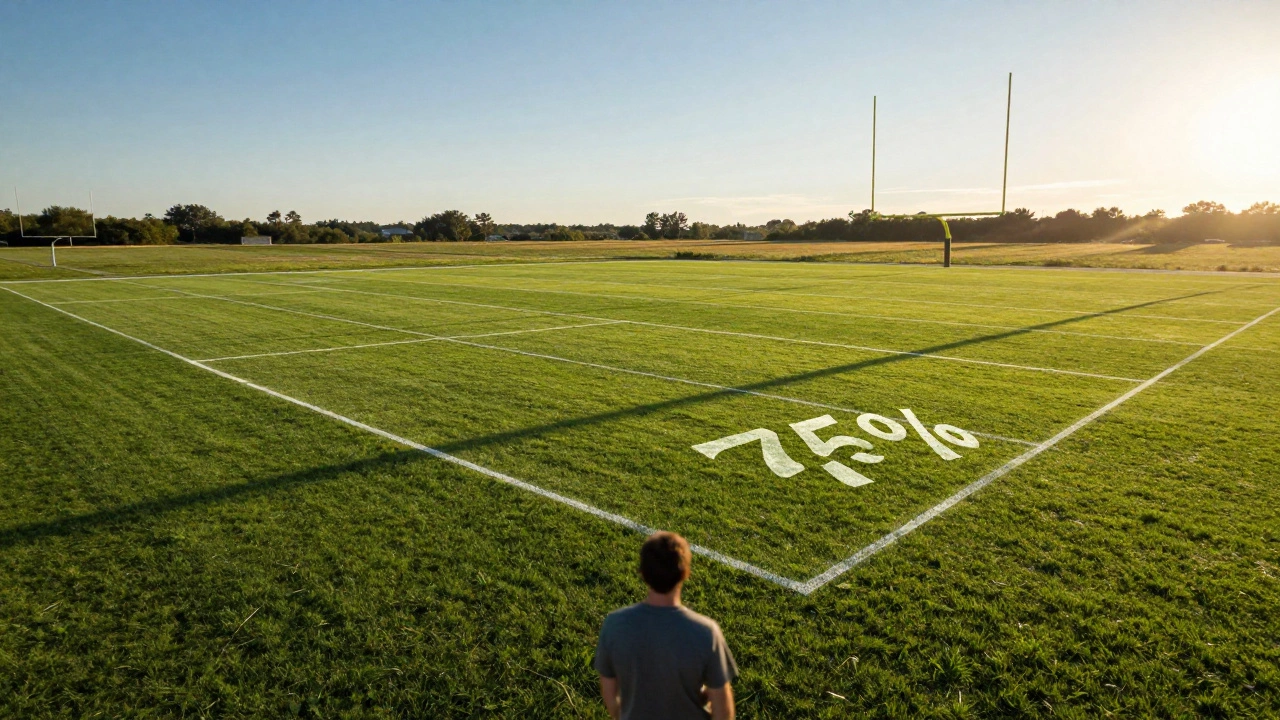
The most common benchmark for visualizing an acre comes from sports. If you are in the United States, this is your go-to reference. An American football field, including the two 10-yard end zones, measures 360 feet long by 160 feet wide. That totals 57,600 square feet.
An acre is roughly 75% of that field. To get the exact visual, imagine taking a standard football field and cutting off about a quarter of its length. That remaining rectangle is one acre. It feels substantial, but not overwhelming. It’s enough space to play a serious game of soccer or cricket, with plenty of room left over for parking or a house.
| Object/Area | Dimensions (approx.) | Square Feet | Acre Equivalent |
|---|---|---|---|
| American Football Field (with end zones) | 360 ft x 160 ft | 57,600 | 1.32 acres |
| One Acre | 208.7 ft x 208.7 ft (square) | 43,560 | 1.0 acre |
| Soccer Field (FIFA standard) | 360 ft x 180 ft | 64,800 | 1.49 acres |
| Tennis Court (Singles) | 78 ft x 27 ft | 2,106 | 0.048 acres |
| Standard House (2,000 sq ft) | Varies | 2,000 | 0.046 acres |
The Square Shape: Walking the Perimeter
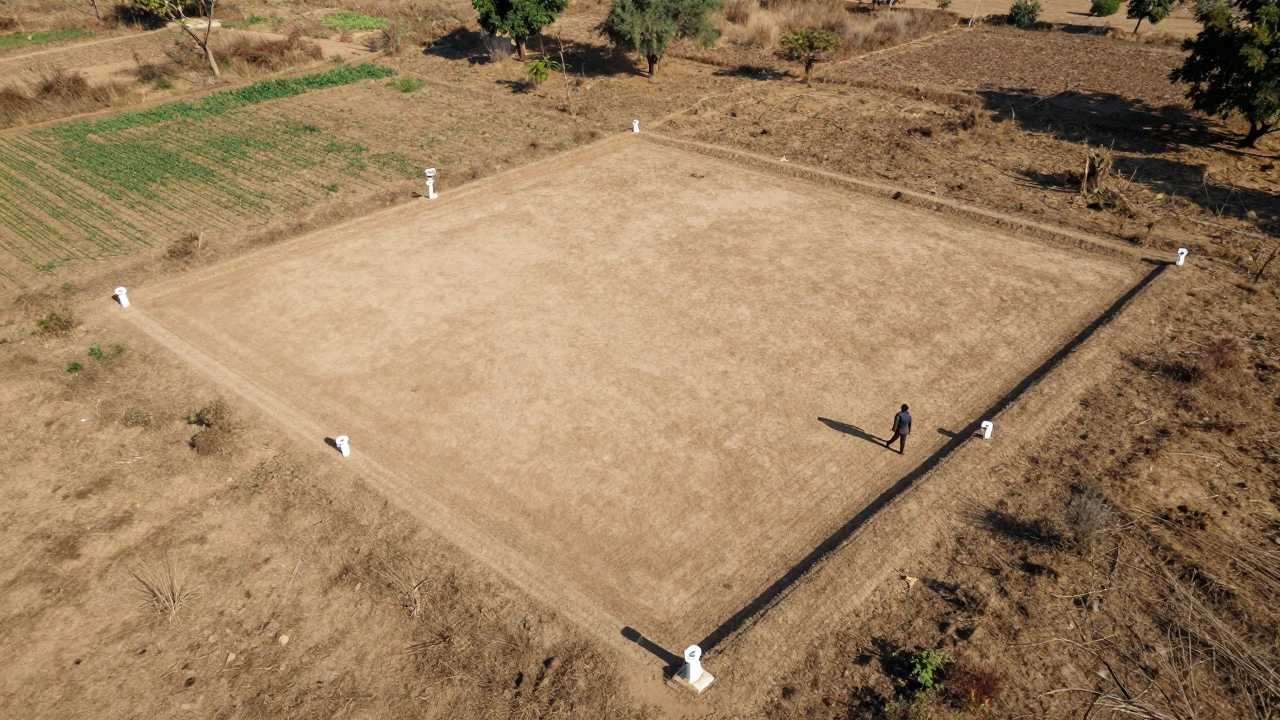
If the land plot is perfectly square, each side measures approximately 208.7 feet. This is a helpful number to memorize because it gives you a sense of walking distance. How far is 208 feet?
It’s about 64 meters. For context, that’s slightly longer than two NBA basketball courts placed end-to-end. If you walk at a normal pace, covering 208 feet takes about 40 to 45 seconds. So, if you walk around the perimeter of a square acre, it will take you roughly three minutes. Try this next time you are touring a property. Time yourself walking the boundary. If it takes less than two minutes, the lot is likely smaller than an acre. If it takes four minutes or more, you’re looking at significantly more land.
Urban vs. Rural Shapes
In rural areas, land often comes in large, rectangular blocks. In suburban or urban settings, lots are frequently irregular. A city lot might be 50 feet wide and 871 feet deep. That’s still one acre, but the visual experience is completely different. You have a narrow frontage but immense depth.
This shape matters for usability. A square acre allows for flexible building placement. A long, thin acre restricts where you can put a driveway or a garden. When visualizing the size, don’t just think of the total area; think of the usable width. A 100-foot width is comfortable for a main house and a guest cottage. A 50-foot width forces everything into a single line.
Everyday Objects: Parking Lots and Houses
If sports aren't your thing, try these comparisons. One acre can fit approximately 16 standard tennis courts. Imagine a complex with four courts side-by-side and four rows deep. That’s an acre. It’s also enough space to park about 30 to 40 average-sized cars, depending on how tightly you pack them.
Consider residential housing. The average new home in the US is around 2,300 square feet. You could theoretically fit nearly 19 such houses on a single acre if they were stacked flatly without any roads or green space. In reality, with setbacks, driveways, and landscaping, a typical suburban development might build 4 to 6 homes per acre. This helps explain why density changes the feel of a neighborhood. Low-density areas give each home half an acre or more, creating a spacious, quiet environment.
Nature and Agriculture Benchmarks
For those interested in farming or gardening, tree counts offer a tangible metric. A mature oak tree canopy might cover 1,000 to 1,500 square feet. Therefore, one acre can support roughly 30 to 40 large trees if planted in a dense orchard style. If you are planning a wooded retreat, visualize a grove of 40 big trees. That’s your acre.
In agriculture, an acre of corn or wheat is a manageable plot for a family farm but tiny for industrial operations. Modern combines harvest hundreds of acres a day. For a hobby farmer, one acre is perfect for high-value crops like vegetables, berries, or flowers. It’s large enough to generate income but small enough to manage without heavy machinery.
Why Shape Matters More Than Size
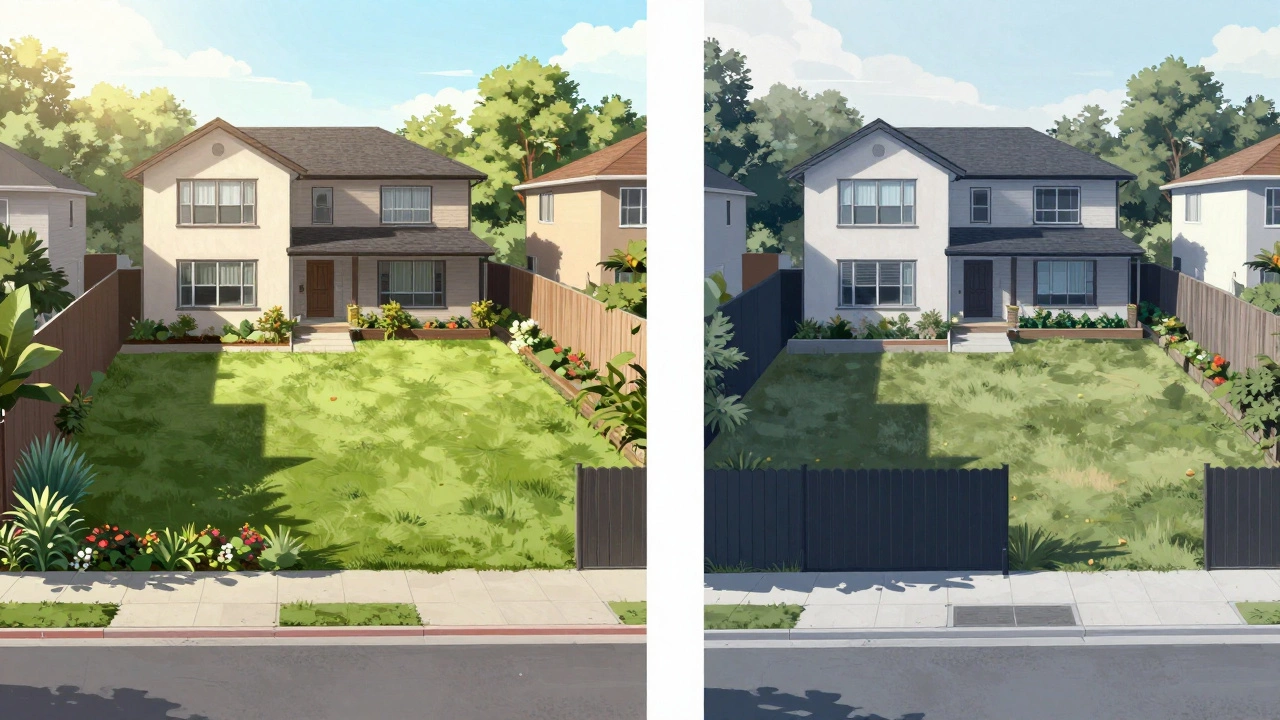
Two plots can both be one acre, yet one feels huge while the other feels cramped. This is due to the aspect ratio. A circular acre has the smallest perimeter, meaning the least amount of fence needed. A long, narrow acre has a massive perimeter, requiring more fencing and maintenance along the edges.
When viewing land, ask for the survey map. Look at the width at the street. If the listing says "1 acre" but the frontage is only 40 feet, you know the lot extends back over 1,000 feet. This impacts sunlight, privacy, and access. A wide lot captures morning sun better. A deep lot offers seclusion but may require long utility runs.
Common Mistakes in Estimating Land Size
People often confuse linear feet with square feet. Saying a lot is "100 feet by 100 feet" describes a square shape, but it equals only 10,000 square feet, which is about 0.23 acres. Don’t assume a "big" sounding dimension means a big acreage. Always multiply length by width to get square footage, then divide by 43,560 to get acres.
Another error is ignoring topography. One acre of flat land is easier to use than one acre of steep hillside. The usable surface area shrinks as the slope increases. If you plan to build, factor in the grade. A sloping acre might effectively provide only 0.7 acres of buildable space after retaining walls and terracing are accounted for.
Tools for Better Visualization
Before visiting a site, use online mapping tools. Google Earth allows you to drop pins and measure distances. Draw a polygon around the property lines. The tool will give you the area in acres and square feet. This digital preview helps set expectations before you drive out.
On-site, bring a measuring tape or a laser distance measurer. Walk the boundaries and verify the dimensions against the listing. Sellers sometimes include easements or shared driveways in the total acreage count. Knowing the exact net usable space prevents disappointment later.
How many football fields are in 1 acre?
One acre is approximately 0.75 of an American football field, including the end zones. Since a full field is about 1.32 acres, you would need roughly 1.32 acres to cover one complete field.
What are the dimensions of a square acre?
A square acre measures approximately 208.7 feet by 208.7 feet on each side. This creates a perimeter of about 835 feet.
Is 1 acre enough for a house and garden?
Yes, one acre is considered spacious for a single-family home. It provides ample room for a large lawn, vegetable garden, playground, and even a small pond or workshop, while still being manageable for maintenance.
How long does it take to walk around 1 acre?
Walking around the perimeter of a square acre takes about 3 minutes at a normal pace. If the land is irregular or shaped differently, the time may vary slightly, but 3 minutes is a good rule of thumb.
Can I subdivide 1 acre into multiple lots?
It depends on local zoning laws. Many suburban areas require minimum lot sizes of 0.25 to 0.5 acres. Therefore, one acre might be subdivided into 2 to 4 smaller lots, provided utilities and road access can be established for each new parcel.