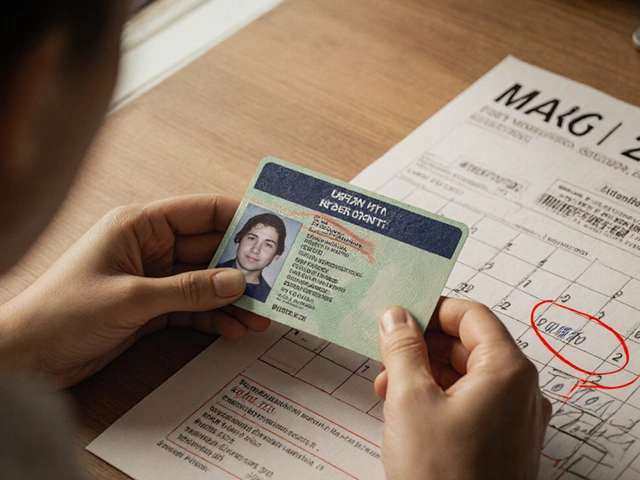
Section 8 Rent Calculator
How Section 8 Works in Virginia
Section 8 helps low-income families pay rent in private homes. You pay 30% of your income, and the voucher covers the rest up to the payment standard. This calculator shows exactly what your rent contribution would be based on your location and income.
Section 8 in Virginia isn’t a government apartment complex. It’s a voucher program that helps low-income families pay rent in private homes. You pick where you want to live - an apartment, townhouse, or even a single-family home - and the government pays part of your rent directly to your landlord. It’s not free housing. It’s rent assistance. And it works differently than most people think.
Who Qualifies for Section 8 in Virginia?
To get a Section 8 voucher in Virginia, your income must be below 50% of the area median income (AMI). In most counties, that means a family of four earning less than $54,000 a year. In high-cost areas like Northern Virginia, the limit can be higher - up to $75,000 in Fairfax County - because rent is more expensive. But even there, you’re still looking at people making minimum wage or slightly above.
The housing authority in your county or city handles applications. You can’t apply statewide. That means if you live in Richmond, you apply through the Richmond Redevelopment and Housing Authority. If you’re in Roanoke, you go to the Roanoke Housing Authority. Each has its own waiting list, and most are closed because demand far outstrips supply.
You don’t need to be unemployed to qualify. Many recipients work full-time at grocery stores, nursing homes, or warehouses. What matters is how much you make compared to local rent prices. A single mom working 30 hours a week at Walmart might qualify. A retired veteran on Social Security might too.
How the Voucher Actually Works
Once you get approved, you’re given a voucher. That voucher covers the difference between 30% of your monthly income and the payment standard set by the local housing authority. Let’s say your income is $1,200 a month. You’d pay 30% of that - $360 - toward rent. The voucher pays the rest, up to a cap.
That cap is called the payment standard. In Virginia, it’s based on Fair Market Rent (FMR) data from the U.S. Department of Housing and Urban Development (HUD). For example, in 2026, the FMR for a two-bedroom apartment in Alexandria is $2,150. So if you find a unit for $1,900, the housing authority pays $1,540 (the difference between $1,900 and your $360 contribution). If you find a unit for $2,300, you’d pay the extra $200 out of pocket - but the voucher still only covers up to $2,150.
Landlords can’t charge more than the payment standard unless you’re willing to pay the difference. That means you can’t use your voucher to rent a luxury condo unless you’re covering the full cost above the cap.
Where Can You Use Your Voucher?
You can use your Section 8 voucher anywhere in Virginia - as long as the landlord agrees to accept it. That’s the key part: landlords aren’t required to take Section 8. In many places, they won’t. Some landlords say the inspections are too strict. Others worry about delays in payment. A few still hold biases against voucher holders.
But Virginia law says landlords can’t refuse a voucher just because the tenant has one. In 2023, the state passed a law banning source-of-income discrimination. That means if you have a Section 8 voucher, a landlord can’t say no just because you’re using it. They can still screen you - credit check, rental history, references - but they can’t say, “We don’t take Section 8.”
Still, in practice, many landlords don’t advertise that they accept vouchers. You often have to ask. Some rental listings even say “no Section 8” outright, which is illegal. If you run into that, you can report it to your local housing authority or the Virginia Fair Housing Office.

What Landlords Need to Know
If you’re a landlord in Virginia and you’re considering accepting Section 8 tenants, here’s how it works on your end.
- You must pass a housing quality standards (HQS) inspection. That means no broken windows, working heat, no peeling lead paint, functional plumbing. Most homes pass if they’re in decent condition.
- The housing authority pays you directly. No more chasing tenants for rent. Payments are reliable and on time - usually the first of the month.
- You set the rent. As long as it’s within the payment standard and comparable to similar units in the area, you’re good.
- You can screen tenants like any other. Background checks, income verification, references - all allowed.
- You can raise rent after the lease ends - just like with any tenant - but the new rent must still be within the payment standard or the tenant will have to pay the difference.
Many landlords in Virginia find Section 8 tenants to be stable, long-term renters. The program requires annual recertification, so tenants don’t just disappear. And because the housing authority pays a big chunk of rent, late payments are rare.
Common Misconceptions
People think Section 8 means you live in a project or that it’s only for the homeless. That’s not true. Most voucher holders live in regular neighborhoods - in apartments above shops, in suburban complexes, in quiet cul-de-sacs.
Another myth: Section 8 is a handout. It’s not. Tenants still pay 30% of their income. That’s the same percentage many middle-class families pay on rent. The difference is, most of those families don’t get help.
And no, Section 8 doesn’t pay for utilities unless you’re in a unit where the landlord includes them. Most vouchers are for rent only. You still pay for electricity, water, internet - just like anyone else.
How to Apply in Virginia
There’s no online statewide application. You have to go to your local housing authority. Here’s how:
- Find your local housing authority. Search “[Your City] Housing Authority Virginia” - for example, “Norfolk Housing Authority”.
- Check if their waiting list is open. Most are closed. Some open once every few years. Sign up for email alerts.
- If the list is open, apply immediately. They often get thousands of applications in one day.
- Wait. The wait time can be 2-5 years depending on your area. Priority is given to families with children, seniors, veterans, or those displaced by disaster.
- Once you’re on the list, you’ll get a call when your turn comes. Then you’ll complete an interview, provide documents (pay stubs, ID, Social Security cards), and get your voucher.
Don’t give up if the list is closed. Keep checking every few months. Some housing authorities open lists unexpectedly after federal funding changes.

What Happens If You Move?
Section 8 vouchers are portable. If you get a voucher in Roanoke and then land a job in Richmond, you can move. Just tell your housing authority ahead of time. They’ll coordinate with the new housing authority to transfer your voucher. You can even move out of state - as long as the new area has a housing authority that accepts vouchers.
But here’s the catch: you must live in the jurisdiction that issued your voucher for at least one year before you can move elsewhere. That rule exists to prevent people from gaming the system. After a year? You’re free to go.
Alternatives to Section 8 in Virginia
If you’re on the waiting list and can’t wait years, here are other options:
- Low-Income Housing Tax Credit (LIHTC): These are apartments where rent is capped based on income. No voucher needed. You apply directly to the property. Examples: Heritage Place in Lynchburg or The Residences at Hampton in Roanoke.
- Public Housing: Government-owned buildings. Still available, but fewer than in the past. You apply through your local housing authority.
- Emergency Housing Vouchers (EHV): For people escaping domestic violence, homelessness, or displacement. These are temporary but can jump you to the front of the line.
- Local Rental Assistance Programs: Cities like Charlottesville and Arlington run their own smaller programs. Check your city’s website.
These alternatives often have shorter wait times. They’re worth exploring while you wait for Section 8.
Final Thoughts
Section 8 in Virginia isn’t perfect. Waiting lists are long. Landlords sometimes say no. The rules can feel confusing. But for hundreds of thousands of families, it’s the only way to afford a safe place to live. It’s not charity. It’s a tool - one that lets people work, raise kids, and stay in communities without being priced out.
If you’re trying to get on the program, stay persistent. Check your local housing authority every month. If you’re a landlord, consider accepting vouchers. You’re not just helping someone - you’re getting reliable rent and a long-term tenant.
Section 8 works because it’s flexible. It doesn’t force people into specific buildings. It gives them choice. And in a state where rent keeps rising faster than wages, that choice matters.
Can I use my Section 8 voucher anywhere in Virginia?
Yes, you can use your Section 8 voucher anywhere in Virginia as long as the landlord agrees to accept it. The program is portable statewide. However, you must live in the jurisdiction that issued your voucher for at least one year before moving to a different county or city. After that, you can transfer your voucher to another housing authority.
Do landlords in Virginia have to accept Section 8?
Yes. Since 2023, Virginia law prohibits landlords from refusing tenants because they use a housing voucher. This is called source-of-income discrimination, and it’s illegal. Landlords can still screen applicants for credit, rental history, or criminal background - but they can’t say, "We don’t accept Section 8." If a landlord refuses, you can report them to the Virginia Fair Housing Office.
How much rent does Section 8 cover in Virginia?
Section 8 covers the difference between 30% of your monthly income and the local payment standard. For example, if your income is $1,500 a month, you pay $450. The voucher pays the rest up to the maximum allowed for your unit size in your area. In 2026, the payment standard for a two-bedroom in Richmond is $1,850. If rent is $1,700, the voucher pays $1,250. If rent is $2,000, you pay the extra $150.
How long is the Section 8 waiting list in Virginia?
Waiting lists vary by location. In high-demand areas like Northern Virginia, the wait can be 3-5 years. In smaller cities like Danville or Harrisonburg, it might be 1-2 years. Many housing authorities have closed lists because demand is so high. You should check your local authority monthly - some open unexpectedly after federal funding changes.
Can I get Section 8 if I have a criminal record?
It depends. Federal law bans people convicted of certain drug-related crimes or violent offenses from the program. But local housing authorities have discretion. Many will consider applicants with past convictions if they’ve been clean for several years and have completed rehabilitation. Each case is reviewed individually. Blanket bans are not allowed.