Non-Resident Property Cost Calculator
Estimate the additional costs associated with buying property as a non-resident, including FIRB fees and stamp duty surcharges.
Imagine standing in front of your dream home, keys in hand, only to be told you can’t legally own it because of where you sleep at night. It sounds like a plot twist from a movie, but for thousands of people looking to buy real estate, this is the harsh reality of **non-resident** status. The term "non-resident" isn't just a label on a form; it’s a legal classification that dictates what you can buy, how much tax you pay, and whether you even need government approval to close the deal.
If you are looking to register property-whether it's a holiday home, an investment unit, or a primary residence abroad-understanding your residency status is the single most important step you will take. Get it wrong, and you face fines, forced sales, or blocked transactions. Get it right, and you unlock access to markets that might otherwise seem closed off. So, what actually makes you a non-resident? It’s not as simple as checking a box on a passport application.
The Core Definition: Domicile vs. Physical Presence
At its heart, being a non-resident means you do not meet the specific criteria set by a country’s immigration and tax authorities to be considered a "resident." But here is the catch: tax residency and legal residency often follow different rulebooks. For property registration purposes, governments usually care about two things: your physical presence and your economic ties to the country.
In many jurisdictions, including Australia, the United States, and the UK, you are generally considered a non-resident if:
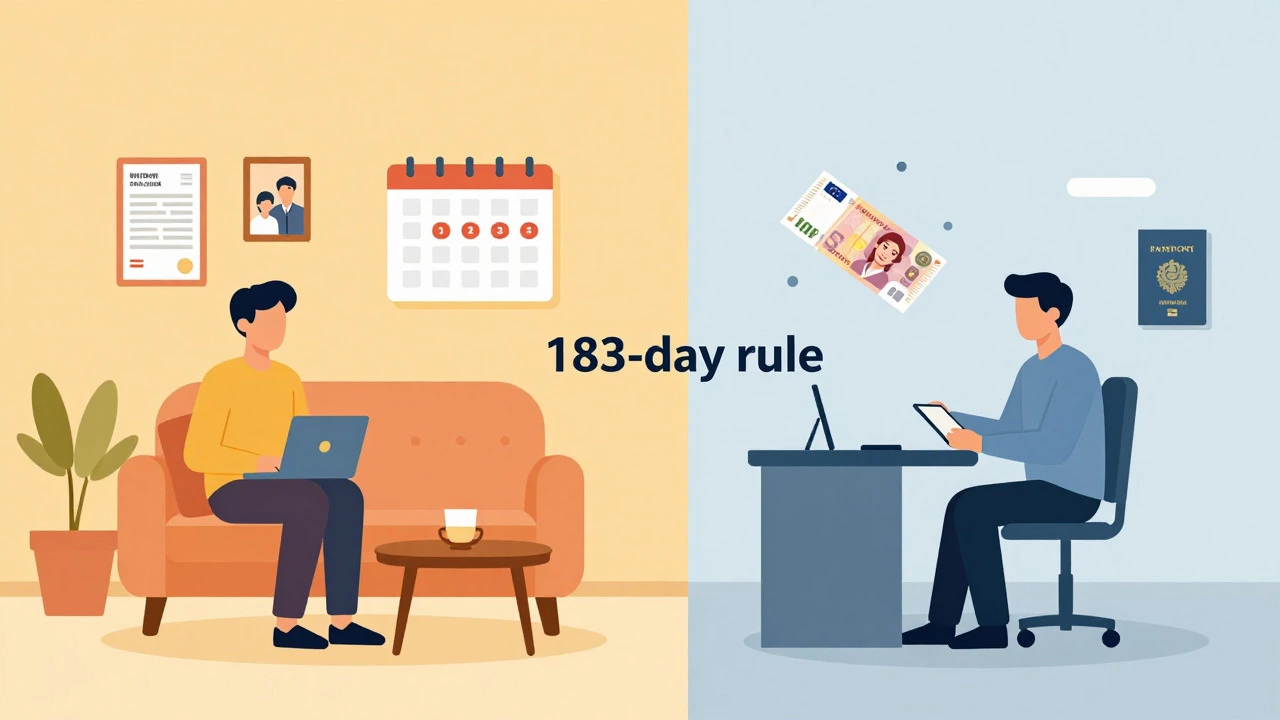
- You spend less than half the year (183 days) physically present in the country.
- Your permanent home (domicile) is located elsewhere.
- Your center of vital interests-where your family, bank accounts, and social life are based-is outside the country.
For example, if you live in Adelaide, Australia, but work remotely for a company in Berlin and keep your main household there, you might be a tax resident of Germany but a non-resident for Australian property laws if you haven't established sufficient local ties. This distinction is crucial because property laws often hinge on "citizenship" combined with "residency," not just one or the other.
Why Residency Status Matters for Property Buyers
Why do governments care so much about who buys their land? It comes down to housing supply and national interest. Many countries restrict non-residents from buying existing homes to prevent driving up prices for locals who need places to live. Instead, they often allow non-residents to build new dwellings or buy vacant land, which stimulates construction without removing inventory from the local market.
When you register as a non-resident, several immediate consequences kick in:
- Approval Requirements: In Australia, non-residents must get approval from the Foreign Investment Review Board (FIRB) before buying most residential properties. Without this, the contract is void.
- Tax Implications: Non-residents often face higher stamp duties (transfer taxes). In states like New South Wales and Victoria, surcharges can range from 7% to 8% on top of standard rates.
- Cap Gains Tax: When you sell, non-residents may face withholding taxes or different capital gains calculations compared to residents.
These aren't minor fees. An 8% surcharge on a $500,000 property is $40,000 out of pocket before you even sign the final deed. Understanding these costs upfront saves you from nasty surprises at settlement.
Common Scenarios That Create Non-Resident Status
You don’t have to be a foreign citizen to be classified as a non-resident. Several common life situations trigger this status unexpectedly:
The Expatriate Worker
You’re an Australian citizen working on a two-year contract in Dubai. You’ve moved your family there, enrolled your kids in local schools, and rented an apartment. If you try to buy a beach house back home while still employed overseas, you’re likely a non-resident. Your center of economic life has shifted, even if your passport says otherwise.
The International Student
Students on temporary visas are almost always non-residents. While some countries offer exemptions for students who intend to return home after graduation, others treat them strictly as foreign buyers. Always check visa-specific property rules.
The Permanent Resident Living Abroad
This is the trickiest category. If you hold a Permanent Resident (PR) visa for a country but have lived outside it for more than two consecutive years, you may lose your PR status-or retain it but be treated as a non-resident for tax and property purposes. In Australia, for instance, long-term absences can affect your eligibility to buy unrestricted property.
How to Determine Your Status: A Step-by-Step Check
Don’t guess your status. Use this practical checklist to assess where you stand before making an offer on a property:
| Factor | Resident Indicator | Non-Resident Indicator |
|---|---|---|
| Physical Presence | Lived in the country for 12+ months continuously | Lived abroad for 12+ months; less than 183 days/year locally |
| Visa Type | Citizenship or Permanent Residency | Temporary Work Visa, Student Visa, Tourist Visa |
| Family Ties | Spouse/children reside locally | Immediate family lives abroad |
| Economic Center | Local job, local bank accounts, local driver’s license | Income earned abroad, banking primarily offshore |
| Intent | Plan to stay indefinitely | Plan to return home within 2-5 years |
If you tick more boxes in the "Non-Resident" column, proceed with caution. You will likely need to file additional paperwork and budget for extra taxes.
Navigating Government Approvals: The FIRB Example
Let’s look closer at Australia, since many readers asking about non-resident status are dealing with Australian property laws. Here, the Foreign Investment Review Board (FIRB) acts as the gatekeeper. As a non-resident, you generally cannot buy an existing house or unit unless it’s part of a larger development project. You can buy vacant land to build a new home, or replace an existing dwelling with a new one.
The process involves:
- Application Fee: Fees scale with the purchase price. For a property under $600,000, the fee might be around $6,000, but it jumps significantly for luxury assets.
- Timeframe: Approval takes 30-90 days. Factor this into your cooling-off period and contract deadlines.
- Ongoing Obligations: Once approved, you must notify FIRB when you sell the property. Failure to report can result in penalties up to 100 times the application fee.
This system exists to ensure foreign money builds new supply rather than hoarding existing stock. If you’re buying in Sydney or Melbourne, expect strict scrutiny. In regional areas, the rules might be slightly more flexible, especially if the property contributes to local tourism or agriculture.
Tax Traps for Non-Residents
Beyond the purchase price, ongoing ownership carries tax weight. Two major areas trip up non-residents:
Land Tax
Most states impose higher land tax thresholds or rates on non-residents. In Victoria, for example, non-residents pay an additional 7% surcharge on land tax. If your property value exceeds the threshold (often around $600,000-$1,000,000 depending on the state), this adds up quickly every July.
Capital Gains Tax (CGT)
When you sell, non-residents often face a withholding tax mechanism. The buyer’s agent might withhold 12.5% (or higher, depending on recent legislation changes) of the sale price and send it directly to the tax office. You then claim back any excess during your annual tax return. However, if you’re not careful with record-keeping, you could end up paying double taxation-once in the country of sale and once in your home country. Double taxation agreements (DTAs) exist to prevent this, but you must actively apply for credits.

Exceptions and Loopholes: Are There Any?
While the rules are strict, there are legitimate pathways to ease restrictions:
Temporary Residents Who Become Permanent
If you start as a temporary resident (e.g., on a skilled worker visa) and later gain permanent residency, you may be able to convert your investment property into a principal place of residence, exempting it from some non-resident taxes.
Business Visas
Holders of certain business innovation visas may qualify for relaxed rules, provided they demonstrate significant economic contribution to the host country.
Close Family Relationships
In some cases, non-resident spouses of citizens can buy property jointly without full FIRB approval, though this varies by state. Always verify with a local conveyancer.
Practical Tips for Smooth Registration
Buying property as a non-resident doesn’t have to be a nightmare. Follow these steps to protect yourself:
- Hire a Specialist Conveyancer: Don’t use a generalist lawyer. Find someone who handles foreign investment deals weekly. They’ll know the latest FIRB updates and state-specific surcharges.
- Get Pre-Approval Early: Apply for government approvals before signing a binding contract. Make your offer "subject to FIRB approval" to avoid losing your deposit if rejected.
- Calculate Total Cost of Ownership: Include stamp duty surcharges, land tax, FIRB fees, and potential CGT withholding in your budget. A $500k home might cost $550k+ in true entry costs.
- Keep Meticulous Records: Save all proof of residency status, visa documents, and tax filings. You’ll need them for future sales or audits.
- Consult a Cross-Border Tax Advisor: Before closing, talk to a tax pro who understands both your home country’s laws and the destination country’s rules. They can help structure the purchase to minimize double taxation.
Conclusion: Clarity Is Power
Being labeled a "non-resident" doesn’t mean you’re locked out of the property market. It means you’re playing by a different set of rules-one that requires more preparation, higher upfront costs, and stricter compliance. By understanding exactly what triggers this status, you can navigate approvals, avoid tax pitfalls, and secure your asset with confidence. Whether you’re an expat, a student, or an investor, clarity on your residency status is the first key to unlocking your property goals.
Can a non-resident buy existing residential property in Australia?
Generally, no. Non-residents must obtain approval from the Foreign Investment Review Board (FIRB) and are typically restricted to buying vacant land to build a new home or replacing an existing dwelling. Buying an existing house or unit is usually prohibited unless it’s part of a large-scale development project.
How long do I need to live in a country to be considered a resident for property purposes?
There is no single universal rule, but most countries use a combination of physical presence (often 183 days per year) and intent. In Australia, living continuously for 12 months is a strong indicator of residency. However, your visa type, family ties, and economic center also play critical roles in determining your status.
What is the FIRB application fee for non-resident property buyers?
FIRB fees are tiered based on the purchase price. As of 2026, fees range from approximately $6,000 for properties under $600,000 to over $200,000 for high-value assets. These fees are non-refundable even if your application is rejected, so factor them into your budget early.
Do non-residents pay higher stamp duty?
Yes. Most Australian states impose a surcharge on stamp duty (transfer duty) for non-residents. This ranges from 7% to 8% in states like New South Wales, Victoria, and Queensland. On a $1 million property, this could add $70,000-$80,000 to your upfront costs.
Can I change my residency status after buying property as a non-resident?
Yes. If you become a permanent resident or citizen after purchasing, you may be eligible to remove the property from non-resident tax regimes. For example, you might stop paying the land tax surcharge or adjust your capital gains tax obligations. Notify the relevant tax authority and FIRB promptly to update your records.