
Australian Building Class Identifier
Confused by terms like "C1" or "Class 2"? Answer these questions about a potential property to identify its likely National Construction Code (NCC) classification and understand what it means for you.
Answer the questions to see the NCC Classification result.
You’re standing in a potential new home, maybe a cozy 2BHK apartment, and the agent hands you a document with a code: "Class 1a" or just "C1." You stare at it. Is this about the floor plan? The energy rating? Or is it some obscure legal hurdle that could kill your loan application?
Here’s the truth: "C1" isn’t just random jargon. It’s part of the National Construction Code (NCC), the rulebook that dictates how every building in Australia is designed and built. If you are buying an apartment, understanding these classifications isn’t optional-it’s essential for knowing what you’re actually getting, how safe it is, and whether it meets modern living standards.
| Code | Name | Typical Use Case | Key Feature |
|---|---|---|---|
| Class 1a | Detached House/Townhouse | Single-family homes, duplexes | No shared corridors; separate structures |
| Class 2 | Apartments/Flats | Multi-unit residential buildings | Two or more sole-occupancy units; shared common areas |
| Class 3 | Accommodation | Hotels, motels, boarding houses | Transient accommodation; often includes Class 9b features |
| Class 4 | Dwelling within another building | Caretaker's flat, shop-top residence | A single dwelling located inside a commercial building |
The Myth of "C1" in Modern Apartments
Let’s clear up the confusion immediately. In strict technical terms under the current National Construction Code (NCC) the primary set of technical provisions for the design and construction of buildings throughout Australia, there is no such thing as a "C1 apartment." Class 1 refers to detached houses or townhouses where each unit is structurally separate from its neighbors. You don’t share walls with your neighbor in a Class 1a build; you might share a party wall in a Class 1b (duplex), but you still have your own front door opening directly outside.
So why do people keep asking "what does c1 mean in apartments?" Usually, it’s one of two things:
- Old Terminology: Some older property listings or non-specialist agents mix up "Class 1" (residential) with "Class 2" (multi-residential). They see "Class 1" on an old council approval and assume it applies to the whole block.
- Misreading "Class 2": Visually, a handwritten "2" can look like a "Z" or be misread, but rarely as a "1." More likely, they are confusing the fire resistance level (often labeled FRL 1) with the building class.
- Specific Sub-classification Confusion: Sometimes, a mixed-use development has retail on the ground floor (Class 5 or 6) and apartments above (Class 2). If someone points to the ground floor office and calls it "C1," they are wrong, but they might be referring to a small caretaker’s flat which is technically Class 4, not Class 1.
If you are looking at a high-rise or even a low-rise walk-up apartment, it is almost certainly a Class 2 building. Knowing this distinction matters because Class 2 buildings have stricter fire safety, acoustic insulation, and waterproofing requirements than Class 1 homes. If an agent tells you your apartment is "Class 1," ask them to point to the structural separation in the plans. If you share a corridor with other residents, you are in Class 2 territory.
Why Building Classes Matter for Your Wallet
You might think, "Who cares what the code says? I just want to know if the kitchen works." But building classification drives three major cost centers for owners:
- Insurance Premiums: Insurers price risk based on construction type. A Class 2 apartment block with timber framing (common in older builds) faces different risks than a concrete Class 2 tower. If your strata committee hasn’t updated their insurance to reflect the actual NCC class and age, you could be underinsured after a fire.
- Strata Levies: Class 2 buildings require mandatory annual inspections for fire systems, lifts, and external cladding. These costs are baked into your quarterly fees. Misclassifying a building can lead to budget shortfalls when those mandatory reports come due.
- Retrofit Costs: If you buy an older apartment that was grandfathered under previous codes, you might face unexpected upgrades. For example, newer NCC updates regarding combustible cladding apply specifically to certain classes and heights. If your building is misclassified in its records, you might miss out on government grants intended to help owners fix non-compliant facades.
Decoding the Rest of the Alphabet Soup
Since we’ve established that your apartment is likely Class 2, let’s look at the neighbors. What else shares your building? This affects noise, traffic, and lifestyle.
Many modern developments are "mixed-use." This means one building contains multiple classes. Imagine a tower where floors 1-3 are offices (Class 5 offices for professional or commercial purposes), floors 4-10 are apartments (Class 2 two or more sole-occupancy units for long-term residence), and the top floor is a gym or café (Class 9b public entertainment or assembly spaces).
Why does this matter to you? Acoustic isolation. The NCC requires specific sound transmission ratings between different classes. However, enforcement varies by state. In Victoria, for instance, recent changes tightened rules on impact sound (footsteps) between Class 2 units. If you live above a Class 5 office, you might hear less noise than if you lived above another Class 2 apartment, simply because office hours end at 5 PM while apartment life continues late into the night.

Fire Safety: The Critical Difference Between Class 1 and Class 2
This is the big one. When people worry about "C1" vs "C2," they are usually worried about safety. Here is the practical reality:
In a Class 1a house, if a fire starts in the kitchen, you run out the back door. Simple. No alarms required in many older builds, though smoke detectors are now mandatory everywhere.
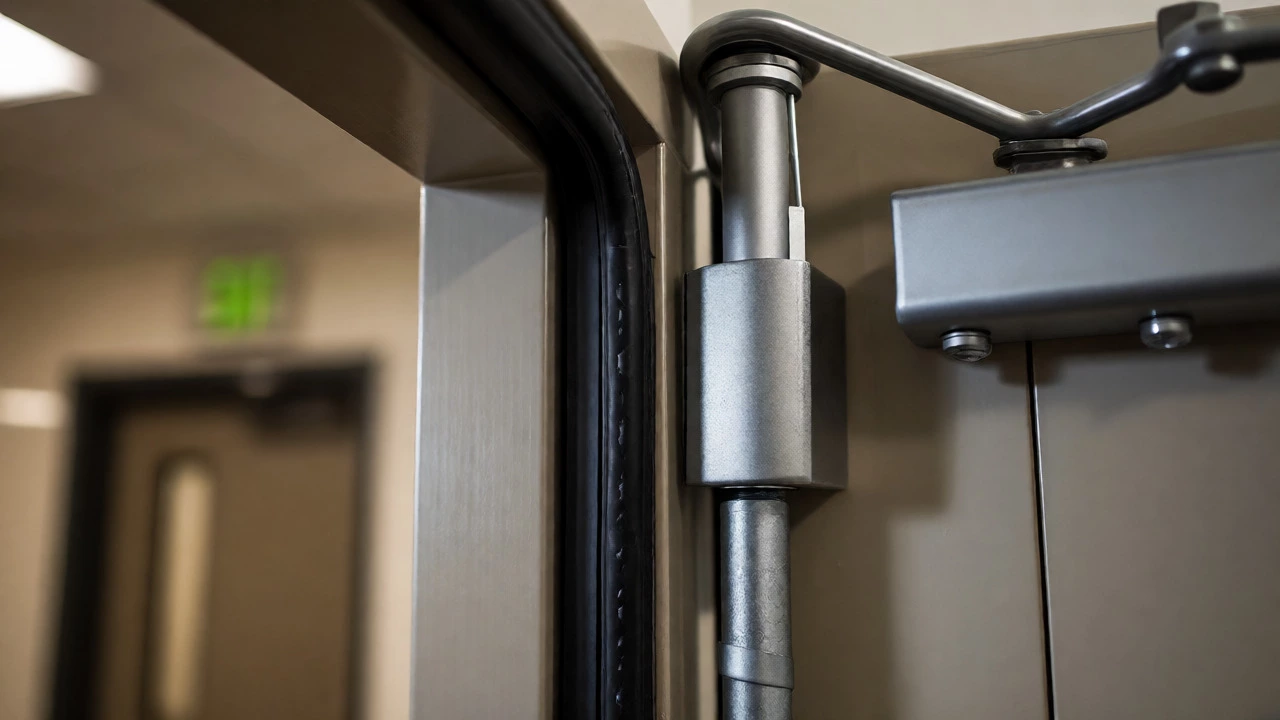
In a Class 2 apartment, the strategy is "defend in place." You don’t necessarily evacuate the whole building when one unit catches fire. Instead, the building relies on compartmentalization. Fire-rated doors, sprinkler systems, and pressurized stairwells keep the fire contained to the affected unit. This is why you see heavy, self-closing doors in apartment corridors. Those aren’t just for privacy; they are part of the passive fire protection system mandated for Class 2 buildings.
If you are touring an apartment, check the entry door. Does it close automatically? Does it have a seal around the frame? If yes, that’s good news-it indicates the builder respected the Class 2 fire integrity requirements. If the door slams shut manually and leaves gaps, you might be dealing with a poorly maintained or older compliant building.
How to Verify the Classification Yourself
Don’t rely on the real estate agent’s verbal confirmation. Agents are salespeople, not certifiers. Here is how you get the hard data before signing a contract:
- Check the Occupation Certificate: Every new building gets an Occupation Certificate (OC) from the local council or private certifier. This document explicitly states the building class. Ask to see a copy during due diligence.
- Review the Strata Plan: The registered strata plan will show the boundaries of your lot. If your lot includes a portion of a common corridor, lobby, or lift shaft, you are definitely in a Class 2 (or higher) environment.
- Look at the Cladding Report: Post-Grenfell, most states require cladding audits for Class 2 and 3 buildings over certain heights. If your building has a cladding report, it confirms the building is treated as multi-residential (Class 2+), regardless of what the old paperwork says.
Living in Class 2: What to Expect Day-to-Day
Once you understand the code, you realize it shapes your daily life. Class 2 living means shared infrastructure. You share water pipes, electrical risers, and waste lines. This leads to two common complaints:
Noise Transmission: While the NCC sets minimum acoustic standards, they are minimums, not luxury specs. In many Adelaide apartments, you will hear footsteps upstairs. This is physics, not poor construction, unless the developer upgraded beyond the baseline. Always visit an apartment at night or during peak hours to test acoustics.
Water Pressure Fluctuations: Because you are connected to a central supply system, running two showers simultaneously in a large family unit can drop pressure. This is less common in Class 1 homes where each house has independent connections. Check the water pressure in the shower before you buy.
The Future: NCC Changes Coming in 2026
As of September 2026, the construction industry is adapting to the latest NCC amendments focused on energy efficiency and sustainability. For Class 2 apartments, this means stricter thermal performance requirements. Newer apartments you are viewing today should have double-glazed windows or advanced insulation packages to meet these standards.
If you are looking at a resale apartment built in 2015, it won’t meet the 2026 energy star ratings. This doesn’t make it bad, but it does mean your electricity bills might be higher than a brand-new build. Factor this into your comparison. A slightly cheaper older apartment might cost more annually in heating and cooling than a pricier, compliant new build.
Frequently Asked Questions
Is a 2BHK apartment always Class 2?
Almost always, yes. "2BHK" describes the layout (2 Bedrooms, Hall, Kitchen), not the building code. However, any residential unit that shares common areas like corridors, lobbies, or elevators with other households is classified as Class 2 under the NCC. If your 2BHK is part of a duplex with no shared internal corridors, it might be Class 1b, but true apartments are Class 2.
Does Class 1 mean better quality than Class 2?
No, it just means different construction types. Class 1 buildings are typically detached houses or townhouses with separate structures. Class 2 buildings are multi-unit dwellings. Neither is inherently "better" quality; it depends on the builder, materials, and maintenance. Class 2 buildings actually have stricter regulations for fire and acoustics due to the proximity of neighbors.
What is Class 4 in an apartment building?
Class 4 is a single dwelling located within a building of another class. The most common example is a caretaker’s flat or a manager’s residence inside a larger apartment complex or hotel. It is not a standard apartment unit for sale to the public; it is usually tied to the management of the building.
Do I need to know my building class for insurance?
Yes. Insurance providers assess risk differently for Class 1 (individual houses) versus Class 2 (strata-titled apartments). Class 2 policies often cover the building structure collectively through the strata corporation, while you insure contents and improvements. Misstating the class can void claims related to structural damage or liability.
Can a building change its class?
Rarely, but possible through redevelopment. For example, converting a large Class 1 house into four separate apartments requires changing the use to Class 2. This involves significant renovations and new approvals to meet Class 2 standards for fire exits, ventilation, and accessibility. You cannot simply partition a house without updating the certification.
Final Checklist Before You Sign
Before you commit to that apartment, take ten minutes to verify the facts. Grab the strata documents. Look for the words "Class 2." Check the fire safety report date. Walk the corridor and listen. If everything aligns with the Class 2 expectations-robust fire doors, managed common areas, and proper acoustic insulation-you’re not just buying a home; you’re buying into a regulated, safe community structure. Don’t let vague terms like "C1" confuse you. Demand clarity, and you’ll sleep easier in your new space.