Home Affordability Calculator for Buyers Over 40
Enter your details to see how much home you can afford.
You’re 40. You’ve saved up. You’ve paid off credit cards. You’ve stopped renting and started wondering: is buying a house at 40 too old? Maybe you’ve watched friends buy homes in their 20s. Maybe you’ve been told it’s "late" to start. But here’s the truth: 40 isn’t late. It’s the perfect time.
Why 40 Is Actually the Best Age to Buy Your First Home
At 40, you’re not starting from zero. You’ve had two decades to build stability. Your income is likely higher than it was at 25. You know what you need in a home - not just a place to crash, but a space that fits your life. You’ve probably learned the hard way that a 30-year mortgage isn’t a free pass to spend recklessly. You understand debt. You’ve seen how fast maintenance costs add up. You’re not chasing trends. You’re chasing security.
In Australia, the average age of first-time buyers has been rising for years. According to the Australian Bureau of Statistics, more than 30% of first-home buyers in 2024 were over 35. At 40, you’re not an outlier - you’re part of a growing trend. People are waiting longer to buy because housing prices rose faster than wages. That doesn’t mean you missed the boat. It means you’re buying smarter.
What Changes When You Buy at 40 (And Why It’s an Advantage)
At 25, you might care about open-plan kitchens and Instagram-worthy bathrooms. At 40, you care about insulation, noise levels, and proximity to hospitals. You don’t need five bedrooms for kids who haven’t been born yet. You need one good study, a low-maintenance yard, and a suburb with good public transport. You’re not buying a party house. You’re buying a home that works for your life now.
Financially, you’re in a better position too. You’ve likely got a solid credit score. You’ve saved a deposit without relying on parents or government grants. You’ve probably paid off student debt, car loans, or medical bills. Lenders see that. They don’t care if you’re 28 or 48 - they care if you can pay. And at 40, you’re more likely to have the proof they need: payslips, tax returns, and bank statements that show consistency.
Can You Still Get a Mortgage at 40?
Yes. Absolutely. Banks don’t have an age cutoff for home loans - they have a repayment deadline. Most lenders want your mortgage paid off by age 70 to 75. That means if you’re 40, you can still get a 30-year loan. Some even allow 35 years if you’re under 45. That’s not a problem. It’s a plan.
Here’s what actually matters: your debt-to-income ratio. If you earn $120,000 a year and owe $15,000 in car loans and credit cards, you’re in great shape. If you earn $80,000 and owe $40,000 in debt, you’ll need to pay down before applying. Age doesn’t block you. Debt does.
Some lenders offer “later life lending” products designed for buyers over 40. These often come with lower interest rates because you’re seen as lower risk. You’re not a student. You’re not a gig worker. You’re employed, stable, and likely to stay employed.
How Buying Online Changes the Game for Older First-Time Buyers
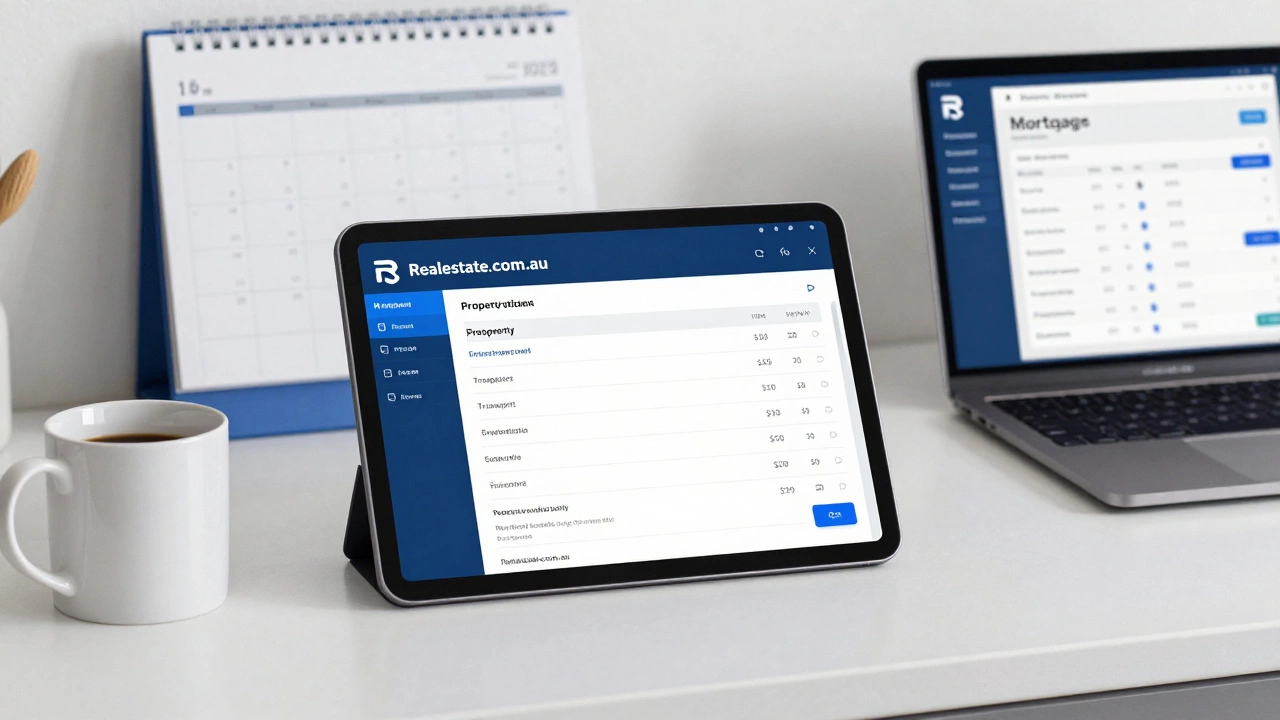
Buying a house at 40 doesn’t mean dragging yourself to open homes every weekend. You can do most of the legwork online. Property portals like realestate.com.au and domain.com.au let you filter by price, suburb, land size, and even walkability scores. You can watch 3D tours from your couch. You can compare median prices over the last five years. You can see school ratings, public transport routes, and flood zones - all before you leave the house.
Online tools also help you calculate what you can afford. Use the Reserve Bank of Australia’s mortgage calculator. Plug in your income, expenses, and deposit. See how much you can borrow without stretching too thin. You don’t need a real estate agent to tell you if $600,000 is too much. The numbers will tell you.
And when you’re ready to make an offer? Many conveyancers now handle everything digitally. You can sign contracts with e-signatures. You can track settlement progress online. You don’t need to be young to be tech-savvy. You just need to be willing to use the tools that exist.
The Real Risks - And How to Avoid Them
There are risks. But they’re not about age. They’re about timing.
Risk 1: You stretch too far to get in. You see a house you love. You think, "This is my last chance." So you borrow 95% and forget about repairs, insurance, and rates. Don’t do it. Buy below your limit. Leave room for the roof that needs replacing, the plumbing that’s 30 years old, the council fees that went up last year.
Risk 2: You assume you’ll sell before retirement. Maybe you think, "I’ll sell this house when I turn 60 and downsize." But markets don’t care about your plans. If interest rates spike in 2030, you might be stuck. Build a home you can live in for 20 years - not one you plan to flip.
Risk 3: You ignore super and savings. Buying a house shouldn’t mean emptying your super fund. If you’re 40 and you’ve got $150,000 in super, don’t raid it for a deposit. That money is for your 60s, not your 45s. Use your savings. Use your income. Use your discipline. Not your retirement fund.
What Success Looks Like at 40
Success isn’t about beating your 25-year-old neighbor to the punch. It’s about walking into your new home and knowing you did it on your terms. You didn’t rush. You didn’t gamble. You saved. You researched. You waited for the right place at the right price.
One client I know - a 42-year-old nurse in Adelaide - bought her first home in 2024. She saved $80,000 over five years. She looked at 47 properties. She walked away from two offers because the inspections revealed mold and faulty wiring. She got a 25-year loan. She’ll pay it off at 67. She’s not stressed. She’s proud. She didn’t wait for "perfect." She waited for "right."
Next Steps: What to Do Right Now
- Check your credit report. Free through Equifax or Experian. Fix errors. Pay down high-interest debt.
- Use a mortgage calculator. Input your income, expenses, and savings. See your borrowing power.
- Set a realistic budget. Don’t chase the most expensive house in the suburb. Aim for the most sensible one.
- Start browsing property sites. Use filters: price, bedrooms, land size, distance to public transport.
- Book a free consultation with a mortgage broker. They’ll help you understand what lenders will accept - no pressure, no sales pitch.
You don’t need to be 25 to own a home. You don’t need to be rich. You just need to be ready. And if you’re 40 and thinking about buying, you already are.
Is it too late to buy a house at 40?
No, it’s not too late. Many Australians buy their first home in their 40s. Lenders focus on your income, savings, and debt - not your age. With a solid financial foundation, you’re more likely to get approved than someone younger with less stability.
Can I get a 30-year mortgage at 40?
Yes. Most lenders allow mortgages to run until age 70-75. At 40, a 30-year loan means you’ll be paying it off at 70. Some lenders even offer 35-year terms if you’re under 45. The key is ensuring your repayments are manageable when you’re older.
Do I need a larger deposit if I’m over 40?
No, the deposit size isn’t based on age. But lenders prefer deposits of 20% or more to avoid Lenders Mortgage Insurance (LMI). If you’ve saved $100,000 for a $500,000 home, you’re in a strong position - regardless of your age.
Should I use my super to buy my first home?
Generally, no. The First Home Super Saver Scheme allows you to withdraw voluntary super contributions, but it’s meant for first-time buyers under 35. Using your super at 40 risks your retirement. Stick to your savings. Your future self will thank you.
Is buying online safe for first-time buyers?
Yes, if you use trusted platforms like realestate.com.au or domain.com.au. Online tools help you research suburbs, compare prices, and view properties without leaving home. Always get a professional inspection before buying - no matter how good the photos look.