2BHK Space Calculator
Your Current Housing
800 sqft 2BHK Option
Your Savings Breakdown
Potential Uses
Your savings could cover:
• 2 weeks of travel
• Credit card payoff
• Emergency fund
• Home upgrades
Eight hundred square feet doesn’t sound like much when you’re scrolling through listings. But for two people? It’s not the tiny studio you imagine-it’s a real, workable space if you know how to use it. In cities like Adelaide, Melbourne, or Sydney, where rent keeps climbing and new builds shrink, 800 sqft 2BHK apartments are popping up everywhere. They’re not luxury. They’re practical. And for a lot of couples, roommates, or young professionals, they’re the only realistic option.
What does 800 sqft actually look like?
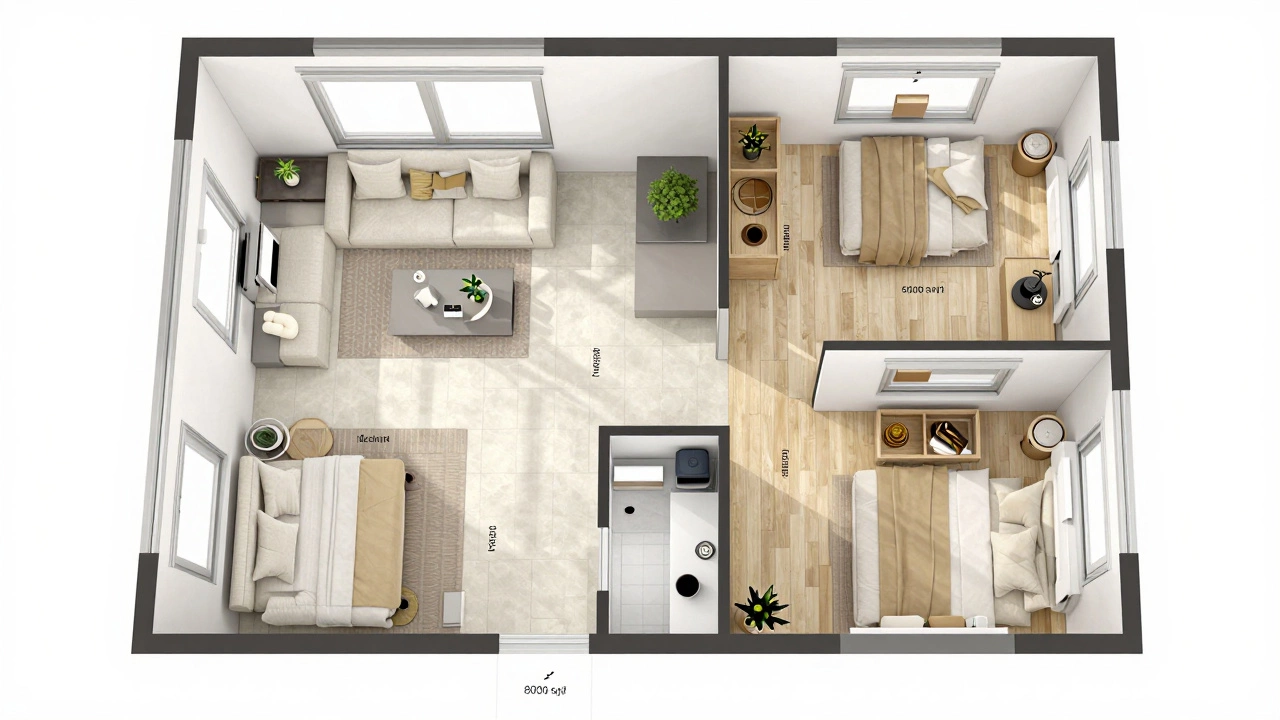
Let’s break it down. Eight hundred square feet is about the size of a two-car garage. But inside, it’s split into two bedrooms, a living area, a kitchen, and a bathroom. That’s not a studio with a curtain dividing the bed. This is a proper 2BHK-two separate rooms you can close the door on. The living room might be 12x14 feet. The master bedroom could be 10x11. The second bedroom? Maybe 8x9. That’s tight, but not impossible.
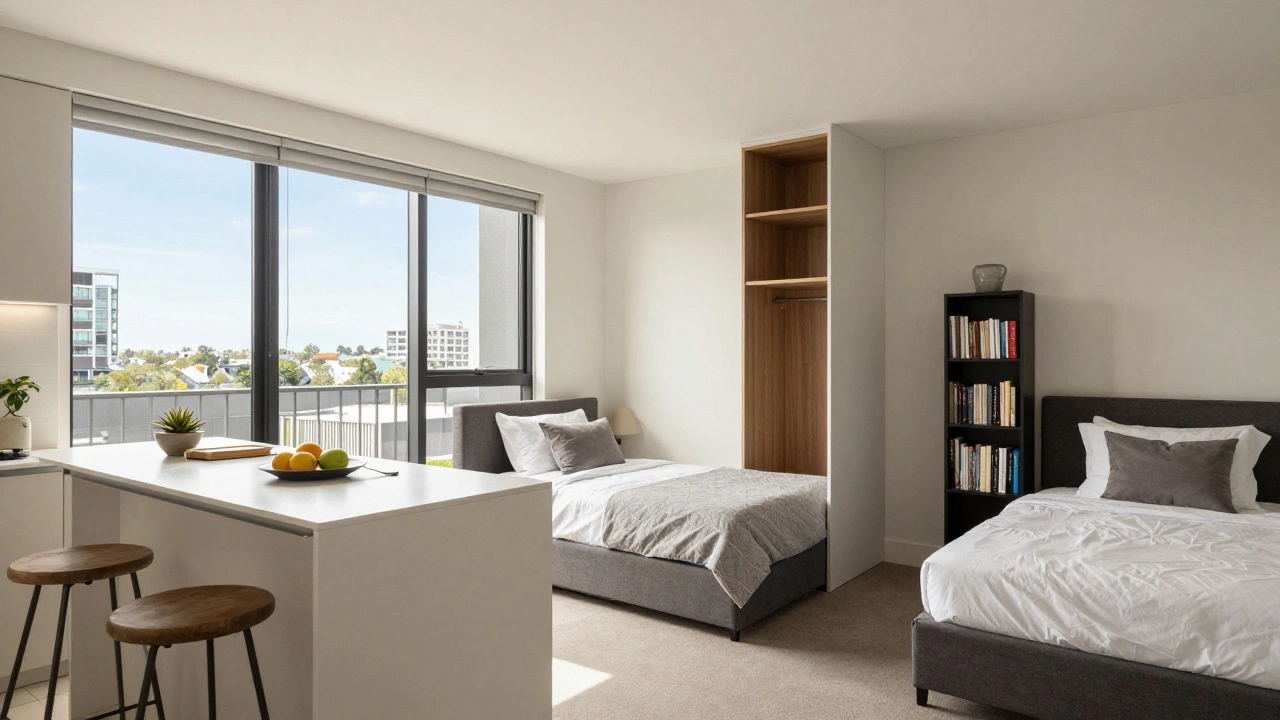
Take a real example: a 2024 build in Norwood, Adelaide. The layout was 810 sqft. The kitchen was open to the living area, with a breakfast bar. The master bedroom had room for a queen bed, a small dresser, and a narrow wardrobe. The second bedroom fit a single bed and a bookshelf. The bathroom was compact but modern, with a shower over the tub. No wasted space. No hallway. Everything served a purpose.
People who say 800 sqft is too small haven’t lived in one. They’re comparing it to 1990s suburban houses with formal dining rooms and walk-in pantries. That’s not the world most people live in anymore. The real question isn’t is it big enough? It’s can you live with less?
How do couples make it work?
Storage is the silent hero. Without closets, you need smart solutions. Under-bed drawers? Check. Wall-mounted shelves? Essential. A fold-down desk in the living area? Game-changer. One couple I spoke to in Port Adelaide turned their second bedroom into a home office by day and a guest room by night. They used a Murphy bed that folded into the wall. No one ever knew it was there until they needed it.
They didn’t own a dining table. They ate at the kitchen island. They didn’t need a TV stand. They mounted the TV on the wall. They used a rolling cart for extra storage in the living room. Every piece of furniture had two jobs. That’s the rule: if it doesn’t pull double duty, it doesn’t fit.
And yes, there are trade-offs. You won’t have space for a full-sized sofa and a coffee table and a side table and a bookshelf. You’ll pick one. Maybe the sofa. Maybe the shelf. You’ll learn to live with less stuff. And honestly? Most people own way more than they need. A 2023 survey by the Australian Bureau of Statistics found that 68% of households had at least 10 items they hadn’t used in over a year. In an 800 sqft apartment, that clutter becomes a problem fast.
What about privacy?
That’s the biggest worry for couples. Sharing a bathroom isn’t the issue-it’s sharing a space where you can’t escape. One person works from home. The other watches TV. One wants quiet. The other wants music. How do you handle that?
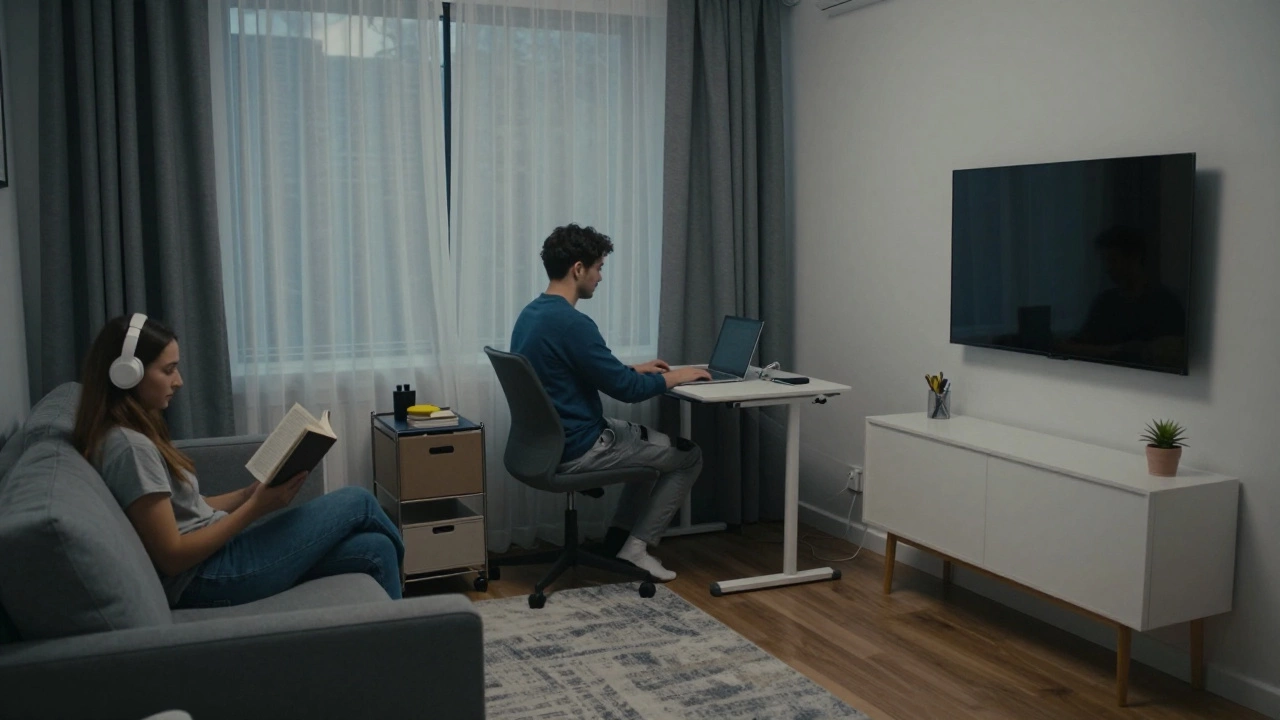
Soundproofing helps. Heavy curtains, rugs, and even a simple door draft stopper can cut noise between rooms. But the real trick is routine. One person works 9-5. The other works 2-10. They stagger their downtime. One takes the dog for a walk after dinner. The other reads in bed with headphones. They don’t try to do everything together in the same room. They use the outside world as an extension of their home.
And if you’re worried about guests? A fold-out couch in the living room works fine for one overnight guest. For two? You sleep on the floor or crash at a friend’s. It’s not ideal, but it’s manageable. Most people don’t have overnight guests more than once a month.
Is it cheaper?
Yes. And that’s why it’s growing fast. In Adelaide, a 1,200 sqft 2BHK in the inner suburbs rents for $450-$550 a week. An 800 sqft unit? $350-$420. That’s a $100-$130 weekly savings. Over a year? That’s $5,200-$6,760. That’s enough to pay off a credit card, save for a trip, or put toward a deposit on a bigger place later.
Utilities are lower. Cleaning takes less time. Heating and cooling are cheaper. You’re not paying for square footage you don’t use. And if you’re buying? The price difference is even starker. An 800 sqft unit might cost $450,000. A 1,000 sqft one? $600,000. That’s $150,000 less upfront. That’s a $300-$400 lower monthly mortgage.
It’s not just about saving money. It’s about freedom. That extra cash lets you take a part-time course, work less, or travel more. For a lot of people, that’s worth giving up a bigger living room.
Who should avoid it?
Not everyone thrives here. If you have a lot of stuff-collectibles, hobbies, gear, or kids-you’ll feel cramped. If you need a home gym, a craft room, or a dedicated office with a door that closes, you’ll hate it. If you’re planning to have kids in the next two years? You’ll outgrow it fast.
And if you’re someone who needs space to breathe? Who feels anxious in tight quarters? Who gets overwhelmed by clutter? This isn’t for you. It’s not a lifestyle-it’s a compromise. And compromises work only if you’re okay with them.
One woman I talked to in Glenelg moved into an 800 sqft unit after her divorce. She’d lived in a 3BHK for 15 years. At first, she cried every night. Then she started selling things. Then she started walking more. Then she stopped caring about having a spare room. She said, "I didn’t lose space. I gained time. I don’t spend hours cleaning. I don’t stress about keeping things perfect. I just live."
What’s the catch?
The biggest catch? Resale value. Smaller units sell faster in hot markets, but they also appreciate slower. In Adelaide, 800 sqft 2BHKs have a 3-4% annual growth rate. Larger units? 5-7%. That’s not a dealbreaker if you’re not planning to sell in five years. But if you’re buying as an investment? You’re betting on rental demand, not capital gain.
Also, not all 800 sqft units are created equal. Some are poorly designed. Thin walls. No natural light. A kitchen that’s just a microwave and a sink. Always check the floor plan. Look for windows in both bedrooms. Check if the bathroom has ventilation. See if the kitchen has counter space. A bad layout can make 800 sqft feel like 600. A good one can make it feel like 1,000.
Final verdict: Is 800 sqft enough?
Yes-for the right people. For couples who value location over size. For people who want to live in the city without paying a premium. For those who are okay with owning less and experiencing more. It’s not a dream home. But it’s a real home. And in today’s market, that’s more than enough.
If you’re considering one, go see a few. Not online. In person. Walk through them with a tape measure. Bring a friend. Ask yourself: Could I live here for two years? Three? Five? If the answer is yes, then 800 sqft isn’t too small. It’s just right.