Horse Land Calculator
Calculate Your Horse Land Requirements
This calculator determines the minimum acreage needed for your horses based on expert recommendations from the article.
If you’re thinking about buying land for a horse, you’re not just buying dirt-you’re buying responsibility. A horse isn’t a pet you can keep in a backyard. It needs space to move, graze, and be healthy. So how many acres do you really need? The short answer: one acre is the bare minimum for one horse, but two to three acres is what most experienced owners aim for. Anything less than that and you’ll be spending more time managing feed and manure than enjoying your horse.
Why One Acre Isn’t Enough (Even Though People Say It Is)
You’ll hear a lot of people say, "One acre is fine." That’s true-if you’re willing to feed hay every single day, clean manure daily, and never let your horse graze naturally. But if you want your horse to behave like a horse-moving around, eating grass, rolling in the dirt-you need more than that.
In South Australia, where the soil is often clay-heavy and rainfall is unpredictable, one acre of pasture can get chewed down to dirt in under six weeks during summer. Without rotation or rest, the grass won’t come back. And without grass, you’re buying hay-$200 a ton, multiple times a month. That adds up fast.
Realistically, if you’re planning to rely on pasture as a major food source, you need at least two acres per horse. That gives the grass time to recover. Three acres? Even better. You’ll have room to rotate paddocks, let the land breathe, and reduce the need for supplemental feed.
What If You Have More Than One Horse?
More horses don’t mean you just multiply the acreage by the number of animals. Horses are social, but they also compete for space and food. Two horses on two acres? That’s tight. Three horses on three acres? Still pushing it.
Here’s a simple rule: start with two acres for the first horse. Add one extra acre for each additional horse. So:
- 1 horse = 2 acres
- 2 horses = 3 acres
- 3 horses = 4 acres
- 4 horses = 5 acres
This isn’t a hard law-it’s based on pasture recovery rates and feeding habits. In richer soils or wetter climates, you might get away with less. In dry, sandy, or rocky ground like parts of the Adelaide Hills, you’ll need more.
Land Quality Matters More Than Just Size
Not all land is created equal. A flat, well-drained field with deep, fertile soil can support more horses than a steep, rocky slope with thin topsoil-even if they’re both the same size.
Look for these signs:
- Good drainage: After rain, water should soak in, not pool. Puddles mean mud, and mud means hoof problems.
- Native grasses: Kikuyu, ryegrass, and clover are common in Australia. They’re tough and nutritious.
- No toxic plants: Oleander, ragwort, and nightshade are deadly to horses. Check the land before you buy.
- Access to shade and shelter: Horses need protection from sun and wind. Trees help, but you’ll also need a run-in shed.
I’ve seen people buy five acres of land that looked perfect-until they realized half of it was a steep, erosion-prone hillside. The usable area? Just one and a half acres. They ended up spending more on fencing and erosion control than they saved on land cost.
What About a Dry Lot?
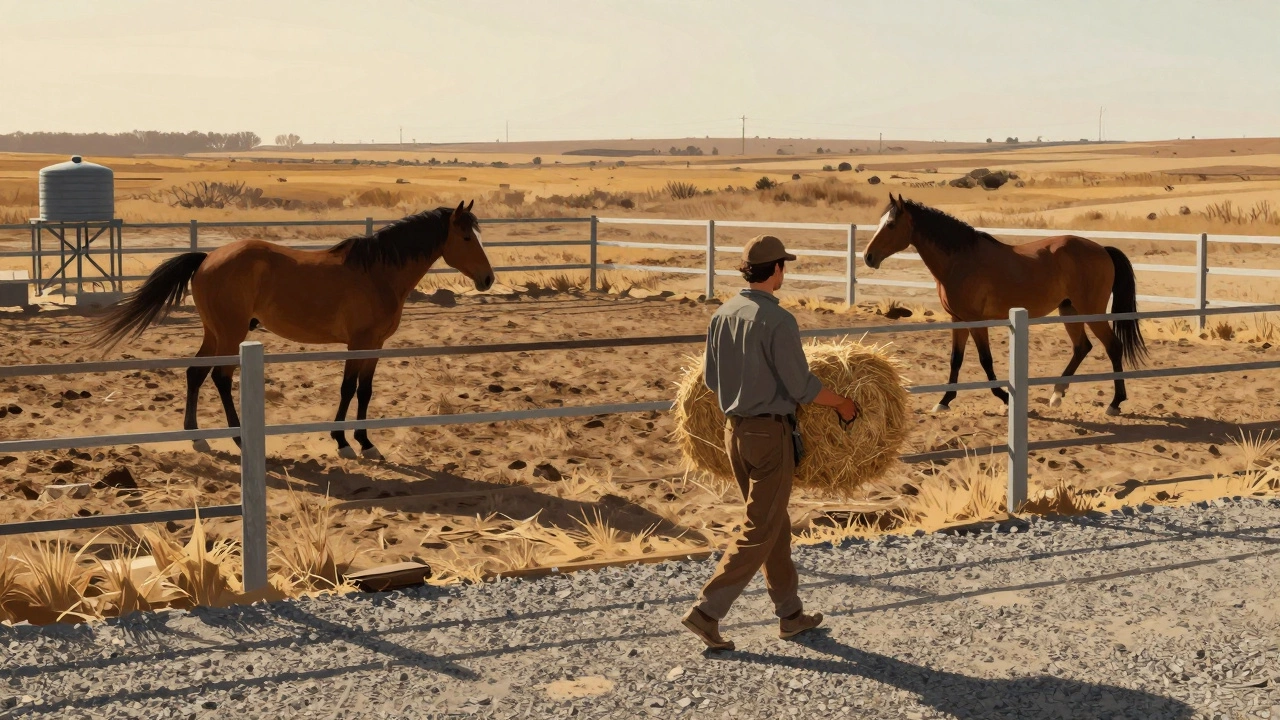
If your land isn’t great for pasture, or you’re dealing with seasonal droughts, you might consider a dry lot. That’s a fenced, dirt or gravel area where horses live without grazing. It’s common in places like the Murraylands or the Eyre Peninsula, where pasture barely survives summer.
A dry lot doesn’t need to be huge-about half an acre per horse is enough. But here’s the catch: you still need space for movement. A horse that can’t walk 500 meters a day will get stiff, bored, and unhealthy. So even in a dry lot, you need room to turn, walk, and stretch.
And you’ll need to feed hay, minerals, and supplements every day. That means storage space, a shed, and regular deliveries. It’s more work, but it’s doable if your pasture is poor.
Other Things You Can’t Ignore
Land size isn’t the only thing that matters. You also need to think about:
- Fencing: Horses break cheap wire. Use smooth, high-tensile fencing or wooden rails. Budget at least $10,000-$20,000 for a 5-acre property.
- Water access: One horse drinks 20-30 liters a day. That’s 7,000-10,000 liters a month. A reliable bore, tank, or reticulated system is non-negotiable.
- Manure management: One horse produces 50 pounds of manure a day. That’s over a ton a month. You need space to compost it-or pay someone to haul it away.
- Access roads: Can a truck get in to deliver hay? Can a vet reach you in the rain? If the driveway turns to mud, you’re in trouble.
Many people buy land thinking they’ll just put a horse in it. Then they realize they need a shed, a water system, fencing, a compost area, and a way to get supplies in. The total cost of setting up a horse property often doubles the purchase price.

What About Zoning and Local Rules?
In South Australia, rural residential zones usually allow one horse per two acres. But some councils, especially near Adelaide’s outer suburbs, have tighter rules. You might need a permit just to keep one horse.
Check with your local council before you sign anything. Some areas require:
- A minimum lot size of 1 hectare (2.5 acres)
- Distance from neighboring houses (often 50+ meters)
- Restrictions on noise, odor, or manure storage
I’ve seen buyers get stuck after closing-because their dream property was zoned for "agricultural use only," and they weren’t allowed to keep a horse without a farm business license. That’s a $10,000+ legal headache.
What’s the Sweet Spot?
So, how many acres do you really need? Here’s the practical breakdown:
- Minimum: 1 acre (only if you’re feeding hay 100% of the time and have a dry lot)
- Recommended: 2-3 acres for one horse (allows pasture rotation, reduces feed costs)
- Ideal: 3-5 acres (room for multiple horses, compost area, storage, and breathing space)
If you’re serious about horse ownership, don’t cut corners on land. A bigger property means less work, lower costs over time, and a healthier, happier horse. And honestly? You’ll enjoy it more too.
Final Thought: It’s Not Just About Space
People think owning a horse is about the riding, the trails, the glory. But the truth? It’s about the dirt under your nails, the early mornings feeding hay, the fence repairs after a storm, and the quiet satisfaction of watching your horse graze in a field that’s healthy because you took care of it.
Land isn’t just a number. It’s the foundation of everything else. Get it right, and your horse will thrive. Get it wrong, and you’ll be stressed, broke, and wondering why you ever thought this was a good idea.
Can I keep a horse on less than one acre?
Technically, yes-but only if you’re prepared to feed hay all year, clean manure daily, and never let the horse graze. Horses need movement, and less than one acre leads to boredom, stress, and health problems like laminitis. It’s not sustainable long-term.
How much does it cost to maintain a horse on two acres?
On two acres with decent pasture, you’ll spend about $2,500-$4,000 a year on hay, supplements, vet care, and fencing repairs. If the pasture is poor, costs jump to $6,000+ because you’re buying more hay and supplements. Water and manure removal add another $500-$1,000.
Do I need a barn or stable?
Not necessarily, but you need shelter. A simple run-in shed (3m x 4m) costs $3,000-$7,000 and gives your horse protection from sun, rain, and wind. A full barn is overkill unless you’re training or boarding. Most owners in South Australia get by with a shed and a good fence.
Can I share land with a neighbor to save money?
Yes, but it’s risky. Shared land means shared responsibility-and shared disputes. Make sure you have a written agreement covering fencing, water, feeding, and emergency care. Many horse owners regret informal arrangements when one person stops paying or neglects maintenance.
What’s the best type of soil for horse pasture?
Loamy soil with good drainage is ideal. It holds nutrients, supports grass growth, and doesn’t turn to mud. Clay soils are common in South Australia but can work if they’re well-managed with rotation and composting. Avoid sandy soils-they drain too fast and don’t hold nutrients.