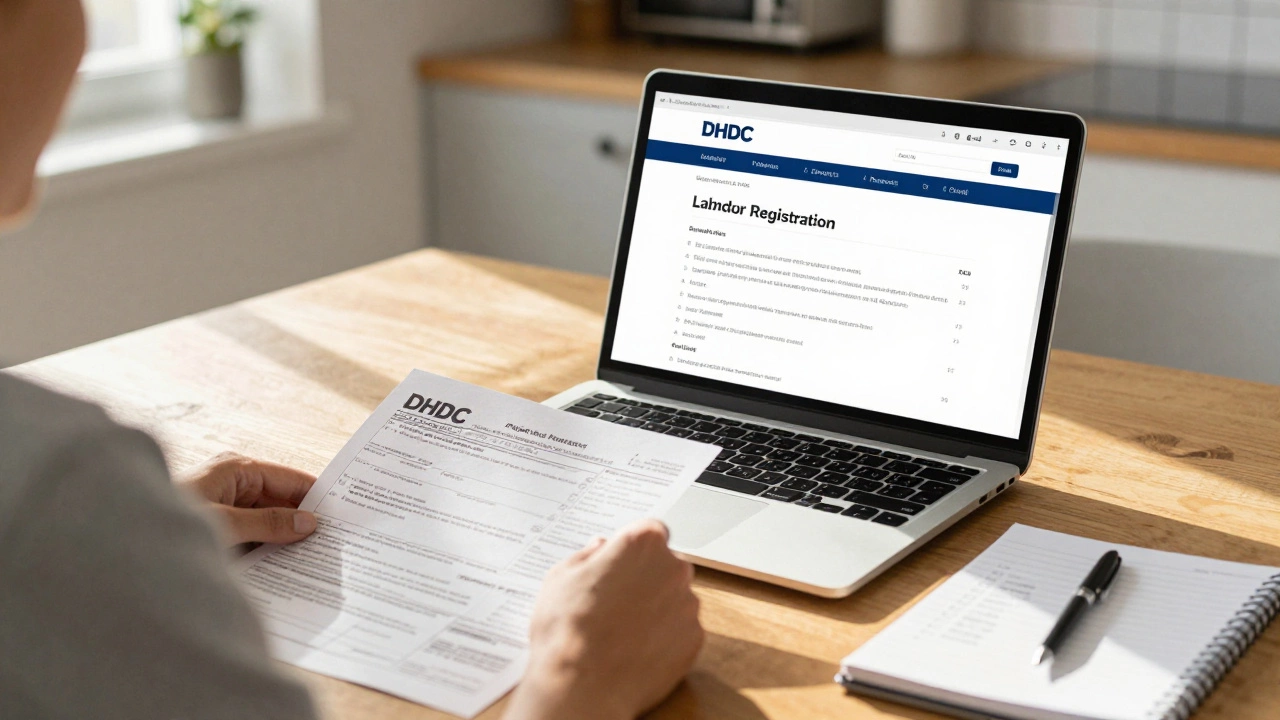
Maryland Landlord Registration Checker
Check Your Landlord Registration Requirement
Answer a few questions to determine if you're required to register as a landlord in Maryland. This tool helps you avoid fines and legal issues by confirming your registration status.
Do you own a rental property in Maryland?
Is this a residential rental property?
Do you rent to someone who isn't a family member?
Will the tenant stay for more than 30 days?
If you own a rental property in Maryland, you might be wondering: Do you have to register as a landlord? The short answer is yes - and skipping this step can cost you more than just time. It can lead to fines, legal trouble, or even the loss of your right to collect rent.
Maryland’s Landlord Registration Law Explained
In Maryland, anyone who owns and rents out residential property must register with the state. This isn’t optional. It’s a legal requirement under the Landlord Registration Program, enforced by the Maryland Department of Housing and Community Development (DHCD). The rule applies to all rental units - single-family homes, duplexes, apartments, and even basement units - if you’re collecting rent from someone who isn’t a family member.The law went into full effect in 2021 after years of debate over tenant safety and property accountability. Before that, only certain counties required registration. Now, it’s statewide. That means whether you live in Baltimore, Frederick, or a quiet town in Somerset County, if you’re renting out property, you’re required to register.
Why Does Maryland Require Landlord Registration?
You might think this is just bureaucracy. But there’s a real reason behind it. Maryland’s goal is to improve housing conditions and protect tenants from unsafe or neglectful landlords. The registration system gives the state a way to:- Track who owns rental properties
- Enforce housing codes and safety standards
- Respond faster to complaints about mold, broken heat, or illegal evictions
- Hold absentee landlords accountable
It’s not about punishing good landlords. It’s about making sure bad ones can’t hide. If a tenant reports a serious issue - like no running water or exposed wiring - authorities can quickly identify the owner and issue orders for repairs. Without registration, those owners could disappear, leaving tenants in dangerous conditions with no recourse.
How to Register as a Landlord in Maryland
Registering is straightforward - and free. You don’t pay a fee. Here’s how to do it:- Go to the Maryland DHCD website and click on the Landlord Registration portal.
- Create an account using your email and a password.
- Enter your personal information: full name, address, phone number, and email.
- List all rental properties you own in Maryland. For each, provide the physical address, number of units, and whether it’s owner-occupied.
- Submit the form. You’ll get a confirmation email and a registration number.
You’ll need your property’s tax ID number (found on your county property tax bill) and your Social Security number or EIN if you own the property through a business. If you’re using a property manager, you still register as the owner - but you can list your manager’s contact info too.
What Happens If You Don’t Register?
Not registering isn’t a minor oversight. It’s a violation of state law. Here’s what you risk:- Each unregistered property can cost you up to $500 per month in fines - and they add up fast.
- You can’t legally file an eviction case in court until you’re registered. That means if a tenant stops paying rent, you can’t take them to court until you fix your paperwork.
- Insurance companies may deny claims if they find you’re operating illegally.
- Future buyers may walk away if they discover your property isn’t registered - it’s a red flag on public records.
Some landlords think they can avoid registration by calling it a "room rental" or "short-term stay." That doesn’t work. If you’re taking money from someone who lives there for more than 30 days, it’s a rental under Maryland law. Even if you rent out one room in your own home, you still need to register.
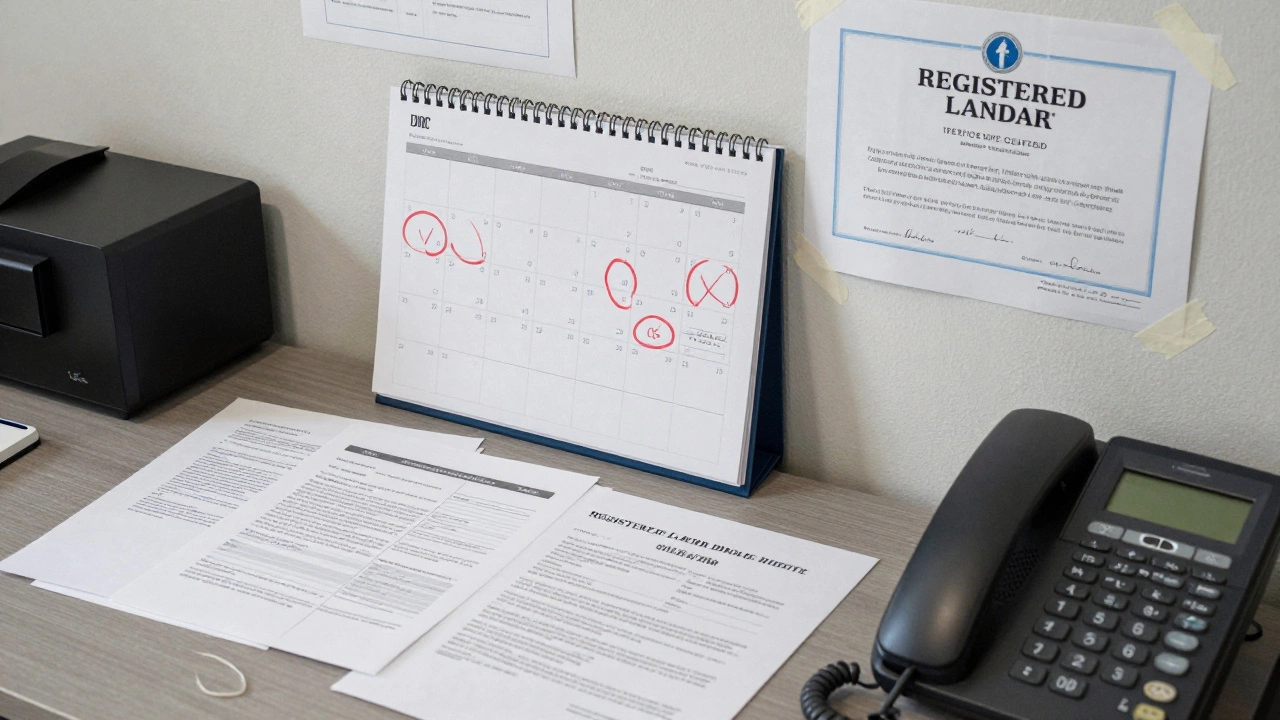
Registration Renewal and Updates
Your registration doesn’t last forever. You must renew it every year, on the anniversary of your original submission date. The state sends you a reminder email, but don’t rely on it. Set a calendar alert.You also need to update your registration within 30 days if:
- You buy or sell a rental property
- You change your name or address
- You hire or fire a property manager
- You stop renting out a unit
Failure to update can lead to penalties, even if you’re still registered. The system relies on accurate, current data. Out-of-date info defeats the whole purpose.
Landlord Registration vs. Local Licensing
Some counties and cities in Maryland have their own rules on top of the state law. Baltimore City, for example, requires landlords to get a separate Business License and pass a property inspection before renting. Montgomery County requires a rental certificate.Don’t assume state registration covers you locally. Always check with your county’s housing or licensing office. In some places, you’ll need to pay a local fee, get a certificate, and even complete a landlord training course.
What If You’re an Out-of-State Landlord?
If you live in Virginia, Pennsylvania, or even another country but own rental property in Maryland, you still have to register. The law doesn’t care where you live - it cares where the property is. Many out-of-state owners use a local agent to handle the paperwork, but the legal responsibility still falls on you.Some out-of-state landlords try to avoid registration by putting the property in a trust or LLC. That doesn’t help. The state requires the real owner - the person who controls the property - to register, no matter the legal structure.
What About Property Managers?
If you hire a property management company to handle your rentals, you still register as the owner. The company can act as your agent in communications, but the state needs to know who the ultimate owner is. You’ll list the manager’s contact info on your registration form, but you remain legally responsible.Property managers themselves don’t need to register - unless they own rental property. Then they register as landlords too.
Common Mistakes Landlords Make
Even experienced landlords slip up. Here are the most common errors:- Thinking vacation rentals are exempt - they’re not, if rented for more than 30 days.
- Believing you only need to register once - you must renew annually.
- Not updating your info after selling a property - you still owe fines until you officially remove it.
- Using a PO Box instead of a physical address - the state requires a real mailing address.
- Assuming your HOA or condo association handles it - they don’t. You’re responsible.
What You Get from Registering
It’s not all penalties and paperwork. Registering gives you real benefits:- Access to free landlord training webinars on tenant screening, lease agreements, and eviction procedures.
- Priority access to state housing grants for repairs and energy upgrades.
- Official recognition that you’re a compliant landlord - which can help when applying for loans or insurance.
- Protection from frivolous lawsuits. Courts take registered landlords more seriously.
Some banks even offer lower interest rates on investment property loans to landlords who are registered and up to date. It’s a small step that can save you money long-term.
Where to Get Help
If you’re confused, don’t guess. The Maryland DHCD offers free help:- Phone: 410-767-2367 (Monday-Friday, 8:30 a.m.-4:30 p.m.)
- Email: [email protected]
- Live chat on their website
Nonprofits like the Maryland Tenants’ Union and Legal Aid Bureau also offer free landlord consultations - even if you’re not a tenant. They’ll walk you through the form, help you avoid mistakes, and explain your rights.
Final Check: Are You Registered?
Before you do anything else, ask yourself:- Do I own any property in Maryland that I rent out?
- Have I registered with DHCD?
- Did I renew this year?
- Did I update my info after any changes?
If any answer is "no," act now. The system is online, free, and takes less than 20 minutes. Waiting won’t make it go away - and the penalties don’t wait either.
Do I have to register if I rent out a room in my own home?
Yes. If you’re charging rent to someone who isn’t a family member and they live there for more than 30 days, Maryland law treats it as a rental unit. You must register, even if it’s just one room.
Is there a fee to register as a landlord in Maryland?
No. The state does not charge a fee to register. Beware of third-party websites that claim to register you for a fee - they’re not official. Use only the Maryland DHCD website.
What if I own multiple rental properties?
You list all of them on a single registration form. You don’t need to register each one separately. But you must include every property you own in Maryland that’s rented out.
Can I register if I’m not a U.S. citizen?
Yes. Citizenship doesn’t matter. If you own rental property in Maryland, you must register. You’ll use your Social Security number or EIN, regardless of immigration status.
What happens if I sell my rental property?
You must update your registration within 30 days to remove the property. If you don’t, you’ll continue to get renewal notices and may face fines. The new owner must register in their own name.
Do I need to register for short-term rentals like Airbnb?
Only if the guest stays 30 days or longer. Short-term rentals under 30 days are exempt from state registration, but some cities like Baltimore and Annapolis have their own rules. Always check local laws.