Virginia rent prices have jumped nearly 40% since 2020. In Richmond, a one-bedroom apartment that cost $1,200 in 2020 now averages $1,680. In Northern Virginia, it’s worse - some studios hit $2,000. You’re not imagining things. Rent really is out of control. But why?
People Are Moving Here - Fast
Virginia isn’t just growing. It’s exploding. Since 2020, over 300,000 new residents have moved into the state. Many came from high-tax, high-cost states like New York, California, and Maryland. They didn’t just want a change of scenery. They wanted more space, lower taxes, and better schools. And they brought their paychecks with them.The biggest influx? Northern Virginia. Areas like Arlington, Alexandria, and Fairfax are now magnets for federal workers, tech employees, and contractors tied to defense and cybersecurity. Companies like Amazon, Microsoft, and Google have expanded offices here. With those jobs come high incomes - and high demand for housing.
But here’s the catch: the housing supply hasn’t kept up. In Fairfax County, new housing construction rose just 8% between 2020 and 2024. Meanwhile, population growth hit 14%. That gap? It’s driving rent up. More people. Same number of apartments. That’s basic economics.
There Just Aren’t Enough Apartments
Virginia’s housing shortage isn’t new - but it’s gotten worse. In 2023, the state had a deficit of more than 150,000 rental units, according to the Virginia Housing Development Authority. That number is still growing.Why? Because building new apartments is expensive and slow. In places like Arlington and Alexandria, local zoning laws make it nearly impossible to build anything taller than four stories. Some neighborhoods ban multi-family housing entirely. Even when developers want to build, they face years of delays from permits, community opposition, and environmental reviews.
Meanwhile, property taxes on rental buildings have climbed. In Richmond, tax bills for apartment complexes jumped 25% between 2021 and 2024. Landlords can’t absorb that cost. So they raise rent. Or sell the building to a private equity firm that turns it into a luxury rental. Either way, you pay more.
Landlords Are No Longer Small Owners - They’re Corporations
Ten years ago, most rentals in Virginia were owned by local families. Now? Big investors own over 30% of the state’s rental units. Private equity firms like Blackstone, The Blackstone Group, and Invitation Homes have bought up thousands of homes and apartments across the state.These companies don’t care about community. They care about returns. They buy properties in bulk, renovate them slightly, and rent them at premium rates. In Chesapeake, a three-bedroom home bought for $210,000 in 2021 now rents for $2,800 a month. That’s a 70% rent increase in just three years.
And they’re not just buying older homes. They’re buying new construction too. Developers build apartments knowing they’ll sell them to these firms right after completion. It’s a cycle: build for investors → rent to tenants → profit. No one’s building for people who make $50,000 a year.
Wages Aren’t Keeping Up
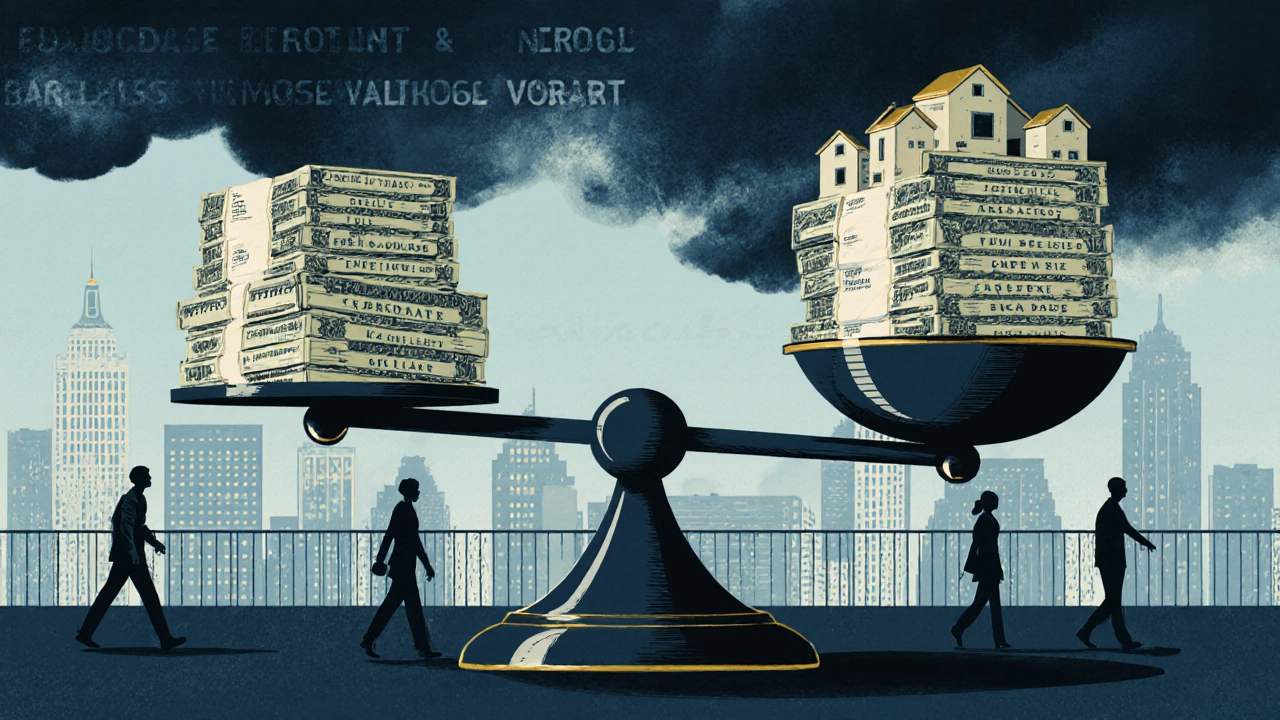
You might think, “If rent is up, wages must be too.” Not in Virginia. Median rent has jumped 38% since 2020. Median income? Up just 14%.Think about it: a nurse in Roanoke makes $58,000 a year. That’s $4,800 a month before taxes. Rent for a one-bedroom? $1,400. That’s 29% of income - above the 30% affordability threshold. A teacher in Lynchburg makes $47,000. Rent for a two-bedroom? $1,550. That’s 39% of take-home pay.
Meanwhile, fast food workers, retail clerks, and home health aides - the people who keep the state running - earn $15 to $18 an hour. In Virginia Beach, a studio apartment costs $1,300. That’s more than half their paycheck after taxes. No wonder so many are doubling up, moving to cheaper states, or sleeping in their cars.
Government Policies Are Making It Worse
Virginia’s state government talks about affordable housing. But its policies often do the opposite.Local governments control zoning. And most cities and counties still require minimum lot sizes, single-family-only zones, and parking minimums. In Norfolk, you can’t build an apartment building unless you provide one parking space per unit. That adds $30,000 to $50,000 per unit in construction cost. Who pays? You do - in rent.
Some cities have tried to fix this. In 2023, Arlington passed a law allowing duplexes and triplexes on every lot. But only 12% of the city’s land was affected. That’s not enough to move the needle.
And then there’s Section 8. The federal housing voucher program is underfunded. In Virginia, only 1 in 4 eligible families gets a voucher. The waiting list in Richmond is over five years long. That means the people who need help the most? They’re left behind.
What’s Next? It’s Not Getting Better Soon
Unless something changes, rent will keep rising. Developers won’t build more affordable units unless they can make money. And they can’t make money if they’re forced to charge $1,200 for a one-bedroom in a city where the average rent is $1,900.Some cities are starting to experiment. Roanoke is allowing tiny homes and ADUs (accessory dwelling units) on single-family lots. That’s a step. But it’s slow. And it won’t fix the core problem: too many people, too few homes, and rules that protect the status quo.
For now, renters in Virginia are stuck. You can move to a cheaper county - but then your commute is two hours. You can live with roommates - but that’s not a long-term solution. You can save up and buy - but with mortgage rates at 6.5%, even that’s out of reach for most.
The truth? Rent in Virginia isn’t high because of one thing. It’s high because of a perfect storm: mass migration, broken zoning, corporate landlords, stagnant wages, and government inaction. Fixing it won’t be easy. But pretending it’s just a temporary spike? That’s what got us here.
Why is rent higher in Northern Virginia than in other parts of the state?
Northern Virginia has the highest concentration of high-paying jobs tied to federal agencies, defense contractors, and tech companies. That drives demand. At the same time, strict zoning laws limit new construction. The result? A huge imbalance between supply and demand. In Arlington, for example, there are more than 2.5 renters for every available unit.
Are rent control laws in Virginia helping?
No. Virginia has a state law that bans rent control in all cities and counties. Even if a city wanted to cap rent increases, it’s illegal. That means landlords can raise rent by 10%, 20%, or even 30% in a single year - as long as they give proper notice. There’s no legal limit.
Can I get help paying rent in Virginia?
Possibly. The Virginia Rent Relief Program offers emergency aid to renters behind on payments, but funding is limited and applications close when money runs out. Section 8 vouchers are available, but the waitlist is years long in most counties. Local nonprofits and faith-based groups sometimes offer short-term help, but they can’t replace a long-term solution.
Is it cheaper to live in Virginia or Maryland?
It depends. Maryland has higher property taxes and income taxes, but some areas like Prince George’s County have lower rent than Northern Virginia. However, the cost of commuting from Maryland into Virginia often cancels out any savings. In practice, rent in Northern Virginia is still among the highest in the region, even compared to parts of Maryland.
Why don’t more people move out of Virginia if rent is so high?
Many can’t. Jobs are tied to the region - especially in defense, healthcare, and government. Moving means starting over. Schools are better here. Public transit is better here. And for people who’ve lived here for years, leaving feels like giving up. The real issue isn’t that people won’t leave - it’s that they can’t afford to leave without losing everything else.
What’s the most affordable place to rent in Virginia right now?
As of 2025, the most affordable areas are in Southwest Virginia: Wytheville, Galax, and Martinsville. A one-bedroom there averages $850 to $950. But jobs are scarce. Services are limited. And the commute to major cities is 3+ hours. It’s affordable - but not practical for most.
What Can Be Done?
The fix isn’t complicated - it’s just politically hard. We need to allow more housing where people want to live. That means ending single-family-only zoning. It means building apartments near transit, schools, and jobs. It means cutting red tape for developers who build affordable units.It also means funding housing vouchers so no family has to wait five years for help. And it means stopping the flood of corporate investors buying up homes and turning them into profit machines.
Until then, rent in Virginia will keep rising. And the people who make the state run - teachers, nurses, cashiers, mechanics - will keep getting pushed out. The system isn’t broken. It’s working exactly as designed. For someone else.