Villa or Townhouse Decision Guide
Take the Quiz
Answer these questions to find which home type best matches your lifestyle and priorities.
When you're looking at homes for sale, especially in places like Adelaide, you'll often see two names pop up: villa and townhouse. At first glance, they might look similar-both are attached homes, both often come with a small yard, and both are popular with first-time buyers and downsizers. But they’re not the same. Knowing the real difference can save you from a costly mistake, especially if you’re planning to live in it for years or resell later.
What Exactly Is a Villa?
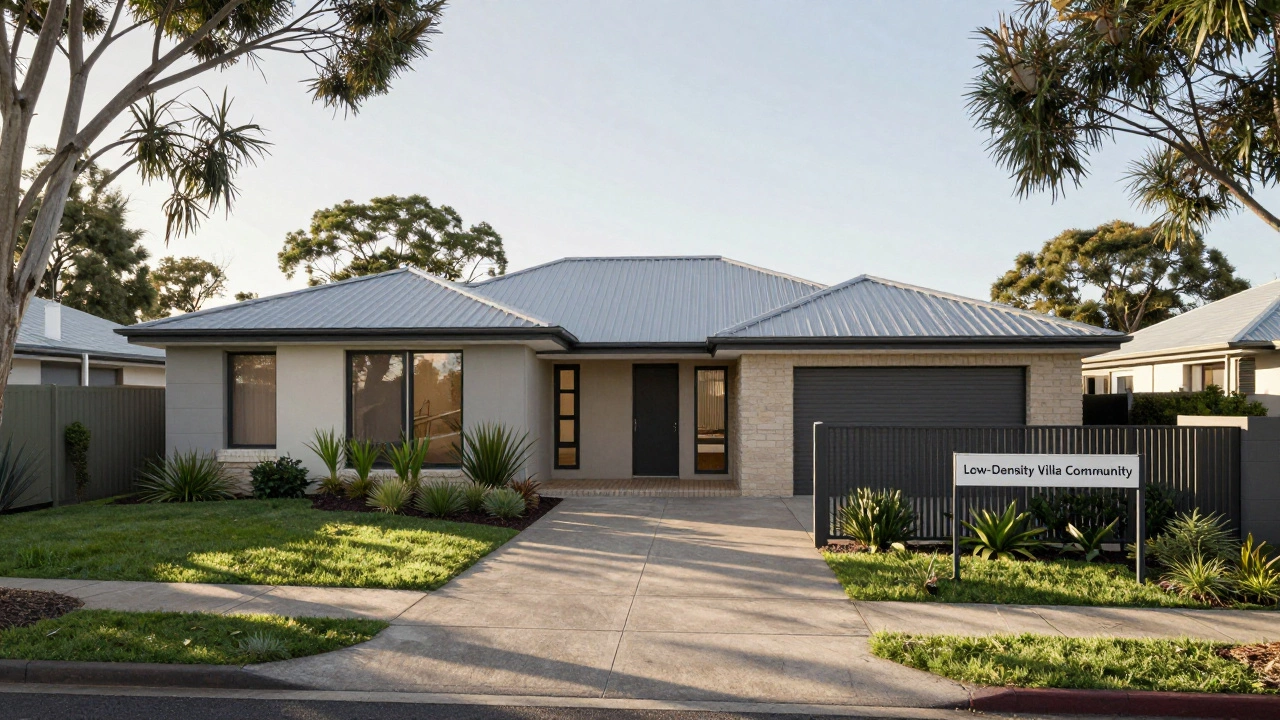
A villa, in modern Australian real estate, is usually a single-level, detached or semi-detached home built on its own titled land. It’s not a house on a large block, but it’s also not sharing walls with neighbors on both sides. Think of it like a small standalone house with a private entrance, your own driveway, and usually a backyard you can call your own. You own the land beneath it, and you’re responsible for everything from the roof to the fence line.
Most villas built in the last 15 years in Australia are part of a gated community or a small group of 4 to 12 units. These are often called low-density villa developments. They usually have shared amenities like a pool, gym, or BBQ area, but each unit has its own title. That means you can renovate your kitchen, add a deck, or even build a shed without needing approval from a body corporate-unless it affects structural elements or the exterior appearance.
Because villas are often built on larger lots than townhouses, they tend to have more outdoor space. You might get 300 to 500 square meters of land, sometimes even more. That’s enough for a decent garden, a vegetable patch, or room for kids to play without stepping onto someone else’s property.
What Exactly Is a Townhouse?
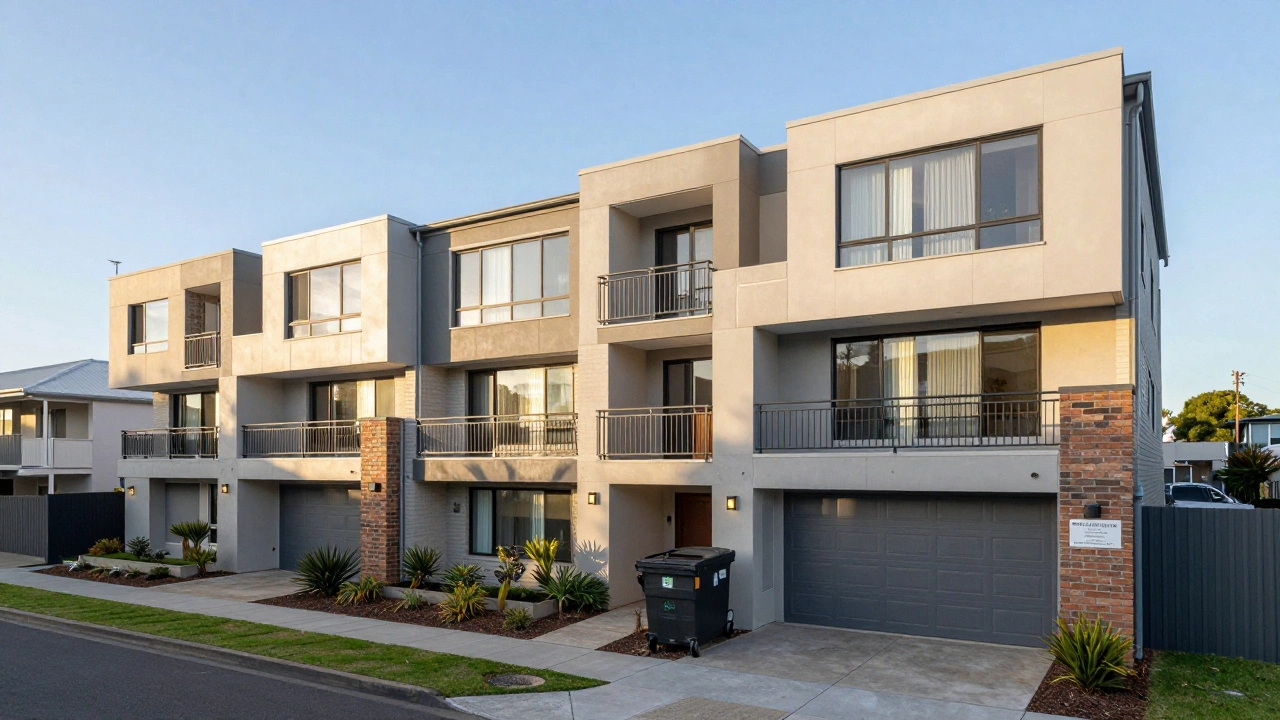
A townhouse is a multi-level home that shares one or two walls with neighboring units. They’re usually built in rows of 4 to 20 units, stacked vertically. You’ll typically find two or three floors: a ground floor with living areas, a middle floor with bedrooms, and sometimes a rooftop terrace or attic space. Unlike villas, townhouses are almost always part of a strata title scheme. That means you own your unit, but you also share ownership of common areas like driveways, gardens, and building exteriors with everyone else in the complex.
Because of this shared ownership, you’ll pay quarterly strata fees. These fees cover things like building insurance, gardening, rubbish collection, elevator maintenance (if applicable), and repairs to shared walls or roofs. In Adelaide, strata fees for a townhouse usually range from $1,200 to $2,500 a year, depending on the age and amenities of the complex.
Townhouses are often built in higher-density areas-near train stations, shopping strips, or schools. They’re designed for convenience. You trade outdoor space for location. A typical townhouse lot might be just 100 to 200 square meters. You might get a small courtyard or a rooftop balcony, but don’t expect a backyard where you can grow tomatoes or have a weekend BBQ without worrying about noise complaints.
Ownership: Freehold vs Strata Title
This is one of the biggest differences, and it affects everything from renovation rights to resale value.
Villas are almost always sold under freehold title. That means you own the land and the building outright. You can do what you want with it, as long as you follow local council rules. Need to knock down a wall? Go ahead. Want to install solar panels? No one can stop you. Want to rent it out? Easy. Freehold gives you full control.
Townhouses are almost always sold under strata title. You own your unit, but not the land beneath it. The land and common areas are owned collectively. This means you need approval from the strata committee for big changes-like painting your front door a bright red, adding an external air conditioning unit, or even replacing your fence. Some strata schemes are very relaxed. Others are strict, especially in newer developments that want to maintain a uniform look.
Strata title also means you’re part of a group decision-making system. If the roof needs replacing, everyone pays. If someone in the complex is noisy and the committee doesn’t act, you can’t force them to do anything. It’s a trade-off: less control, but less responsibility for major repairs.
Costs: Upfront and Ongoing
On paper, townhouses often look cheaper. In Adelaide, a 3-bedroom townhouse might sell for $650,000, while a similar-sized villa could be $780,000. But that’s only part of the story.
Villas usually cost more upfront because of the land. But they rarely have ongoing fees. You pay for your own gardening, your own repairs, your own insurance. That’s fine if you like doing things yourself. But if you’re retired or travel often, those costs can pile up.
Townhouses have strata fees, which are predictable but not optional. And they can rise. In the last five years, strata fees in Adelaide have increased by an average of 4% per year. Some complexes have raised fees by 10% in a single year after a major repair-like replacing the entire roof or fixing leaking balconies.
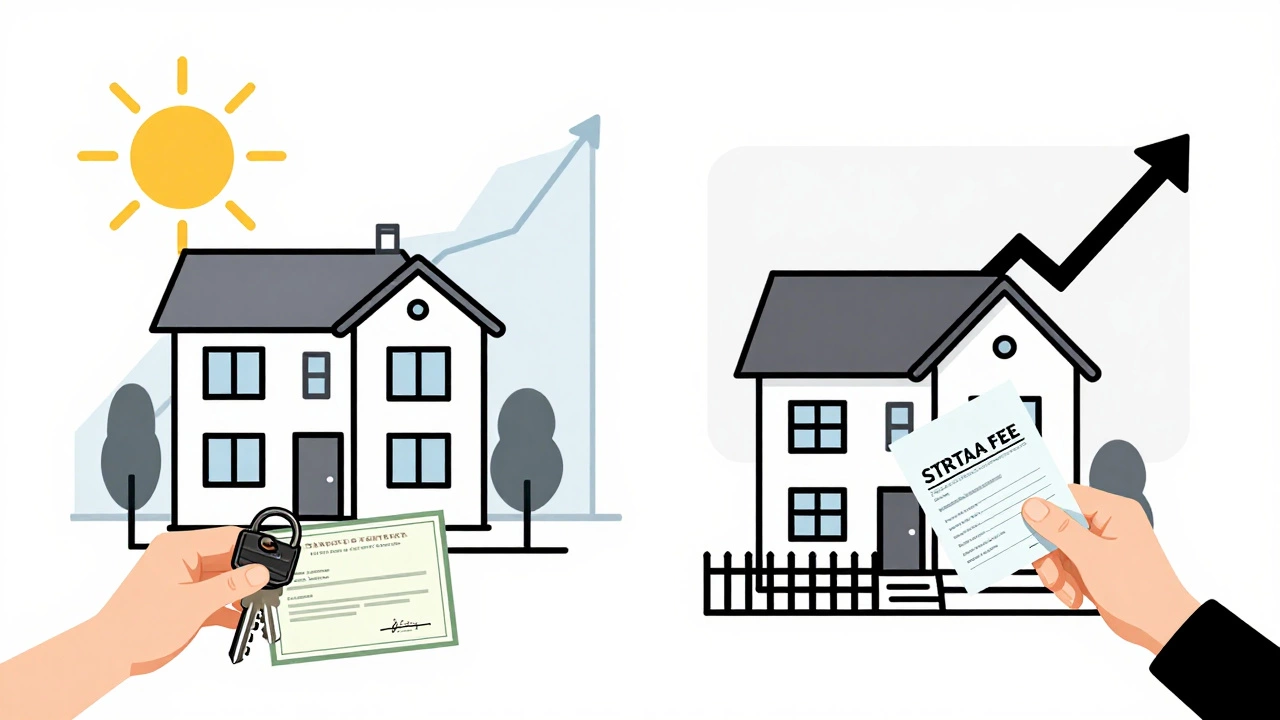
Also, villas tend to hold their value better over time. Why? Because land is finite. When you own a villa, you own the land, and land always increases in value. Townhouses are more like apartments-they’re tied to the condition of the building. If the complex ages poorly, or if the strata fund is underfunded, your resale value can drop faster than you expect.
Privacy and Noise
If you’ve ever lived in a townhouse, you know the sounds: footsteps from above, a TV through the wall, a door slamming next door. Even with double-glazed windows and thick walls, you’ll hear more than you expect. Most townhouses have shared walls, and sometimes even shared ceilings or floors.
Villas, on the other hand, are mostly detached. Even if they’re close together, they usually have a gap of at least 1.5 meters between units. That means you’re not sharing walls. You might hear a lawnmower next door, but not someone’s shower. That’s a big deal if you work nights, have young kids, or just value quiet.
Some newer villa developments try to mimic townhouse density by building units right next to each other. Always check the floor plan. If the units share a wall, it’s not a true villa-it’s a townhouse in disguise.
Who Is Each Type Best For?
Here’s who usually ends up happy with each option:
- Villas are best for families who want space, retirees who want low maintenance without giving up independence, and investors who want long-term value. They’re ideal if you plan to stay put for 10+ years.
- Townhouses are best for first-time buyers on a budget, young professionals who commute, or people who want to live near the city without the high cost of an apartment. They’re great if you don’t mind paying fees for upkeep and want to avoid gardening or exterior repairs.
If you’re unsure, ask yourself: Do you want to own your land? Do you mind paying monthly fees? Do you care about noise from neighbors? Your answers will point you in the right direction.
What to Watch Out For
Here are three red flags to check before buying either:
- Strata minutes (for townhouses): Request the last 12 months of strata meeting minutes. Look for mentions of repairs, disputes, or special levies. If there’s a $50,000 roof repair planned next year, you’ll pay your share.
- Land size (for villas): Some developers label small, attached homes as "villas" to make them sound more premium. Measure the lot. If it’s under 250 square meters and shares a wall, it’s likely a townhouse.
- Future development: Check the local council’s zoning map. Is the land around the property slated for high-density housing? That could mean more traffic, less privacy, and lower future value.
Always get a building inspection, even for new builds. And if you’re buying off-the-plan, make sure the final design matches the sales brochure. Developers often cut corners on outdoor space or insulation.
The Bottom Line
Villas give you freedom, land, and quiet. Townhouses give you convenience, lower upfront cost, and less maintenance. Neither is "better." But if you’re looking at homes for sale in Adelaide right now, the market is shifting. More villas are being built in outer suburbs like Modbury or Gawler, while townhouses are popping up near train lines in the inner ring.
Choose based on how you live-not how you think you should live. If you hate mowing lawns but love having your own yard, go for a villa. If you’d rather spend your weekends at the café than fixing a leaky gutter, a townhouse might be smarter. And never buy based on looks alone. The title type, the strata rules, and the land size matter more than the color of the bricks.
Can a villa have more than one level?
Yes, a villa can have two or even three levels. What defines a villa isn’t the number of floors, but the ownership structure and whether it’s detached or semi-detached. A two-story villa on its own titled land is still a villa. What matters is that it doesn’t share walls with multiple neighbors and isn’t part of a strata scheme.
Are townhouses always cheaper than villas?
Not always. In high-demand areas like Adelaide’s inner suburbs, a brand-new, luxury townhouse with premium finishes and a rooftop terrace can cost more than a basic, older villa in a quieter suburb. But generally, townhouses have a lower price tag because they’re built on smaller lots and include shared maintenance costs. The real cost difference shows up over time with strata fees and potential future levies.
Can I rent out a villa or townhouse?
Yes, you can rent out either. With a villa under freehold title, you have full control-you can rent it out without asking anyone. With a townhouse, you still own your unit, so renting is allowed. But some strata schemes have rules about short-term rentals (like Airbnb) or limit the number of rentals in the complex. Always check the strata by-laws before you rent.
Do villas appreciate in value faster than townhouses?
Generally, yes. Because you own the land, villas tend to hold and grow in value better over time. Townhouses, like apartments, are more affected by the condition of the building and the health of the strata fund. If the complex is aging or poorly managed, its value can stagnate or even drop. Land, however, doesn’t depreciate.
What’s the difference between a villa and a unit?
A unit is typically part of a multi-story apartment building with shared elevators and common areas. Units are almost always strata-titled and have little to no outdoor space. A villa, even if multi-level, is usually low-rise, has its own entrance, and often includes a private yard. Units feel more like apartments; villas feel like small houses.