Adverse Possession Calculator
Adverse Possession Calculator
Calculate how much time remains until you can claim land through adverse possession in your Australian state.
Time remaining until claim period ends
Enter your details to calculate
If you’ve ever walked past an abandoned house or a patch of unused land and wondered who owns it, you’re not alone. In Australia, there’s a legal loophole - or maybe a safety net - called the 20-year rule. It doesn’t sound like much, but this rule can quietly change who owns land, even if the original owner never signed a deed or gave permission. It’s not about buying property. It’s about using it. And if you’ve been using it for two decades, the law might just hand it to you.
What Exactly Is the 20-Year Rule?
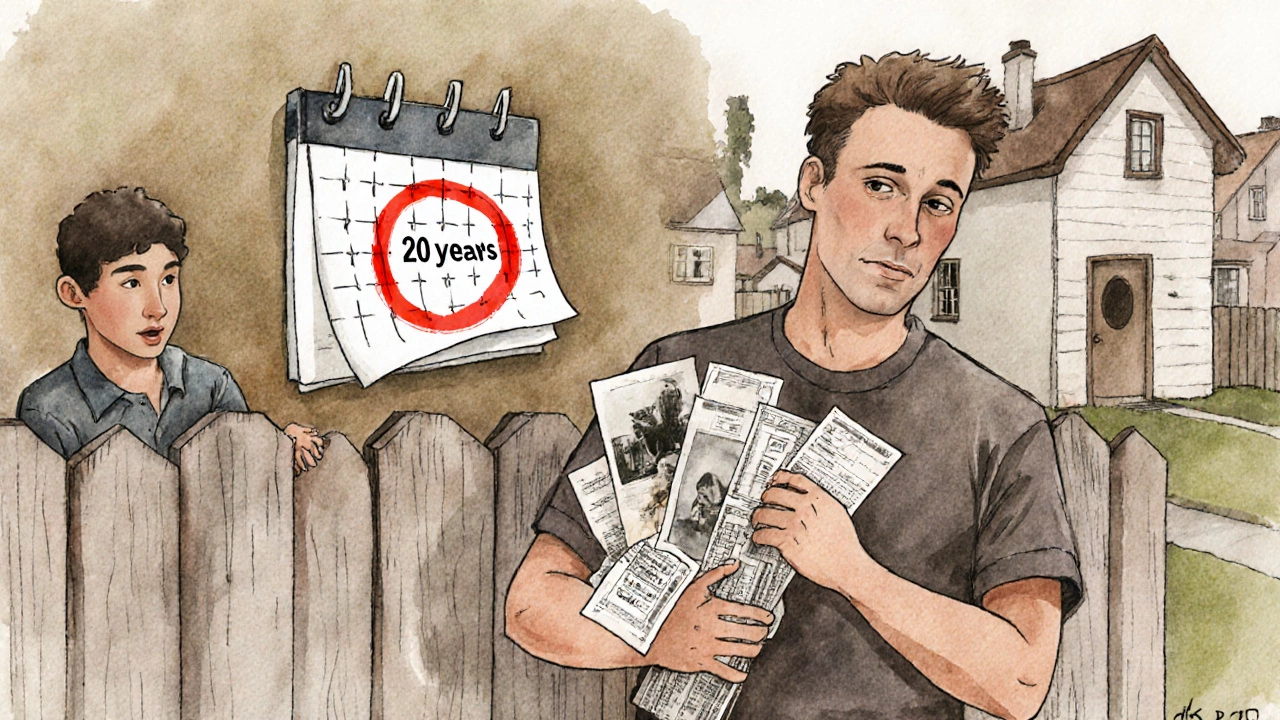
The 20-year rule is Australia’s version of adverse possession. It’s a legal principle that allows someone who isn’t the registered owner to claim ownership of land if they’ve occupied it openly, continuously, and without permission for at least 20 years. This isn’t a loophole for trespassers. It’s a tool designed to prevent land from sitting idle while people who actually use it are locked out of ownership.
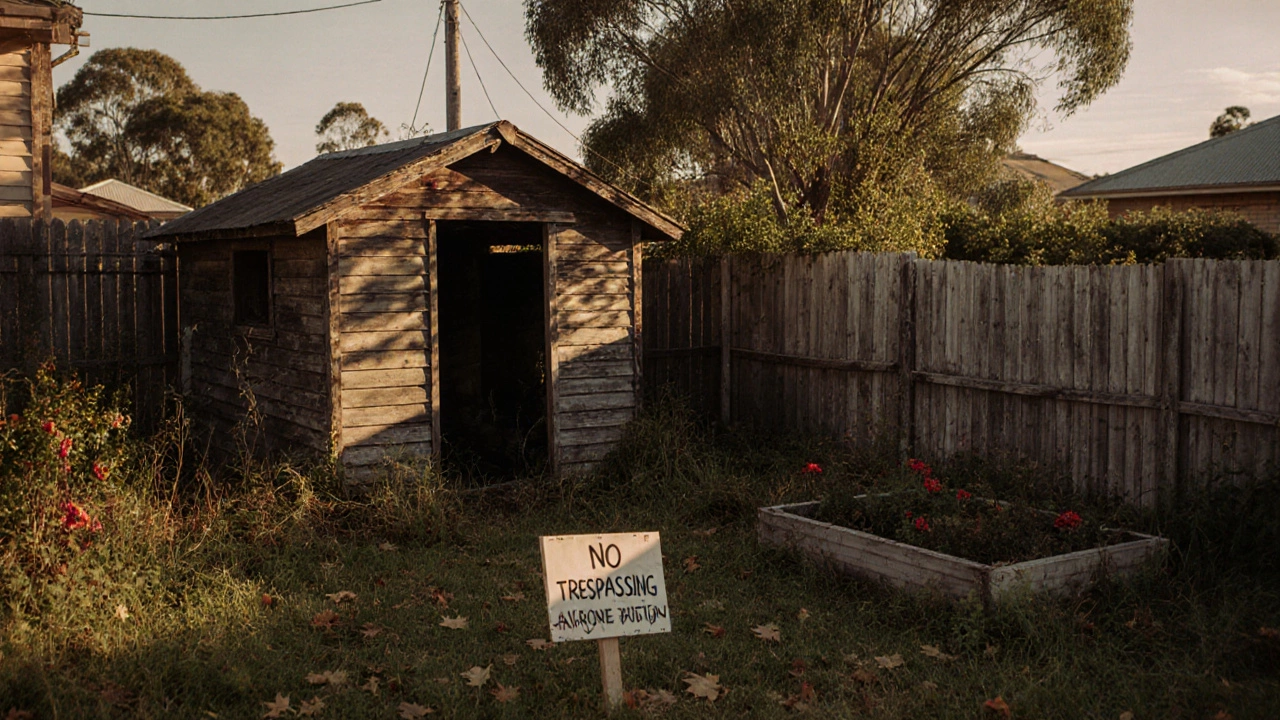
Here’s how it works in practice: Imagine your neighbor’s fence has been on your land for 25 years. You never said anything. They’ve mowed that strip, planted flowers, even built a small shed. No one ever challenged them. After 20 years, they can apply to have the land officially transferred into their name. You lose ownership - not because they stole it, but because you ignored it.
This rule applies to both rural and urban land. It’s been used in South Australia to settle disputes over backyards, driveways, and even small patches of bushland. Courts don’t care about intent. They care about facts: Did the person use the land like they owned it? Did the real owner do nothing?
How Does It Work in Practice?
To claim land under the 20-year rule, you need to prove five things:
- Actual possession - You’ve physically used the land. Not just walked through it. You’ve fenced it, built on it, farmed it, or maintained it.
- Exclusive possession - You treated it as your own. You didn’t share it with the public or the real owner.
- Open and notorious use - Your use wasn’t hidden. Neighbors saw it. The owner could’ve seen it. You didn’t sneak around.
- Without permission - You didn’t have a lease, a license, or verbal consent. If you paid rent or asked for permission, this rule doesn’t apply.
- Continuous for 20 years - No breaks. No gaps. Even if you were away for six months, the clock resets unless you can prove someone else was using it on your behalf.
It’s not enough to say, “I’ve been here a long time.” You need documents - photos, council records, utility bills, witness statements. In one case in Adelaide, a woman claimed a 12-meter strip of land behind her house after 23 years. She showed photos from 2002 showing her planting trees. She had receipts for fencing. Her neighbor’s old letters even mentioned the fence “had always been there.” The court ruled in her favor.
Who Can Use This Rule?
It’s not just squatters or criminals. People who accidentally built over a boundary line often use this rule. A common scenario: You build a garage. Later, a survey shows it’s 1.5 meters over your neighbor’s property. You never moved it. You’ve used it for 20 years. You can apply to claim that extra land - even if your neighbor didn’t notice until now.
It also applies to families. A child inherits a block of land but never lives on it. A relative moves in, cares for the property, pays rates, and maintains it for 20 years. When the original owner passes away, the relative can claim it - if they can prove continuous use.
Even businesses use it. A shop owner in Port Adelaide extended their parking area onto a vacant lot next door. They painted lines, installed bollards, and never paid rent. After 21 years, they applied for ownership. The council had no records of ownership. The court approved it.
What Happens to the Original Owner?
The original owner doesn’t get a notice. There’s no letter. No warning. The clock starts ticking the moment someone begins using the land without permission - and keeps ticking unless the owner takes action.
If you’re the owner, and you know someone is using your land, you need to act before 20 years pass. A simple letter saying, “You’re using my land without permission - stop,” can reset the clock. So can installing a fence, putting up a sign, or even just visiting regularly and documenting it.
Many people don’t realize they’ve lost land until they try to sell it. A buyer’s solicitor runs a title search and finds a claim of adverse possession. Suddenly, part of your property isn’t yours anymore. That’s why checking your property boundaries every few years matters.
Is This Legal in All of Australia?
Yes - but with variations. The 20-year rule is part of the Real Property Act 1886 in South Australia, and similar laws exist in other states, though the time period differs.
- South Australia: 20 years
- New South Wales: 12 years for land not owned by the Crown
- Victoria: 15 years
- Queensland: 12 years
- Western Australia: 12 years
- Tasmania: 12 years
- ACT: 12 years
- Northern Territory: 12 years
So if you’re in NSW or Victoria, the clock ticks faster. But in SA, you’ve got the full 20 years. That’s why this rule matters most here.
Also, the Crown (government land) is protected. You can’t claim public parks, roads, or Crown reserves. Only private land.
What About Land with a Mortgage or Loan?
If the land is mortgaged, the bank still owns the title until the loan is paid. Adverse possession claims can still be made, but the bank must be notified. Banks usually fight these claims hard. If you’re trying to claim land with a mortgage, you’ll need legal help - and even then, success is rare.
But if the mortgage is paid off and the owner disappeared - maybe they passed away and no one claimed the estate - then the 20-year rule becomes a real path to ownership.
Common Mistakes People Make
People think if they’ve lived somewhere for 20 years, they own it. That’s not true. You have to prove you used the land as if you owned it - and the real owner did nothing.
Here are the top three mistakes:
- Thinking “I’ve been here a long time” is enough - Without proof of exclusive, open use, your claim fails.
- Not acting fast enough - If you’re the owner and you notice someone using your land, wait too long, and you lose it.
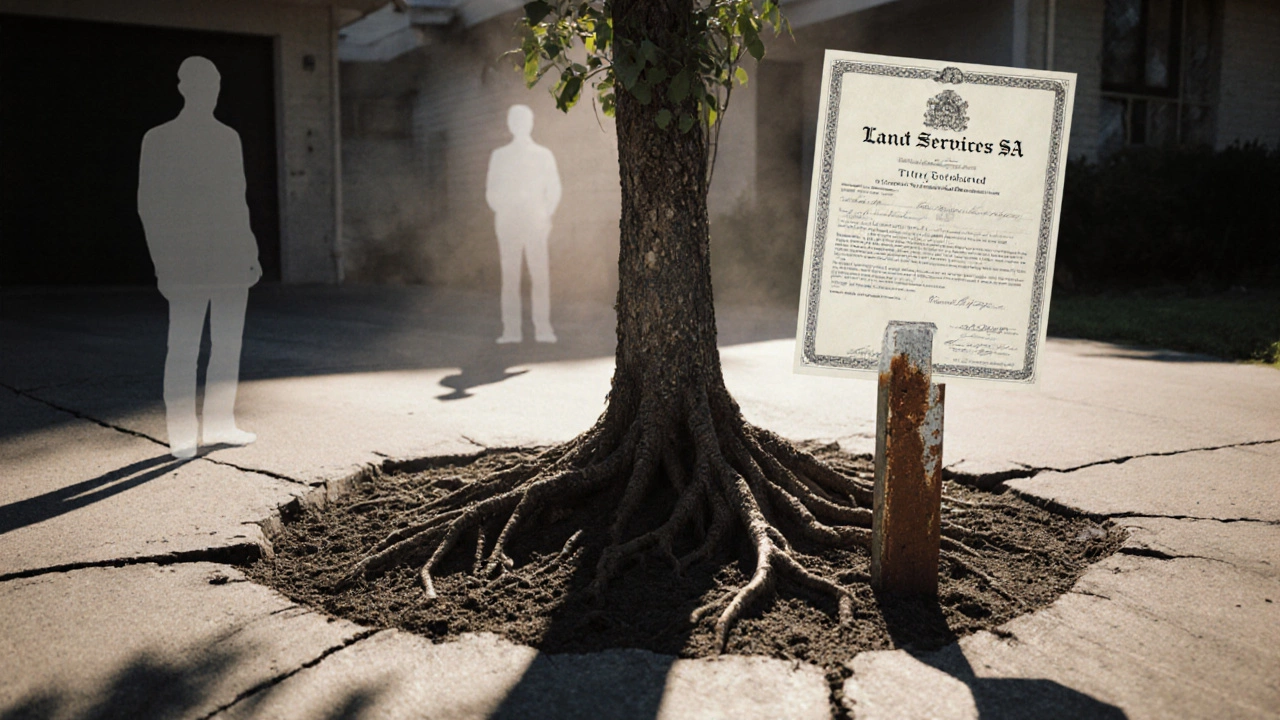
- Assuming it’s automatic - You must apply to the Land Services SA. It’s not a free-for-all. There’s a form, a fee, and a legal process.
One man in Murray Bridge tried to claim a neighbor’s driveway after 18 years. He didn’t have photos. He didn’t pay rates. He just said, “I’ve always parked there.” The application was rejected. He lost.
How to Protect Your Land
If you own land - even a small strip - here’s what to do:
- Check your title deed and survey plan every 5 years.
- Take photos of your boundaries every year.
- If someone is using your land, send a written notice - even a text message counts as proof you objected.
- Don’t let fences, sheds, or gardens go unchallenged for more than 5 years.
- If you’re unsure, get a boundary survey. It costs a few hundred dollars. Losing part of your property costs far more.
Many people don’t realize how easy it is to lose land. A neighbor’s fence moves. A tree grows over the line. A shed gets built. Silence = surrender.
What Happens After You Win?
If your claim is approved, Land Services SA will issue a new title in your name. The old owner’s name is removed. You get full legal ownership. You can sell it, mortgage it, or leave it in your will.
But it’s not instant. The process takes 6 to 12 months. You’ll need a solicitor. You’ll need to publish a notice in the newspaper. The original owner (if they’re alive) can object. If they do, it goes to court.
Most claims settle before court. The original owner might accept a small payment to walk away. That’s why it’s smart to get legal advice early - whether you’re claiming land or defending it.
Final Thought: Ownership Isn’t Just About Paper
The 20-year rule isn’t about rewarding trespassers. It’s about recognizing that land that’s cared for, used, and maintained deserves to belong to the person who’s been taking responsibility for it. The law assumes that if you don’t care for your property, someone else will - and they should be allowed to own it.
That’s why this rule still exists. It’s not outdated. It’s practical. But it’s also dangerous if you ignore it.
If you’ve been using land that’s not on your title - start documenting it now. If you own land and someone else is using it - speak up before it’s too late.