T2 vs 2BHK Suitability Calculator
Find Your Ideal Apartment Type
Answer these questions to determine if a T2 or 2BHK apartment suits your needs better.
Your Ideal Apartment
Key Factors
- ✔
- ✔
When you're searching for a new place to live, you might come across listings labeled T2 apartment-especially in Europe, parts of Asia, or even in Australian cities with international tenants. If you're used to seeing "2BHK" or "two-bedroom apartment," a T2 might confuse you. So what exactly is a T2 apartment? It’s not a secret code or a new tech gadget. It’s just a simple way to describe the number of rooms in a unit, and it’s widely used across many countries.
What Does T2 Stand For?
T2 comes from the French term "T2", which stands for "Type 2". The "T" means Type, and the number tells you how many main living rooms the apartment has-not including the kitchen, bathroom, or hallway. So a T2 apartment has two main rooms: typically one bedroom and one living room.
Wait-that sounds like a one-bedroom apartment, right? But here’s the catch: in many places, the living room is counted as a room even if it’s small. So a T2 usually means one bedroom plus a separate living area. That’s why it’s often the same as a 2BHK (Bedroom, Hall, Kitchen) in India or a one-bedroom plus den in the U.S.
The kitchen is never counted as a "room" in this system. Neither are bathrooms, balconies, or storage closets. Only habitable spaces meant for living or sleeping count. That’s why a T2 can sometimes feel bigger than it looks-it’s not about square footage, it’s about how many rooms are separated by walls.
What’s Inside a Typical T2 Apartment?
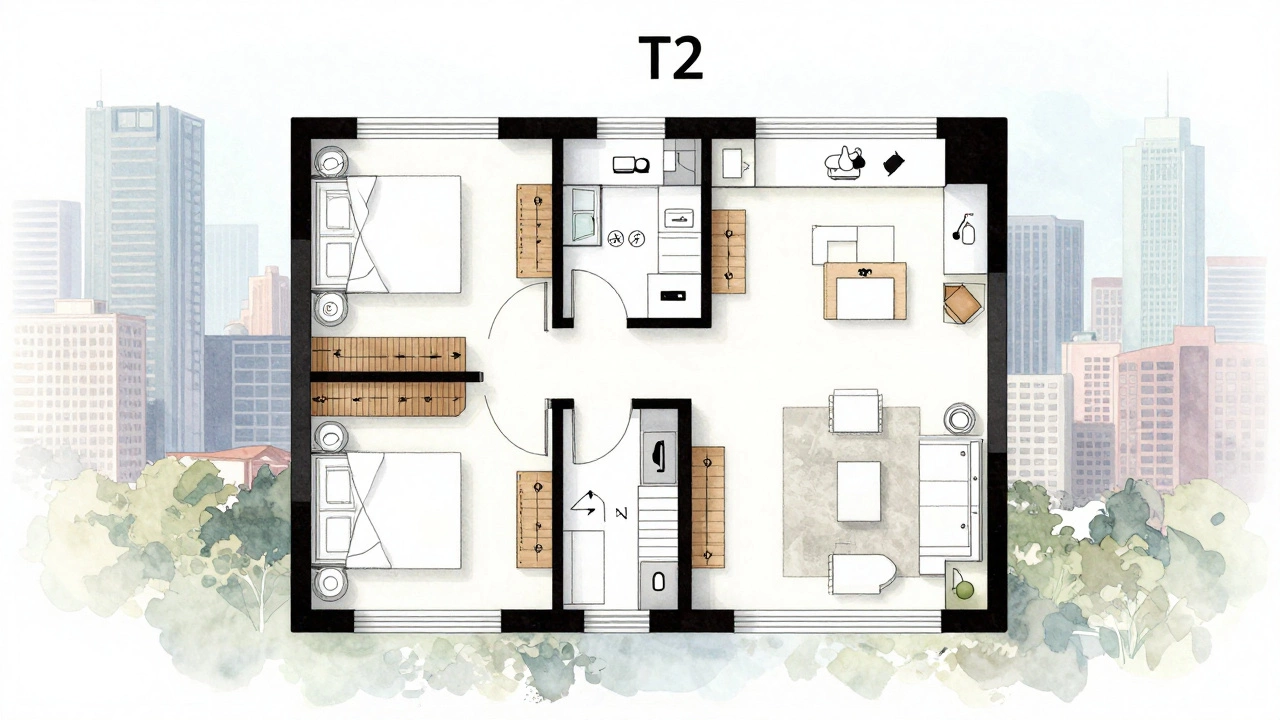
A standard T2 apartment includes:
- One bedroom (usually 10-14 square meters)
- One living room (15-25 square meters, sometimes open-plan)
- A separate kitchen (could be a kitchenette or full kitchen)
- One bathroom
- A hallway or entryway
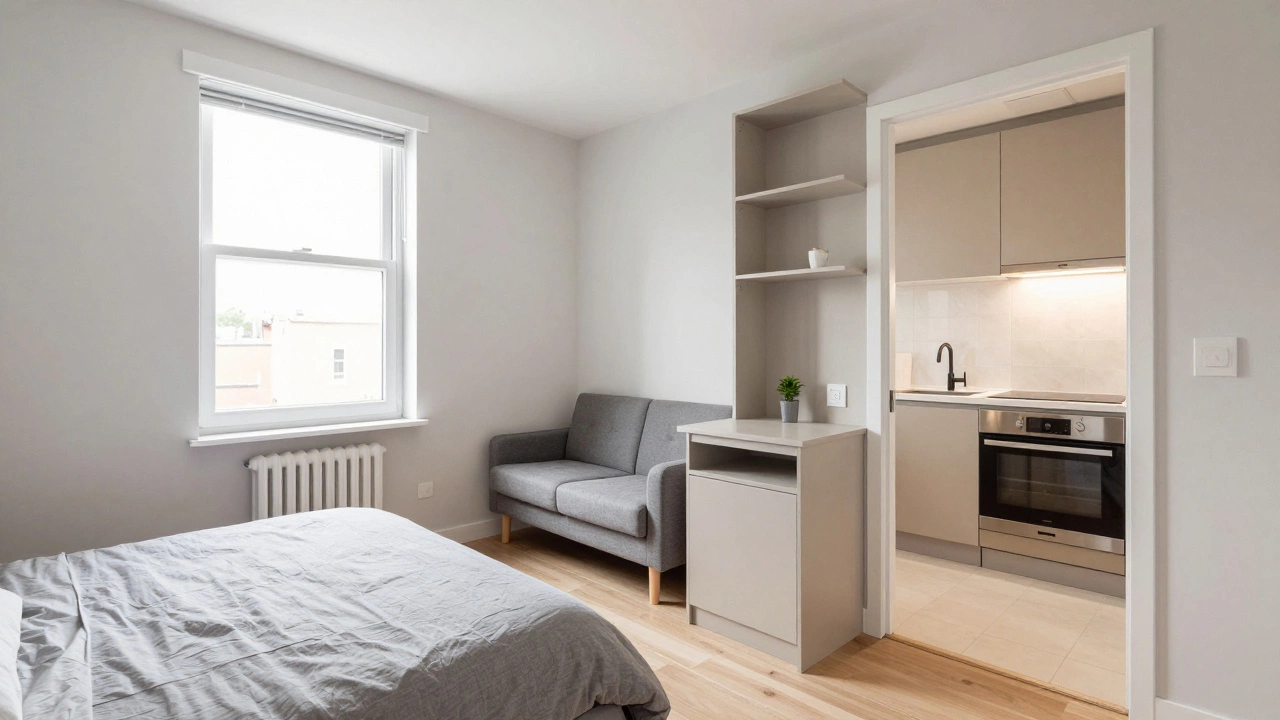
In older buildings, the kitchen might be tucked away in a corner, and the living room might double as a dining area. In newer builds, especially in cities like Paris, Lisbon, or Sydney, T2 apartments often have open-plan living areas with a small, defined bedroom. Some even include a small balcony or a niche that can work as a home office.
Don’t assume a T2 is tiny. In cities where space is expensive, architects design these units to maximize function. A well-designed T2 can feel spacious, even if it’s only 50-60 square meters total. The key is smart layout-not size.
T2 vs. 2BHK: What’s the Difference?
This is where people get confused. A 2BHK apartment means two bedrooms, one hall (living room), and one kitchen. That’s two sleeping spaces. A T2 has only one bedroom. So they’re not the same.
Here’s a quick comparison:
| Feature | T2 Apartment | 2BHK Apartment |
|---|---|---|
| Bedrooms | 1 | 2 |
| Living Room | 1 | 1 |
| Kitchen | 1 | 1 |
| Bathrooms | Usually 1 | Usually 1 or 2 |
| Total Rooms (counted) | 2 | 3 |
| Typical Size | 50-70 m² | 70-100 m² |
| Best For | Singles, couples, remote workers | Families, roommates, multi-generational households |
If you’re looking at listings from India or Southeast Asia and see "2BHK," don’t assume it’s the same as a T2. You’ll end up renting a much larger-and likely more expensive-place than you expected.
Where Are T2 Apartments Common?
T2 apartments are standard in countries that use the French room-counting system:
- France (where the term originated)
- Portugal
- Spain
- Italy
- Belgium
- Switzerland
- Parts of Eastern Europe
- Some international real estate markets like Australia and Canada, especially in areas with European expats or high-end rentals
In Australia, you’ll mostly see T2 in cities like Melbourne, Sydney, and Adelaide where international tenants or investors are active. You might find T2 listings in boutique apartment buildings or older heritage conversions. It’s not common in mainstream Australian ads-but if you’re browsing international platforms like Airbnb, PropertyGuru, or Nestpick, you’ll see it often.
Who Is a T2 Apartment Best For?
T2 apartments aren’t for everyone. But they’re perfect for specific lifestyles:
- Singles who want privacy but don’t need a big space
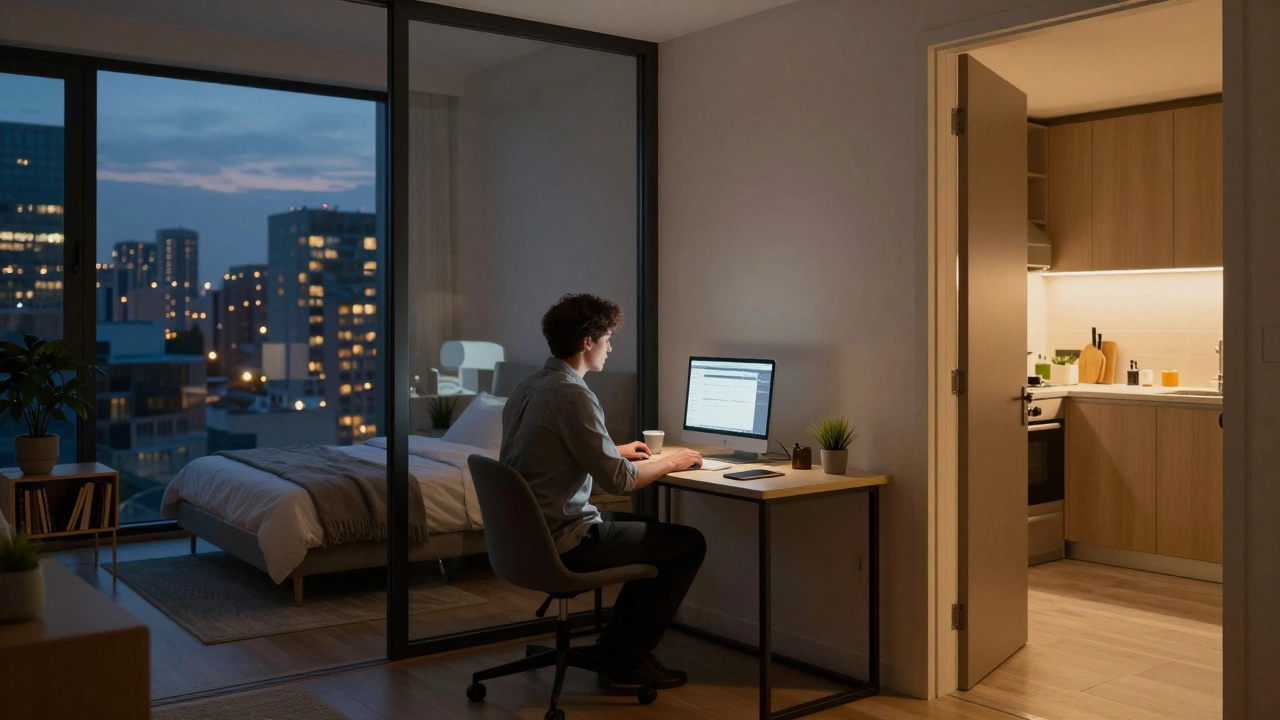
- Couples without kids, especially if one works from home and needs a separate workspace
- Students or young professionals on a budget
- Investors looking for high rental yield in urban areas
- Travelers or digital nomads staying for 3-12 months
It’s not ideal if you need a guest room, plan to have kids soon, or want a dedicated dining area. But if you’re someone who values simplicity, low maintenance, and central location over square footage, a T2 is a smart pick.
What to Watch Out For
Not all T2s are created equal. Here are red flags to check before signing a lease or making an offer:
- Is the "living room" actually a bedroom? Some landlords label a small alcove as a living room to make it a T2. Look for a proper door or wall separating it.
- Is the kitchen functional? Many T2s have kitchenettes with a mini-fridge and two-burner stove. If you cook often, this could be a dealbreaker.
- Is there storage? Small units often lack built-in wardrobes. Check for closet space or storage solutions.
- Is the bathroom shared? In some converted buildings, T2 units might share a bathroom with another unit. Always confirm.
- What’s the noise level? Thin walls are common in compact apartments. If you’re a light sleeper, ask about insulation or check during evening hours.
Always ask for floor plans. A good listing will include one. If they don’t, walk away-or at least visit in person.
Why T2 Apartments Are Growing in Popularity
Urban living is changing. People are moving to cities, but they’re not all forming big families. The demand for smaller, efficient homes is rising-especially among Gen Z and millennials.
In Adelaide, for example, T2-style units are becoming more common in new developments near the CBD and universities. Developers are building compact, well-designed apartments that offer all the essentials without the waste. They’re cheaper to buy, easier to maintain, and often come with amenities like gyms, bike storage, and rooftop lounges.
Plus, with remote work, having a separate room-even if it’s small-for your desk makes a huge difference in mental space. A T2 gives you that without the cost of a three-bedroom.
Final Thoughts: Is a T2 Right for You?
A T2 apartment isn’t a compromise-it’s a choice. It’s for people who want to live well without living large. If you value location, simplicity, and affordability, a T2 might be the sweet spot you’ve been looking for.
Just make sure you understand what you’re getting. Don’t assume it’s a two-bedroom. Don’t skip the floor plan. And don’t let the name fool you: a T2 can be just as comfortable as a bigger unit-if it’s well designed and fits your lifestyle.
Is a T2 apartment the same as a one-bedroom apartment?
Yes, in most cases. A T2 apartment has one bedroom and one living room, which is the standard definition of a one-bedroom apartment in many countries. The difference is in naming: T2 is used in Europe and some international markets, while "one-bedroom" is common in North America and Australia.
Can a T2 apartment have two bedrooms?
No, by definition, a T2 has exactly two main rooms: one bedroom and one living room. If an apartment has two bedrooms, it’s a T3 (Type 3). Be careful-some listings may mislabel a studio with a loft as a T2 to make it seem larger. Always check the floor plan.
Why don’t Australian listings use T2 often?
Australia primarily uses the "BHK" system (Bedroom, Hall, Kitchen) or just "one-bedroom," "two-bedroom." The French T-system is not widely adopted in local real estate marketing. You’ll mostly see T2 in listings aimed at international tenants or on global rental platforms.
Is a T2 apartment cheaper than a two-bedroom?
Yes, usually. A T2 is smaller and has fewer rooms, so it’s typically 20-40% cheaper to rent or buy than a two-bedroom apartment in the same area. That makes it popular with budget-conscious renters and investors looking for higher rental yields.
Do T2 apartments have enough storage?
It varies. Older T2 units often lack built-in storage, but newer ones include clever solutions like under-bed drawers, wall closets, or integrated shelving. Always check for storage space before signing a lease. If there’s none, you may need to invest in furniture with hidden storage.