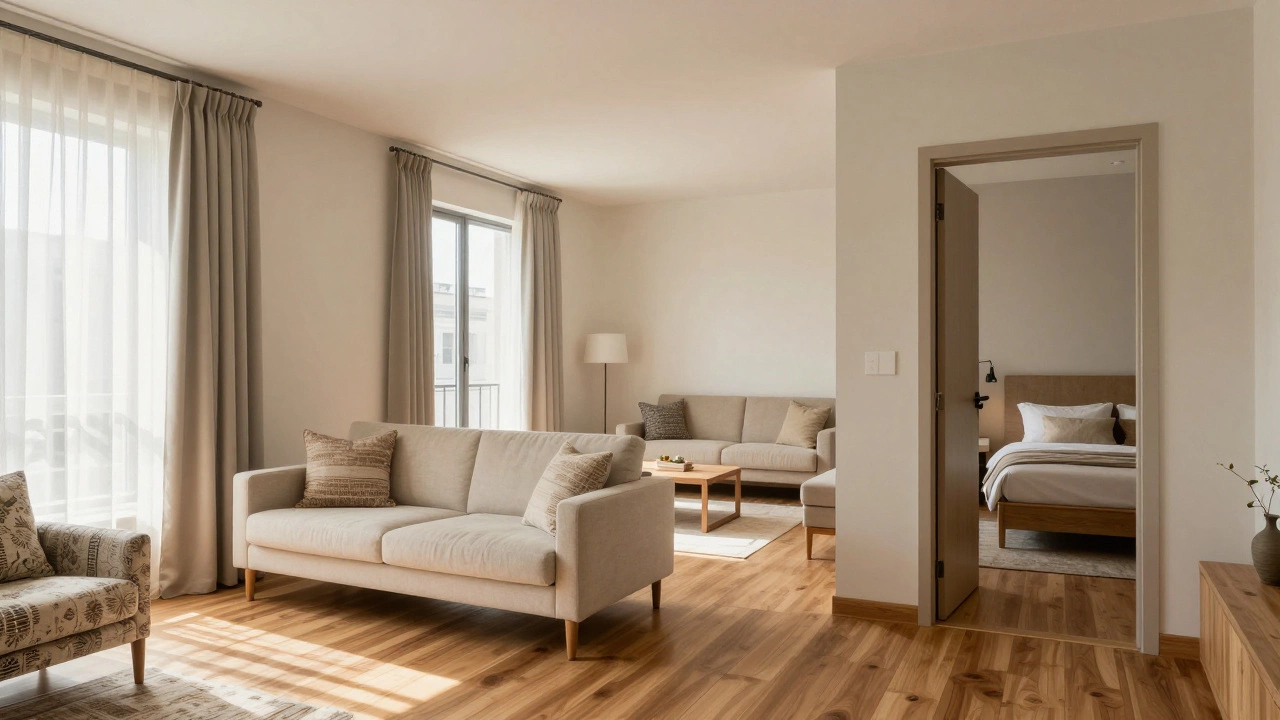
Walking into a property listing that says "2BR" can feel like decoding a secret language if you aren't used to real estate jargon. But the reality is much simpler than it looks. A 2br apartment is simply a residential unit with two separate sleeping areas. It’s the middle ground between living alone in a studio or one-bedroom and sharing a larger family home. For many people, this layout offers the perfect balance of personal space, privacy, and affordability.
If you are looking at properties abroad or need to verify specific listings in other regions, resources like kizdar net might offer insights into local availability, though for most renters, understanding the physical space itself is the first step.
The Anatomy of a Two-Bedroom Unit
To truly understand what you are getting, you have to look past the number "two." A standard two-bedroom apartment consists of three main zones: the sleeping area, the living area, and the service area (kitchen and bathroom). The magic happens in how these zones connect.
In most modern builds, you will find two distinct bedrooms. These are usually separated by walls and doors, ensuring that noise from one room doesn’t bleed into the other. This separation is crucial. It means you can have a guest over without them hearing your morning routine, or you can work from home in one room while someone sleeps in the other. Unlike a studio, where your bed is often visible from your sofa, a 2BR provides true visual and acoustic privacy.
The living area typically serves as the hub. In smaller units, this might be a compact lounge that doubles as a dining space. In larger units, you might find an open-plan kitchen that flows into a spacious living room. The key difference here compared to a one-bedroom is volume. You have enough square footage to define different activities without everything feeling cramped together.
Who Actually Needs Two Bedrooms?
You don’t need two partners to justify renting or buying a two-bedroom apartment. In fact, the demographic for these units has shifted dramatically in recent years. Here is who benefits most from this layout:
- The Remote Worker: If you work from home, a second bedroom acts as a dedicated office. Closing the door helps create a psychological boundary between "work mode" and "home mode." It also ensures you don’t have clients seeing your unmade bed during video calls.
- Couples with Guests: Living with a partner but wanting to host friends or family occasionally? A 2BR allows guests to sleep comfortably without pulling out an awkward air mattress in the living room.
- Singles Seeking Space: Many single professionals choose 2BR units because they want more room to move. One bedroom becomes a sanctuary for sleep, while the other can be a hobby room, gym, library, or meditation space.
- Roommates: Sharing a lease on a 2BR is common among friends or colleagues. It splits the cost evenly while giving each person their own private retreat after a long day.
Layout Variations: What to Look For
Not all two-bedroom apartments are created equal. The layout significantly impacts how livable the space feels. When viewing a property, pay attention to these common configurations:
| Layout Type | Description | Best For |
|---|---|---|
| Side-by-Side | Bedrooms are next to each other, often sharing a wall. | Families with young children; easy supervision. |
| Split Bedroom | Bedrooms are on opposite sides of the living area. | Couples wanting privacy; roommates. |
| Jack-and-Jill | Two bedrooms share a single bathroom via double doors. | Budget-conscious buyers; older buildings. |
| En-Suite Master | One bedroom has a private attached bathroom. | Couples; those valuing morning privacy. |
A split bedroom layout is generally considered more valuable because it reduces noise transfer between occupants. If you are renting with a roommate, this is a huge plus. On the flip side, a Jack-and-Jill setup can be convenient for families but might feel intrusive for unrelated adults sharing the space.

Cost vs. Value: Is It Worth the Premium?
Generally, a 2BR apartment costs more per month than a 1BR in the same building. However, the price-per-square-meter often drops. Let’s break that down. If a 1BR costs $1,500 and is 60 square meters, you are paying $25 per square meter. If a 2BR costs $1,900 and is 85 square meters, you are paying roughly $22 per square meter. You get more space for less money per unit of area.
This efficiency makes 2BR units attractive for investors too. They appeal to a broader range of tenants-couples, small families, and remote workers-which reduces vacancy risk. If you plan to live there long-term, the extra space adds resale value. Homes with flexible rooms tend to sell faster because they adapt to changing life stages.
However, keep an eye on hidden costs. Larger units mean higher utility bills. Heating, cooling, and lighting two bedrooms plus a larger living area will increase your monthly energy spend. In some cities, council tax or property rates are also tiered based on the number of bedrooms, so check local regulations.
Living in a 2BR: Practical Tips
Moving into a two-bedroom apartment requires a shift in mindset regarding furniture and storage. Here is how to make the most of it:
- Define Each Room’s Purpose: Don’t just call the second room "the spare room." Decide if it’s an office, a guest room, or a playroom. This decision dictates your furniture purchases. An office needs a desk and shelving; a guest room needs a comfortable bed and storage for luggage.
- Maximize Storage: Two bedrooms mean double the closet space potential. Use under-bed storage bins and tall wardrobes to keep clutter away. Clutter makes even large apartments feel small.
- Lighting Matters: Ensure both bedrooms have adequate natural light. If one room is dark, use warm artificial lighting to create a cozy atmosphere. Avoid harsh overhead lights in sleeping areas.
- Soundproofing: If the walls are thin, add heavy rugs or bookshelves against shared walls. This simple trick absorbs sound and improves privacy between rooms.

Comparing 2BR to Other Options
How does a 2BR stack up against its neighbors in the housing market? Understanding these differences helps you decide if you are stepping up or staying put.
Compared to a Studio Apartment, which combines living, sleeping, and cooking into one open space, a 2BR offers complete separation. Studios are cheaper and easier to clean, but they lack privacy. If you hate coming home to see your kitchen every time you walk into your bedroom, a 2BR solves that problem instantly.
Against a 3BR House, a 2BR apartment is more manageable. Houses require yard work, exterior maintenance, and often come with higher insurance costs. Apartments usually include amenities like gyms, pools, or concierge services. If you value low maintenance over outdoor space, the 2BR apartment wins.
Frequently Asked Questions
Is a 2BR apartment better than a 1BR?
It depends on your lifestyle. If you work from home, entertain guests frequently, or share the space with a partner who needs privacy, a 2BR is superior. However, if you live alone, rarely have guests, and prefer lower rent and less cleaning, a 1BR might be more practical and cost-effective.
What is the average size of a 2BR apartment?
Sizes vary greatly by location. In major cities like New York or London, a 2BR might be around 70-80 square meters (750-850 sq ft). In suburban areas or smaller cities, you could find 2BR units ranging from 90 to 120 square meters (1,000-1,300 sq ft) or more.
Can I use a 2BR apartment as a home office?
Absolutely. This is one of the biggest advantages of a 2BR layout. You can dedicate one bedroom entirely to work, keeping your primary bedroom free for rest. This separation helps maintain work-life balance, which is difficult to achieve in studios or 1BR units.
Are 2BR apartments harder to rent out?
No, they are often easier to rent because they appeal to a wider audience. Couples, small families, and remote workers all seek this configuration. While the rent is higher, the demand is usually steady, leading to fewer vacancies compared to niche properties.
What should I check before signing a lease for a 2BR?
Check the noise levels between bedrooms, the quality of insulation, and the storage space available. Also, verify if the building allows pets or subletting, as these factors can impact your long-term comfort and flexibility.