Apartment Layout & Suitability Checker
Why this works:
Considerations:
You’re scrolling through property listings, and suddenly you see “3 BHK” everywhere. It looks like a code, but it’s actually one of the most common ways to describe an apartment’s size and layout in many parts of the world. If you’ve ever wondered what those letters stand for or why they matter when you’re looking for a home, you’re not alone.
Understanding 3 BHK isn’t just about memorizing acronyms-it’s about knowing what kind of space you’re getting. Whether you’re buying your first flat, upgrading for a growing family, or just curious about real estate jargon, this guide breaks down exactly what 3 BHK means, how it compares to other layouts, and whether it’s the right fit for your lifestyle.
The Breakdown: What Do B, H, and K Stand For?
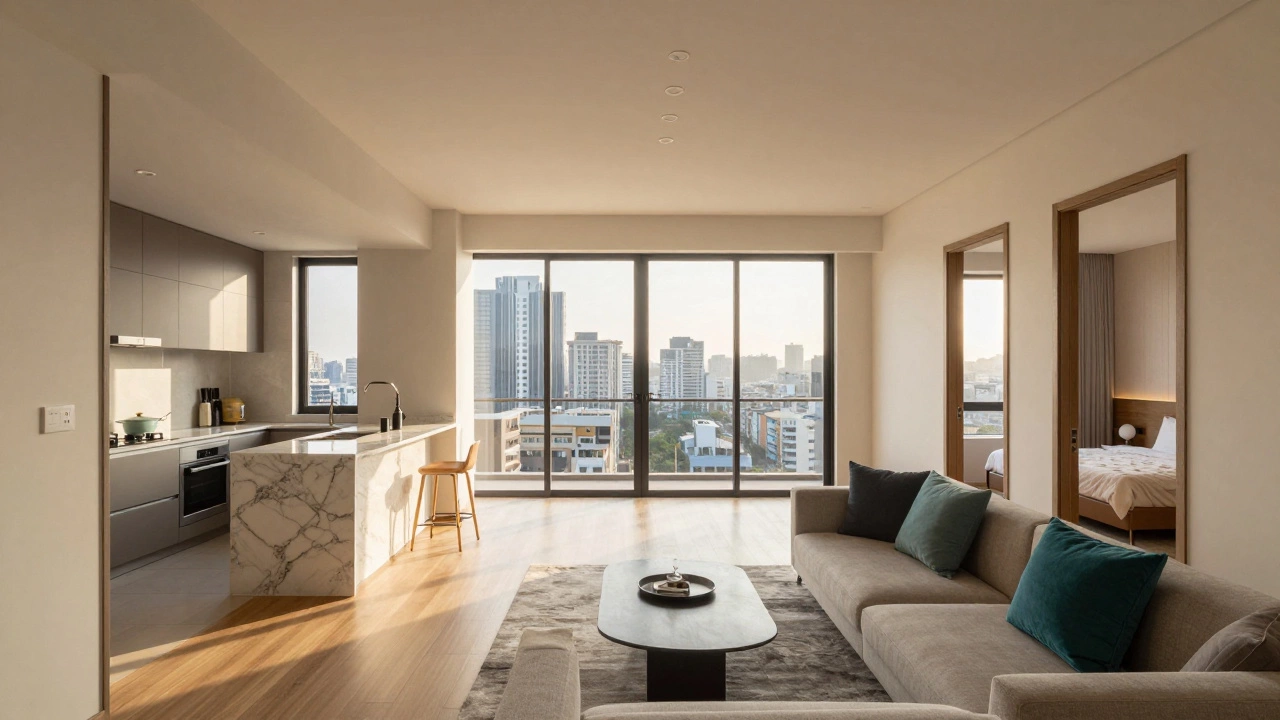
The term BHK stands for Bedroom, Hall, and Kitchen. It’s a shorthand used primarily in South Asia-especially India-but has become widely recognized by international buyers and renters too. Each letter represents a core component of the apartment’s structure:
- B (Bedroom): The sleeping quarters. In a 3 BHK, there are three separate bedrooms.
- H (Hall): Also called the living room or drawing room. This is the main communal space where you relax, entertain guests, or spend time with family.
- K (Kitchen): The cooking area. It can be open-plan, semi-open, or fully enclosed.
So, a 3 BHK apartment simply means a unit with three bedrooms, one living hall, and one kitchen. But don’t let the simplicity fool you-the actual experience of living in one depends heavily on square footage, floor plan efficiency, and local building standards.
How Big Is a Typical 3 BHK Apartment?
Size varies dramatically depending on location and developer quality. In major Indian cities like Mumbai or Delhi, a 3 BHK might range from 1,200 to 1,800 square feet. In contrast, in smaller towns or suburban areas, you could find similar layouts stretching over 2,000 square feet.
In Australia, we don’t use the BHK system. Instead, we refer to properties by the number of bedrooms-so a “three-bedroom apartment” is the equivalent. However, Australian units often include additional spaces like study nooks, laundry rooms, or ensuites that aren’t always counted in the basic bedroom tally. When comparing internationally, keep in mind that a 3 BHK in India may feel more compact than a three-bedroom unit in Adelaide due to differences in construction norms and land availability.
| Layout Type | Average Square Footage (India) | Equivalent in Western Terms |
|---|---|---|
| 1 BHK | 450-750 sq ft | Studio / One-Bedroom Apartment |
| 2 BHK | 750-1,200 sq ft | Two-Bedroom Apartment |
| 3 BHK | 1,200-1,800+ sq ft | Three-Bedroom Apartment |
| 4 BHK | 1,800-2,500+ sq ft | Four-Bedroom House/Apartment |
Who Is a 3 BHK Best For?
A 3 BHK is ideal for families who need dedicated spaces for each member. Think parents plus two children, or a couple with a child and a home office setup. The third bedroom can serve multiple purposes: guest room, nursery, study, or even a hobby room.
If you’re single or a couple without kids, a 3 BHK might be overkill unless you work from home regularly or host frequently. On the flip side, if you have three or more people under one roof, skipping the extra bedroom could lead to cramped conditions and reduced privacy.
Consider your long-term plans too. Are you planning to grow your family soon? Will you need space for aging parents? A 3 BHK offers flexibility that smaller units lack, making it a smart investment for future-proofing your living situation.

3 BHK vs. Other Layouts: Which Should You Choose?
Not every household needs three bedrooms. Here’s how 3 BHK stacks up against popular alternatives:
- 1 BHK: Perfect for singles or young couples. Low maintenance, affordable, and great for city centers.
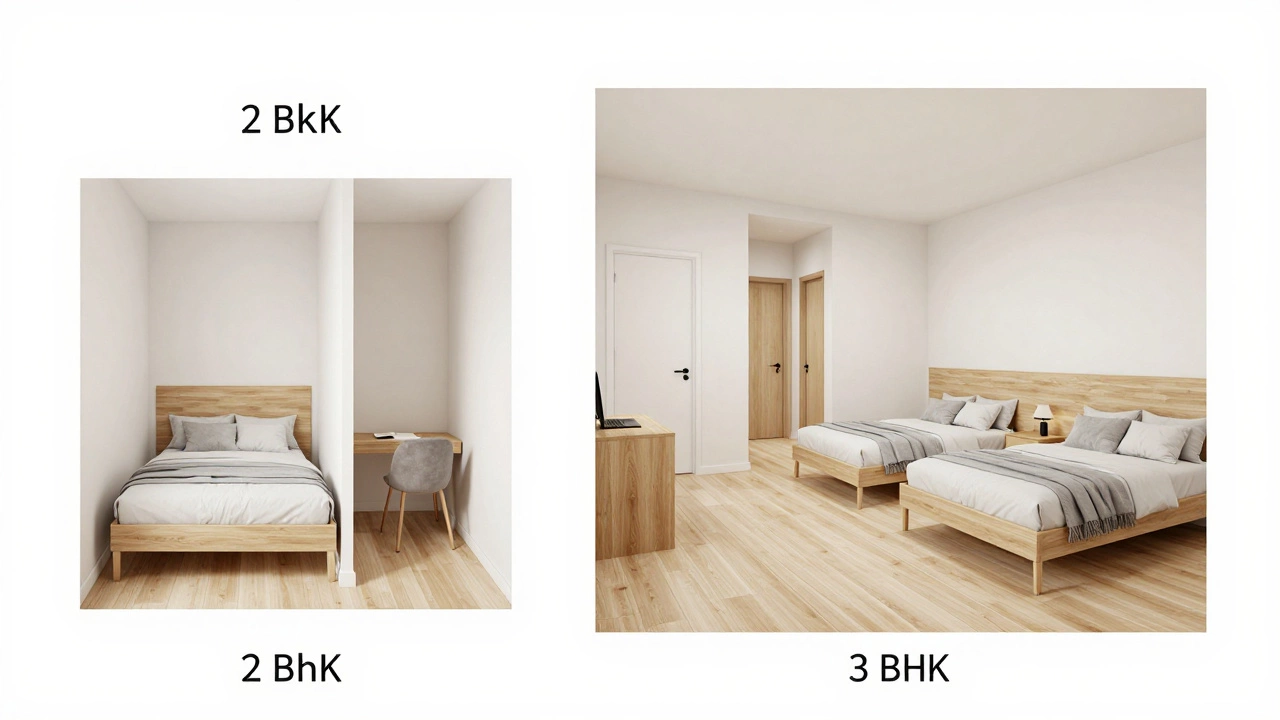
- 2 BHK: Ideal for small families or remote workers needing a separate office. Offers balance between space and cost.
- 3 BHK: Suited for medium-sized families or those requiring multi-functional spaces. More expensive but offers greater comfort and resale value.
- 4 BHK+: Reserved for large families, luxury seekers, or investors targeting high-end markets.
When deciding, think beyond bedroom count. Look at total usable area, natural light, ventilation, storage options, and proximity to schools or workplaces. Sometimes a well-designed 2 BHK feels bigger than a poorly planned 3 BHK.
Key Features to Look for in a 3 BHK Apartment
Just because a listing says “3 BHK” doesn’t mean all such apartments are created equal. Pay attention to these critical features:
- Floor Plan Efficiency: Avoid layouts with wasted corridors or awkwardly shaped rooms. Open plans tend to maximize perceived space.
- Natural Light & Ventilation: Ensure at least two bedrooms face different directions for cross-ventilation. Dark, stuffy rooms reduce livability.
- Kitchen Design: An L-shaped or U-shaped kitchen works best for workflow. Check if it includes enough counter space and cabinetry.
- Bathroom Configuration: At minimum, look for two bathrooms-one attached to the master bedroom and one shared. Three bathrooms are a bonus.
- Storage Solutions: Built-in wardrobes, balcony enclosures, or utility areas add practical value without increasing footprint.
Also check for amenities like parking slots, security systems, gym access, and rooftop terraces. These don’t change the BHK classification but significantly impact daily convenience and property appreciation.
Cost Considerations: Buying or Renting a 3 BHK
Pricing depends heavily on location, builder reputation, and market trends. In premium neighborhoods of Bangalore or Hyderabad, a 3 BHK can easily exceed ₹1 crore ($120,000 USD). In tier-2 cities, prices drop considerably-sometimes below ₹50 lakhs ($60,000 USD).
Rental rates follow similar patterns. Expect to pay anywhere from ₹25,000 to ₹60,000 per month ($300-$700 USD) depending on city and furnishing level. Always factor in hidden costs: stamp duty, registration fees, maintenance charges, and potential renovation expenses.
If financing through a loan, remember that larger homes come with higher EMIs. Calculate your debt-to-income ratio carefully before committing. Many lenders cap home loans at 40% of monthly income, so ensure your budget aligns with reality.
Common Misconceptions About 3 BHK Apartments
Misunderstandings around BHK terminology can lead to poor decisions. Let’s clear them up:
- Mistake #1: Assuming all 3 BHKs have identical layouts. Reality: Floor plans vary wildly between builders. Always review the blueprint.
- Mistake #2: Believing more bedrooms always mean better value. Truth: Oversized units depreciate faster if demand skews toward smaller families.
- Mistake #3: Ignoring carpet area vs. super built-up area. Developers quote larger numbers including common areas; focus on actual usable space inside your walls.
Another pitfall? Not verifying legal documentation. Title deeds, occupancy certificates, and RERA approvals must be checked thoroughly before signing any agreement.
Final Thoughts: Is a 3 BHK Right for You?
Choosing a 3 BHK comes down to balancing current needs with future goals. If you prioritize privacy, flexibility, and long-term stability, it’s likely the sweet spot. But if you prefer low upkeep, minimal clutter, and easy mobility, downsizing might make more sense.
Before finalizing, visit several properties during different times of day. Observe noise levels, sunlight exposure, and neighborhood activity. Talk to existing residents-they’ll give insights no brochure can match.
What does 3 BHK mean in real estate?
3 BHK stands for Bedroom, Hall, and Kitchen. It refers to an apartment layout featuring three separate bedrooms, one main living/hall area, and one kitchen. This configuration is commonly used in South Asian countries to classify residential units based on functional zones rather than just square footage.
Is a 3 BHK apartment suitable for a nuclear family?
Yes, a 3 BHK is highly suitable for a typical nuclear family consisting of two parents and two children. Each person gets their own private space, while the shared hall fosters interaction. Additional benefits include room for guests, homework areas, or hobbies without disrupting others’ routines.
How much does a 3 BHK apartment cost in India?
Prices vary widely by city and locality. In metro cities like Mumbai or Delhi, expect ₹80 lakhs to ₹2 crores ($95,000-$240,000 USD). Tier-2 cities offer cheaper options starting around ₹40-60 lakhs ($48,000-$72,000 USD). Rental costs typically range from ₹25,000 to ₹60,000 monthly depending on location and amenities.
Can I convert a 2 BHK into a 3 BHK later?
Technically possible, but rarely advisable. Converting requires structural changes, which may violate building codes or affect load-bearing walls. Plus, adding a wall reduces overall floor space and natural light. Better to buy a true 3 BHK upfront if you anticipate needing the extra room.
What’s the difference between 3 BHK and 3-bedroom apartment?
Functionally, they’re nearly identical. The key distinction lies in regional usage: “3 BHK” emphasizes functional zoning (bedroom, hall, kitchen), whereas “3-bedroom” focuses solely on sleeping quarters. Internationally, especially in Europe or North America, only bedroom counts are mentioned since halls and kitchens are assumed standard.