Zestimate Accuracy Calculator
Estimate how much your Zestimate might differ from actual market value. Based on Zillow's accuracy data and market conditions from the article.
Zestimate Input
Estimated Value Range
Based on Zillow's accuracy data and your selected conditions:
When you're looking to buy a home online, one of the first things you might do is check Zillow. It shows you a number - a Zestimate - right on the listing. It feels like a quick, free answer to the biggest question: How much is this house really worth? But here’s the truth: that number isn’t a guarantee. It’s not even a professional appraisal. And if you rely on it too heavily, you could end up overpaying… or missing out on a great deal.
What is a Zillow Zestimate?
A Zestimate is Zillow’s automated estimate of a home’s market value. It’s generated using a mix of public records, user-submitted data, and algorithms that compare the home to similar properties that have sold nearby. Think of it like a weather forecast for home prices - it’s based on patterns, not a physical inspection.
Zillow says it updates Zestimates daily. The algorithm looks at things like:
- Number of bedrooms and bathrooms
- Square footage
- Lot size
- Recent sales of comparable homes (called "comps")
- Location, school districts, and neighborhood trends
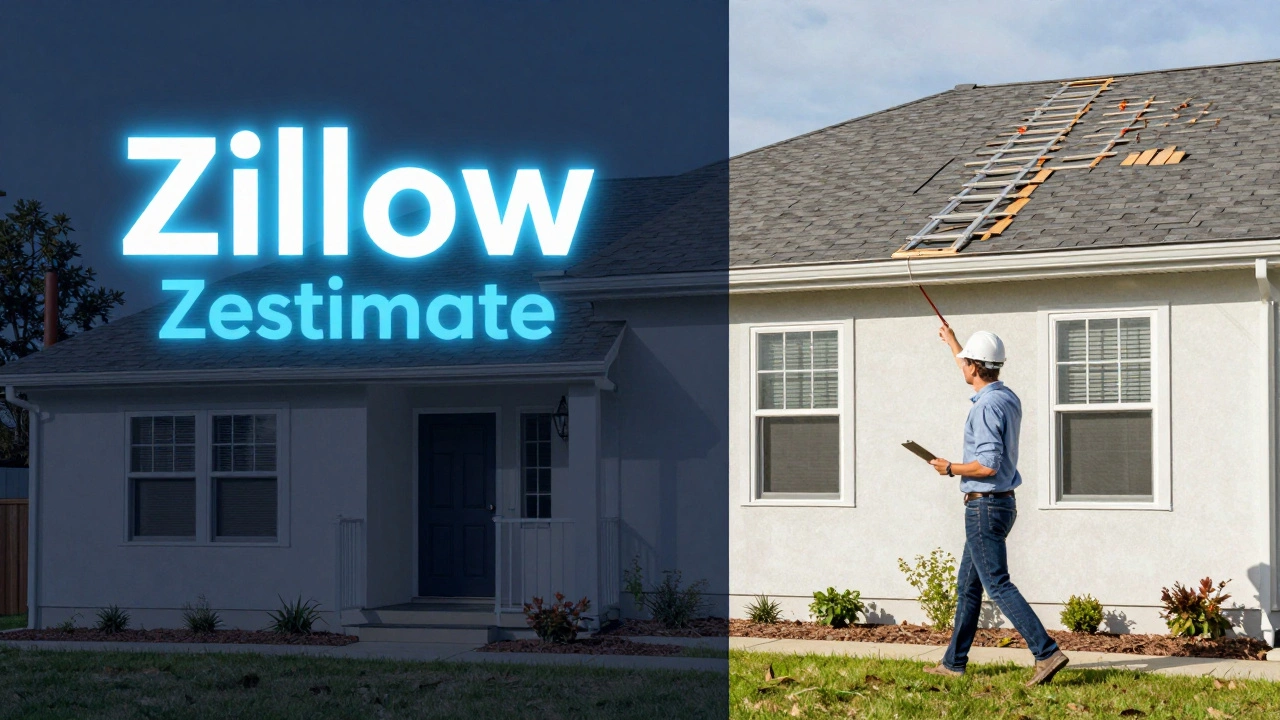
But here’s what it doesn’t see: peeling paint, a leaky roof, outdated wiring, or whether the basement floods every spring. It doesn’t know if the kitchen was remodeled in 2023 or if the neighbors just built a noisy cell tower next door.
How accurate are Zillow Zestimates really?
Zillow publishes its own accuracy report. As of late 2025, nationwide, Zestimates are within 5% of the final sale price for about 67% of homes. That sounds decent - until you realize what that means in real money.
Let’s say a home sells for $400,000. A 5% margin of error means the Zestimate could be off by $20,000. For homes in volatile markets - think cities with rapid growth like Austin, Phoenix, or Nashville - the error rate jumps. In some areas, Zestimates are off by 10% or more. That’s $40,000 on a $400,000 house.
According to Zillow’s own data, Zestimates are most accurate in places with lots of recent sales and detailed public records - like suburban counties in Ohio or Pennsylvania. They’re least accurate in:
- Urban areas with older homes and sparse data
- Rural regions where comps are rare
- Neighborhoods with lots of custom-built or unique homes
- Markets with rapid price swings (like after a major employer moves in)
Why Zillow gets it wrong - and when it matters most
One big reason Zestimates fail is because they don’t account for condition. Two identical houses side by side can have wildly different values if one has a new HVAC system and the other has a 20-year-old one. Zillow can’t tell the difference.
Another problem? Data lag. Public records take weeks - sometimes months - to update. If a home sold for $450,000 in November, but the sale hasn’t been recorded yet, Zillow might still show the 2023 value of $380,000. That makes the home look like a bargain… when it’s actually overpriced.
And don’t forget: Zillow doesn’t know about pending renovations. A homeowner might be adding a sunroom or finishing the basement. Those upgrades aren’t in the system until after the permit is filed and the inspector signs off - often long after the home hits the market.
If you’re using Zillow to decide whether to make an offer, you’re putting blind faith in incomplete data. In 2024, a study by the National Association of Realtors found that 41% of buyers who relied solely on Zillow Zestimates ended up paying more than the home’s true market value.
Zillow vs. a licensed appraiser - the real difference
When a bank loans you money to buy a house, they hire a licensed appraiser. That person walks through the home, takes photos, checks for structural issues, notes upgrades, and compares it to at least three recent sales. They write a 10- to 15-page report. It costs $400-$600. But it’s legally binding.
A Zestimate? It’s a computer model. No walk-through. No inspection. No accountability.
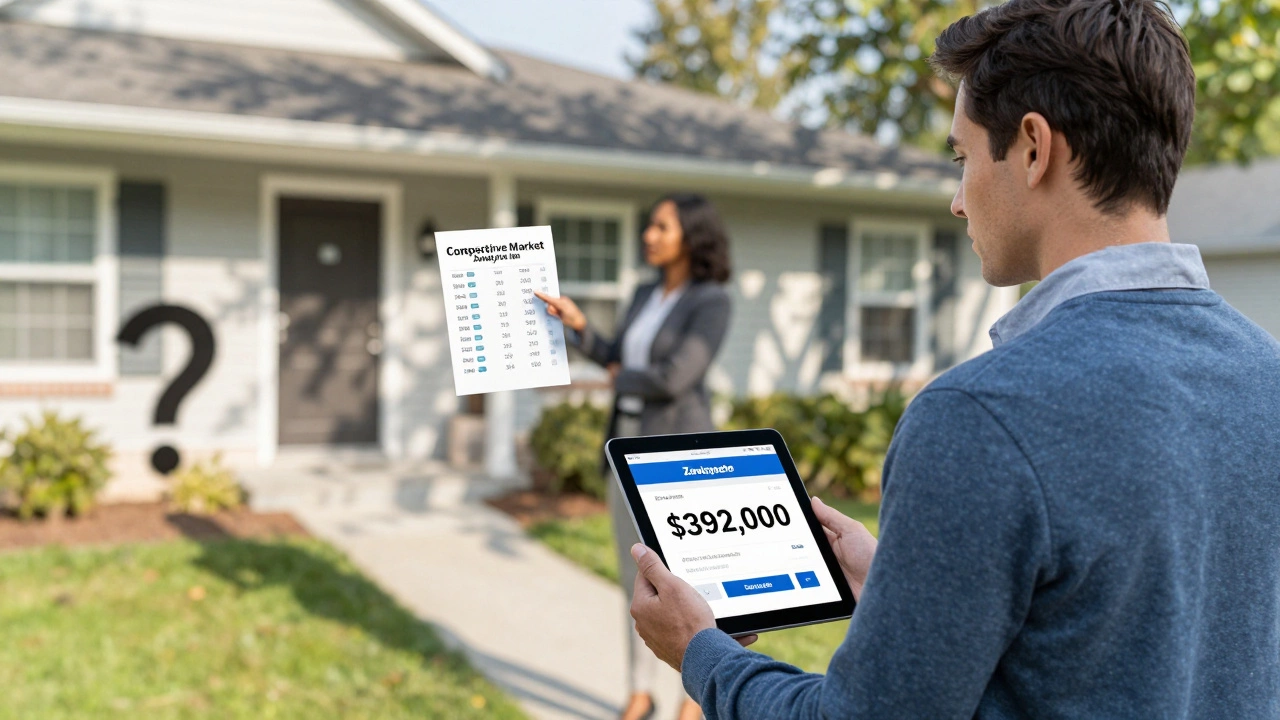
Here’s a real example: In early 2025, a home in Charlotte, North Carolina, had a Zestimate of $392,000. The buyer offered $390,000 and thought they were getting a steal. The appraisal came back at $358,000. The lender wouldn’t loan the full amount. The buyer had to come up with an extra $32,000 in cash - or walk away. The Zestimate was off by 9.5%.
Appraisers don’t guess. They document. Zestimates guess. And they’re not even designed to be perfect.
How to use Zillow - the smart way
You shouldn’t ignore Zillow. It’s a useful starting point. But treat it like a rough sketch, not a blueprint.
Here’s how to use it without getting burned:
- Check the date of the last sale. If it’s older than six months, the Zestimate is probably outdated.
- Compare 5-10 nearby homes. Look at what similar houses sold for in the last 90 days. Are they all selling above or below Zillow’s estimate? That tells you if the algorithm is lagging.
- Look for red flags. If Zillow says a home has 4 bedrooms but the listing says 3, trust the listing. If the square footage is wildly off, assume the data is wrong.
- Ask your agent for comps. A good real estate agent has access to MLS data - more accurate and more current than Zillow. They can show you actual sold prices, not estimates.
- Never use it to set your offer. Use it to spot outliers. If a home’s Zestimate is $50,000 higher than similar homes nearby, it might be overpriced. If it’s $30,000 lower, it might be a hidden gem - or have serious problems.
What to do instead
If you’re serious about buying, skip the guesswork. Get:
- A pre-approval letter from a lender - this tells you what you can actually afford
- A professional home inspection - this tells you what’s actually wrong with the house
- A comparative market analysis (CMA) from a local agent - this tells you what similar homes really sold for
Some buyers skip the CMA because they think Zillow is enough. But Zillow doesn’t know your neighborhood like your local agent does. That agent knows which homes were sold by desperate sellers, which ones had cash buyers, and which ones are sitting on the market because no one believes the price.
And remember: you’re not just buying a house. You’re buying a place to live, raise a family, or retire. That’s worth more than a quick number on a screen.
Final takeaway
Zillow’s Zestimate is not a price tag. It’s a rough guess - sometimes close, sometimes way off. It’s a tool for initial screening, not decision-making. Use it to narrow your search. Don’t use it to set your offer.
When you’re ready to buy, rely on data that’s real: recent sales, professional inspections, and local expertise. The house might look great on Zillow. But only a human - not an algorithm - can tell you if it’s right for you.
Can I trust Zillow’s Zestimate to negotiate a home price?
No. Zestimates are not reliable enough for negotiation. Sellers often list homes above Zillow’s estimate, and buyers who use it as a baseline often overpay. Instead, ask your real estate agent for a Comparative Market Analysis (CMA) based on actual recent sales in the neighborhood. That’s what lenders and experienced buyers use to determine fair value.
Why is my Zestimate so different from my neighbor’s?
Even small differences matter. If your home has an older roof, no garage, or a different floor plan, Zillow’s algorithm may treat it as less valuable - even if it looks similar. Zillow relies on public records, which can be incomplete or outdated. A 100-square-foot difference in reported square footage can swing your estimate by $15,000-$25,000. Always verify the details Zillow has on your home - and update them if they’re wrong.
Do Zestimates affect my property taxes?
No. Zestimates have no legal or financial impact on property taxes. Your tax assessment is determined by your local government using its own appraisal system - usually based on physical inspections and county records. Zillow’s numbers are for public use only and aren’t shared with tax authorities.
Can I update my home’s Zestimate?
Yes. If you own your home, you can claim it on Zillow and update details like square footage, number of bedrooms, renovations, or recent upgrades. This doesn’t guarantee a change - Zillow’s algorithm still runs independently - but providing accurate data gives the system better inputs. Many homeowners report Zestimates improving by 5%-15% after updating their profile.
Are Zestimates more accurate for new construction?
Sometimes. New homes built in planned communities with uniform designs are easier for Zillow’s algorithm to model. But if the home is custom-built or in a new development with few past sales, Zillow may not have enough data. In those cases, the Zestimate can be wildly off. Always compare it to the builder’s price and ask your agent for local sales data.