Cottage vs Villa Decision Calculator
Answer these questions to discover which home type matches your priorities. Don't just look at square meters—find your perfect fit.
Cottage
Villa
Score
Score
Key Strengths
Recommendation
When you're looking at homes for sale, you’ve probably seen listings for both cottages and villas. They sound cozy and fancy, right? But here’s the thing: villa isn’t just a fancy word for a big house. And a cottage isn’t always small. The difference isn’t just in size-it’s in style, layout, location, and what you’re actually getting for your money.
Let’s cut through the marketing fluff. If you’re trying to decide between a cottage and a villa, you need to know what each one really means today-not what you saw in a movie or read in a travel blog.
What Is a Cottage, Really?
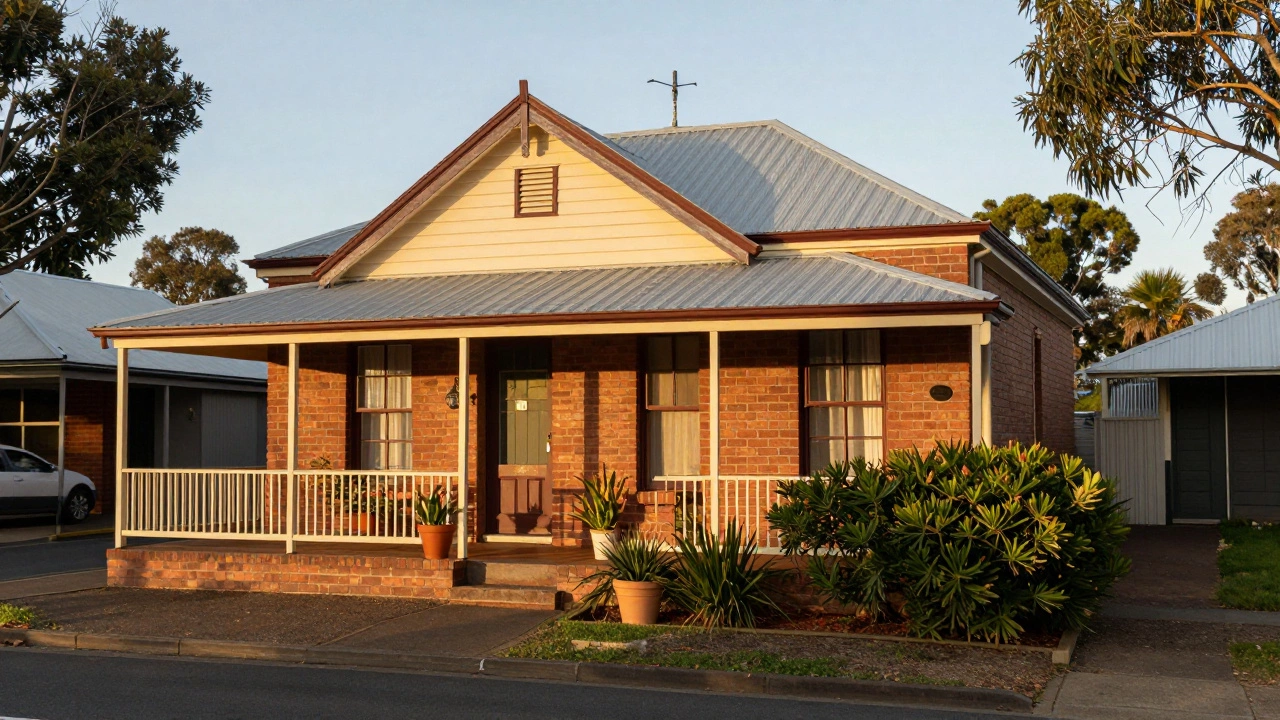
A cottage used to mean a small, simple home in the countryside. Think thatched roofs, stone walls, maybe a garden out back. But today? That’s not the whole picture. In Australia, especially in places like the Adelaide Hills or Byron Bay, "cottage" is a style label. It often means a single-story home with a pitched roof, timber accents, and a wraparound veranda. Size? It can range from 80 square meters to over 200. There are cottages that are bigger than some apartments.
The key traits of a modern cottage:
- Usually single-story
- Low-pitched or gabled roof
- Exposed wood or brick finishes
- Front porch or veranda
- Often on a smaller lot, but not always
- Emphasis on charm over space
Many cottages are heritage homes. That means they come with character-original floorboards, bay windows, maybe a fireplace-but also quirks. You might need to upgrade the wiring, deal with uneven floors, or find that the bathroom is tucked behind the kitchen. If you’re looking for a fixer-upper with soul, a cottage might be your pick.
What Is a Villa, Really?
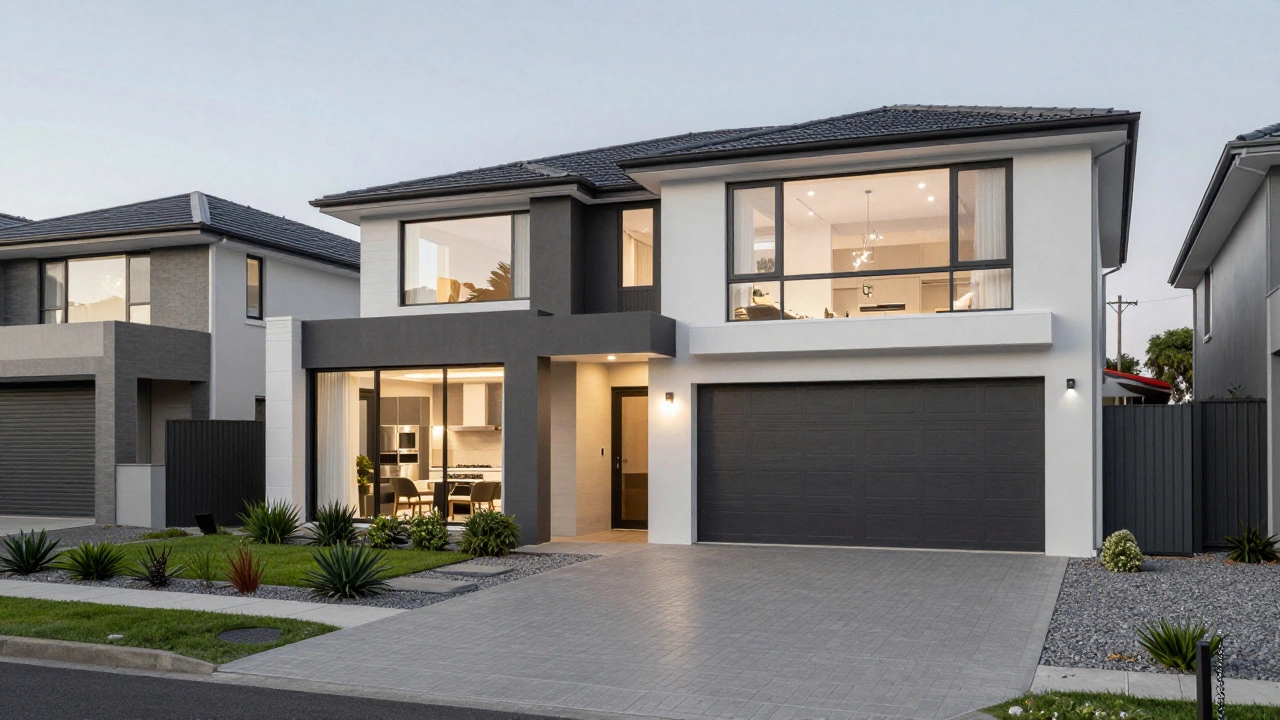
"Villa" is one of the most misused words in real estate. In Europe, a villa might be a sprawling estate with a pool, olive trees, and a separate guest house. In Australia? It’s often a standalone, single-family home with modern finishes, built on a decent-sized block. But here’s the catch: in many new developments, "villa" just means a low-maintenance home with a small backyard and no yard work.
Modern Australian villas typically have:
- 2-4 bedrooms
- 2-3 bathrooms
- Single or double garage
- Open-plan living area
- Low-maintenance garden (often just pavers and gravel)
- Modern kitchen with stainless steel appliances
Size-wise, most new villas are between 180 and 280 square meters. That’s bigger than most cottages. But not all villas are huge. Some are compact, especially in urban infill developments. The real difference? Villas are built for convenience. They’re designed for people who want space without the upkeep.
Size Comparison: Cottage vs Villa
So which is bigger? On average, a villa is larger. But it’s not a hard rule.
| Feature | Cottage | Villa |
|---|---|---|
| Average floor area | 120-200 m² | 180-280 m² |
| Typical bedrooms | 2-3 | 3-4 |
| Typical bathrooms | 1-2 | 2-3 |
| Lot size | 300-800 m² | 400-1,200 m² |
| Garage | Often single, sometimes none | Usually double |
| Outdoor space | Front yard, small rear garden | Low-maintenance backyard, often paved |
There are exceptions. A 250-square-meter heritage cottage in the Barossa Valley might be bigger than a 200-square-meter new-build villa in a suburban estate. But those are rare. In most cases, if you’re comparing a standard cottage to a standard villa, the villa wins on space.
Location Matters More Than You Think
Don’t just look at square meters. Where these homes are built changes everything.
Cottages are often found in older suburbs, rural towns, or coastal villages. They’re not always easy to get to. You might need a car. Public transport? Maybe not. But you get charm, quiet streets, and sometimes views.
Villas? They’re everywhere. New developments in the outer suburbs, near train lines, close to shopping centers. Developers build them in clusters because they’re cheaper to build and easier to sell. That means you’re more likely to have neighbors on both sides. But you also get access to schools, clinics, and supermarkets within walking distance.
If you’re over 50 and want to downsize? A villa might be the smart move. If you’re looking for a weekend escape with character? A cottage wins every time.
Cost and Maintenance: The Hidden Differences
Here’s where people get surprised.
Cottages often cost less upfront-especially if they’re run-down. But that’s because they need work. Replacing old plumbing, rewiring, fixing roof leaks, restoring windows-those costs add up fast. A 1950s cottage might sell for $750,000, but you could spend another $200,000 on renovations.
Villas? They’re built to modern standards. You get double-glazed windows, energy-efficient insulation, and smart home wiring. The price? Usually $900,000-$1.3 million in South Australia. But you pay less on maintenance. No repainting every 3 years. No fixing leaky gutters. No termite damage from old timber.
Think about time, not just money. A cottage might look perfect in photos. But if you work full-time, do you really want to spend weekends fixing the fence?
Which One Should You Choose?
There’s no "right" answer. But here’s how to decide:
- If you want space, modern features, and low upkeep → go for a villa.
- If you love history, charm, and don’t mind putting in work → pick a cottage.
- If you’re buying as an investment → villas rent out easier and hold value better in growing suburbs.
- If you’re buying for lifestyle → cottages offer uniqueness you can’t replicate.
One thing’s clear: size isn’t everything. A 150-square-meter villa with a great layout can feel bigger than a 220-square-meter cottage with awkward hallways and tiny rooms.
What Most Buyers Miss
People focus on square meters. But what really matters is:
- How the space flows
- How much natural light you get
- Whether the kitchen connects to the living area
- If there’s a place to sit outside without being overlooked
- How easy it is to clean and maintain
Some cottages have gorgeous, sunlit kitchens that feel spacious. Some villas have dark, narrow layouts that feel cramped. Always walk through the home with a notebook. Write down what you like and what bugs you.
And don’t let the label fool you. "Villa" doesn’t mean luxury. "Cottage" doesn’t mean small. Read the fine print. Look at the floor plan. Measure the rooms yourself.
Final Thought
The biggest difference between a cottage and a villa isn’t the square footage. It’s the lifestyle.
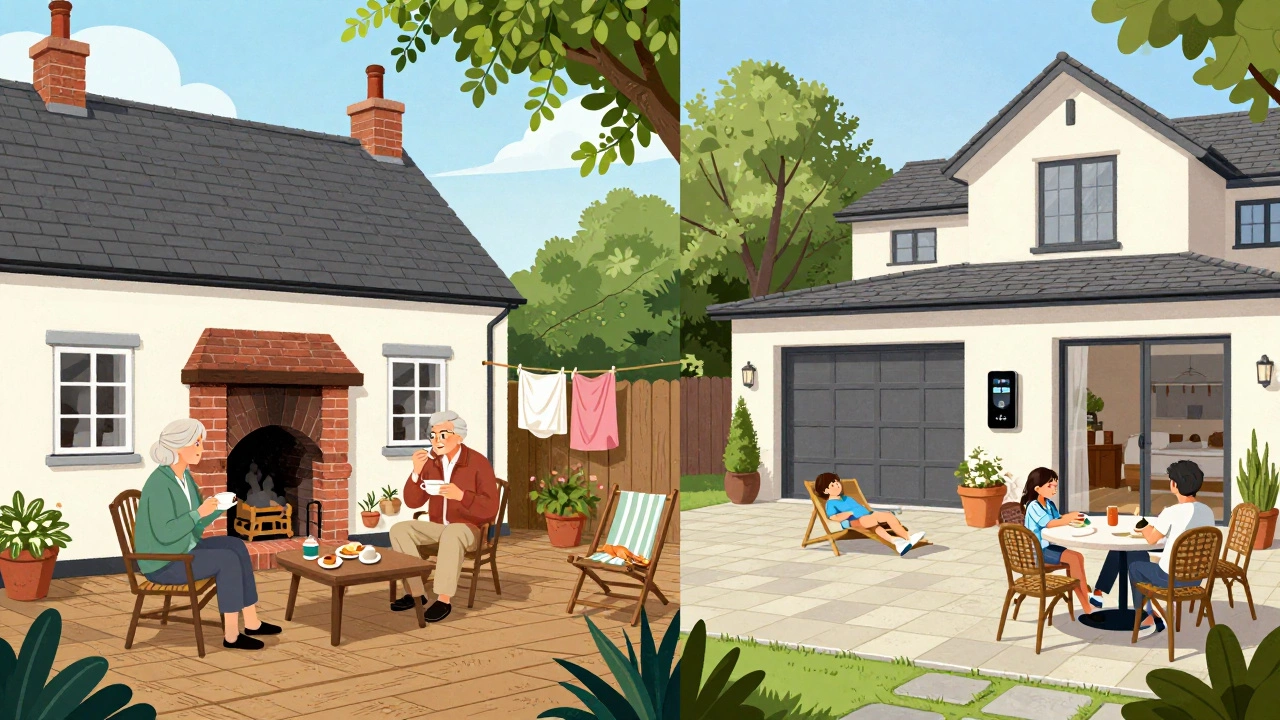
One is about history, character, and soul. The other is about convenience, efficiency, and ease.
If you’re looking to settle down, raise a family, or downsize without hassle-choose the villa.
If you’re looking for a home with personality, a story, and a bit of magic-go for the cottage.
Size? That’s just a number. The right home is the one that fits your life-not your checklist.
Is a villa always bigger than a cottage?
Not always, but usually. Most modern villas are built larger than cottages-typically between 180 and 280 square meters-while cottages range from 120 to 200. But there are exceptions. A large heritage cottage can be bigger than a compact new-build villa. The label doesn’t guarantee size; the floor plan does.
Are cottages cheaper to buy than villas?
Sometimes, but not always. Cottages often have lower upfront prices because they’re older and may need repairs. But after renovations, plumbing, electrical upgrades, and roof work, the total cost can end up higher than a new villa. A villa might cost $100,000 more at purchase, but you’ll save tens of thousands on maintenance over 10 years.
Do villas have backyards?
Yes, but they’re usually small and low-maintenance. Many new villas have paved or gravel backyards with a few potted plants. You won’t find large lawns or vegetable gardens. If you want space to grow things or let kids run around, look for a villa on a larger lot-or consider a cottage instead.
Can you renovate a cottage to be as modern as a villa?
You can modernize it, but not always easily. Heritage cottages often have thick walls, uneven floors, and original wiring that doesn’t support modern appliances. Adding a second bathroom or expanding the kitchen might require council approvals and structural changes. A villa is built to be upgraded, not restored.
Which holds its value better: a cottage or a villa?
In growing areas, villas hold value better because they’re in demand from families and downsizers. Cottages can appreciate too-especially if they’re in historic neighborhoods with strong community appeal. But they’re harder to sell because they appeal to a smaller group. If you’re planning to sell in 5-10 years, a villa is usually the safer bet.