Global Property Price Correction Calculator
Select a Market & Enter Asking Price
Choose a region from the article to see how much you could save based on current market corrections.
Investment Analysis
$0
Estimated Immediate Equity/Savings
Primary Driver:
Reason for price drop...
Select a region and enter an asking price to analyze potential savings.
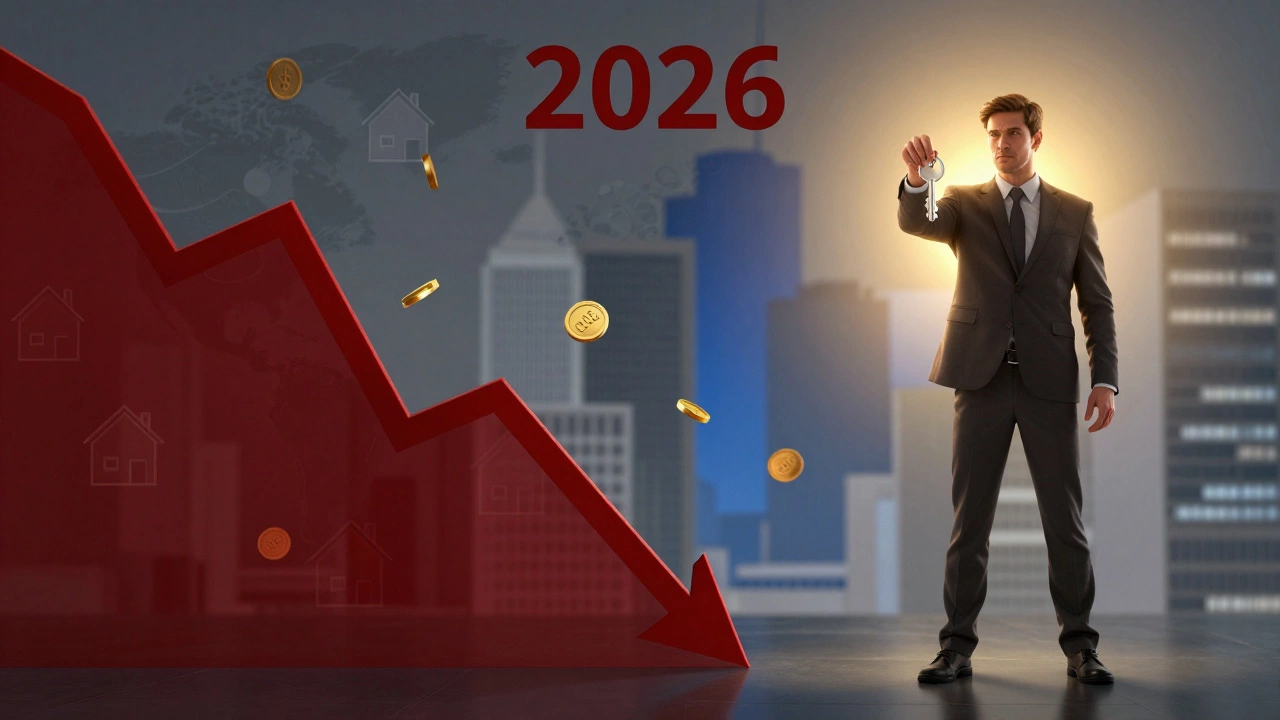
For years, the narrative was simple: house prices only go up. But if you have been watching the headlines or trying to sell your home recently, that script has flipped. In mid-2026, we are witnessing a significant correction in global property markets. For sellers, this is stressful. For buyers, however, it is an opportunity of a lifetime-if you know where to look.
The question isn't just "are prices dropping?" but "where are they falling fastest?" The answer depends heavily on location, asset class, and how much leverage banks are willing to offer. This guide breaks down the regions seeing the steepest declines, why this is happening, and how you can use **buy property online** platforms to secure these deals before the market stabilizes.
The Global Shift: Why Prices Are Correcting
To understand where prices are falling, you first need to understand why. The primary driver in 2026 is still the lingering effect of high interest rates. After a period of historically low borrowing costs from 2020 to 2021, central banks raised rates aggressively to combat inflation. While some economies are beginning to see rate cuts, mortgage rates remain significantly higher than the pandemic lows.
This has squeezed buyer purchasing power. When monthly mortgage payments rise by 30% or more, fewer people qualify for loans. Additionally, there is a surplus of inventory in many major cities. During the boom years, construction boomed too. Now, those new units are hitting the market simultaneously with distressed sales from owners who bought at the peak and can no longer afford their mortgages.
Is now a good time to buy?
If you have cash savings and a stable income, yes. You face less competition and have more negotiating power. However, ensure you stress-test your finances against potential further rate hikes.
Top Regions Seeing Steepest Price Drops
Not all markets are crashing equally. Some areas are resilient due to population growth and limited land supply. Others are experiencing sharp corrections. Here are the hotspots where property values are falling fastest in 2026.
1. Major Metropolitan Areas in North America
Cities like San Francisco, Vancouver, and parts of Toronto have seen double-digit percentage drops from their 2022 peaks. These markets were heavily inflated by remote work trends and speculative investment. As companies enforce return-to-office policies and foreign investor restrictions tighten, demand has cooled dramatically. In San Francisco, median home prices have retreated over 15% from their highs, offering entry points not seen since 2019.
2. Southern European Tourist Hotspots
In Spain, Portugal, and Greece, prices rose explosively during the pandemic as Europeans sought second homes. Now, with tourism normalizing and local affordability crises reaching a breaking point, governments are introducing stricter regulations on short-term rentals (like Airbnb). This reduces the investment appeal, causing prices for non-residential properties and holiday homes to soften rapidly. In Lisbon and Barcelona, you can find luxury apartments selling for 10-20% below asking price.
3. Emerging Markets with Currency Volatility
In countries like Turkey and Argentina, hyperinflation and currency devaluation have made property prices appear volatile. While nominal prices might seem high, when adjusted for USD, the value has plummeted. This creates a unique arbitrage opportunity for foreign buyers using strong currencies like the Euro or US Dollar. However, legal complexities make these markets risky without expert guidance.
| Region | Avg. Price Drop | Primary Driver | Risk Level |
|---|---|---|---|
| San Francisco, USA | -15% | Tech sector slowdown, rate sensitivity | Medium |
| Lisbon, Portugal | -12% | Rental regulation changes | Low-Medium |
| Vancouver, Canada | -18% | Foreign buyer taxes, oversupply | High |
| Istanbul, Turkey | -25% (USD terms) | Currency devaluation | Very High |
| Melbourne, Australia | -8% | High interest rates, rental vacancy rise | Medium |
How to Buy Property Online Safely
Traditionally, buying a home required flying to the country, meeting agents, and signing papers in person. Today, technology has democratized this process. Platforms that allow you to **buy property online** are becoming the standard for international investors. But how do you avoid scams and bad deals?
First, verify the platform's credentials. Reputable online real estate portals partner with licensed local agents and lawyers. They provide digital title searches, virtual tours, and secure escrow services. Look for platforms that offer transparency in fees-hidden costs are the biggest killer of online deals.
Second, use data-driven tools. Modern platforms integrate with government land registries. You can check ownership history, pending liens, and zoning laws without leaving your desk. This is crucial in markets where paperwork can be opaque.
- Virtual Due Diligence: Use 3D walkthroughs and drone footage to inspect the property's condition.
- Digital Contracts: Ensure the platform uses legally binding e-signatures recognized in the target jurisdiction.
- Escrow Services: Never transfer funds directly to a seller. Use a third-party escrow account that releases funds only after title transfer is confirmed.

Strategic Buying Tactics in a Falling Market
When prices are falling, patience is your best weapon. Sellers are often motivated. They may have bought at the peak and are now facing negative equity. Here’s how to negotiate effectively:
- Start Low: In a buyer's market, offers 10-15% below asking are common. Don't be afraid to test the waters.
- Focus on Cash Offers: If you have the liquidity, a cash offer is irresistible to sellers worried about mortgage approvals failing.
- Inspect Thoroughly: Falling prices often correlate with older stock or properties needing repairs. Factor renovation costs into your bid.
- Look for Distressed Sales: Foreclosures and probate sales often appear on online platforms with steep discounts. These require quick decisions but offer the highest margins.
The Role of Interest Rates and Financing
You cannot discuss property prices without discussing financing. Even if a house is cheap, it is expensive if your mortgage rate is 7%. In 2026, most buyers are locked into fixed-rate mortgages for 5-10 years. Before you commit to buying online, get pre-approved by multiple lenders. Rates vary wildly between banks and even between countries.
If you are buying internationally, consider the exchange rate. A weak local currency can offset high interest rates. For example, buying in Mexico with Euros might be cheaper than buying in France with Euros, even if Mexican rates are higher, because the peso has depreciated significantly.

Risks to Watch Out For
Buying in a declining market carries risks. The biggest is "catching a falling knife." Prices might drop another 10% next year. To mitigate this:
- Buy for Long-Term Hold: Ignore short-term fluctuations. Focus on rental yield and long-term capital appreciation.
- Diversify Geographically: Don't put all your money in one city. Spread investments across different economic zones.
- Check Local Regulations: Some countries restrict foreign ownership or impose heavy exit taxes. Always consult a local lawyer before signing.
Another risk is liquidity. In a slow market, it takes longer to sell. If you need quick access to your cash, property might not be the right vehicle. Consider REITs (Real Estate Investment Trusts) as a liquid alternative if you want exposure to real estate without owning physical assets.
Conclusion: Acting with Confidence
The era of effortless property wealth is over. But the era of smart, informed investing is here. Prices are falling fastest in over-leveraged metropolitan areas and tourist-dependent regions. By leveraging online platforms, conducting rigorous due diligence, and negotiating hard, you can acquire assets at historic lows.
Remember, the goal is not to predict the bottom perfectly-that is impossible. The goal is to buy quality assets at a discount. Start by identifying your target region, securing financing, and exploring listings on trusted online portals. The market rewards the prepared, not the lucky.
What causes property prices to fall so quickly?
Rapid price drops are usually caused by a combination of high interest rates reducing buyer demand, an oversupply of new constructions, and economic instability leading to distressed sales.
Is it safe to buy property online from another country?
Yes, if you use reputable platforms that offer escrow services, verified title deeds, and connect you with local legal experts. Always avoid direct bank transfers to sellers without third-party protection.
Which cities have the best rental yields despite falling prices?
Cities with strong job growth but lower price corrections, such as Austin (USA), Dublin (Ireland), and Bangalore (India), often offer better rental yields because demand for tenants remains high even if purchase prices fluctuate.
How do I find off-market deals in a falling market?
Off-market deals are often found through local networks, auction houses, and specialized online platforms that aggregate foreclosure and probate listings. Building relationships with local agents is key.
Should I wait for prices to drop further?
Timing the market is nearly impossible. Instead of waiting for the absolute bottom, focus on finding undervalued properties in stable neighborhoods. If the numbers make sense for your long-term strategy, act decisively.