Virginia Property Tax & Penalty Calculator
Estimate Your Bill
Payment Schedule
Missed Payment Scenario
See the cost of missing a deadline. Virginia has no grace period; interest starts immediately.
$0.00
Picture this: you’ve just bought your dream home in Richmond. The closing is done, the keys are in your hand, and you’re ready to settle in. But then you get a letter from the county. It’s not a welcome gift; it’s a bill for property tax. If you’re new to living in Virginia, or even if you’ve lived here for years but never dug into the details, the timing of these payments can feel like a moving target.
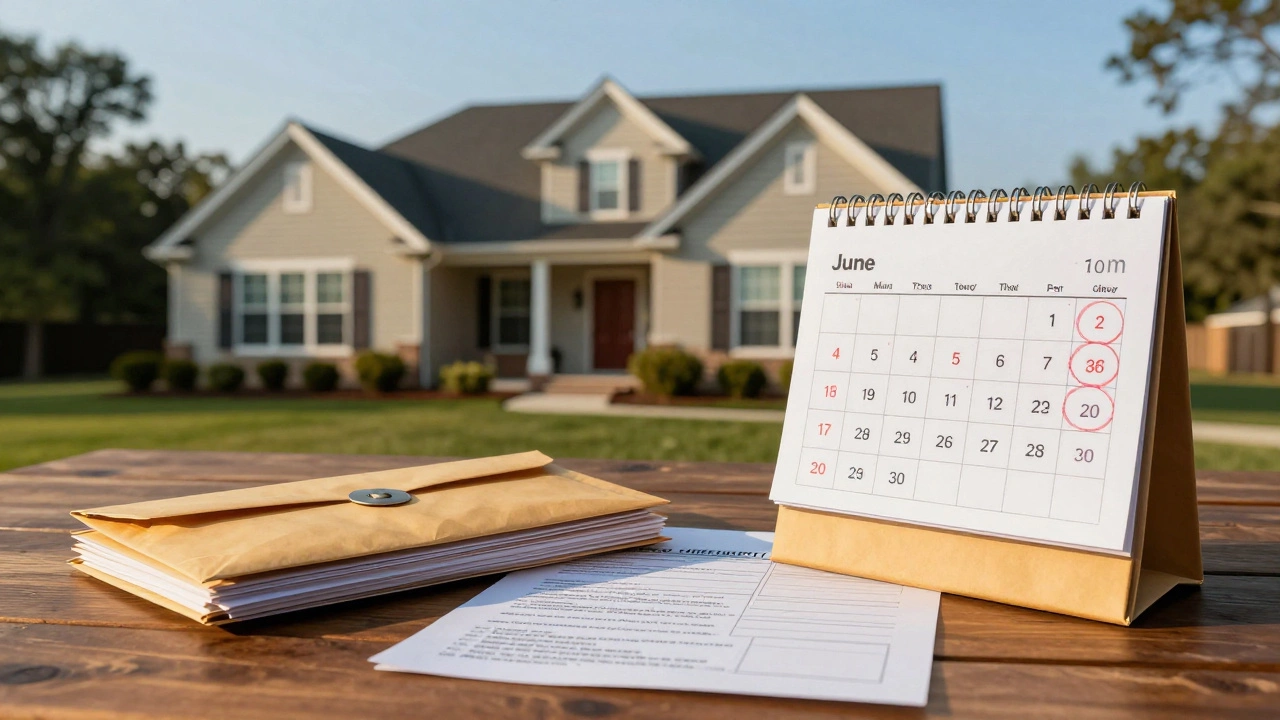
The short answer? You pay twice a year. But that’s only the beginning. Unlike some states where one big annual bill arrives in the mail, Virginia splits the burden into two installments with specific deadlines tied to the calendar months of June and December. Miss those dates, and interest starts ticking immediately. There are no grace periods.
This guide breaks down exactly when you need to pay, how much you might owe, what happens if you slip up, and how to handle the nuances of buying or selling a home during tax season. We’ll also look at who actually collects your money and why your neighbor might pay a different rate than you do.
The Two-Payment System: June and December
In most U.S. states, property taxes are collected annually. Virginia does things differently. The Commonwealth operates on a semi-annual schedule. This means your annual tax liability is divided by two, and you make two separate payments each year.
The first installment is due on June 30. The second installment is due on December 1. These dates are set by state statute and apply across all 95 counties and 38 independent cities in Virginia. Whether you live in a bustling neighborhood in Alexandria or a rural farm in Shenandoah County, these are the days your money needs to be in the hands of your local Treasurer.
Why split it up? Historically, this system was designed to help homeowners manage cash flow. Instead of hitting your bank account with one massive charge, the state spreads the cost out over six-month intervals. For many families, this makes budgeting easier. You have half a year to save up for the next chunk rather than scrambling for a lump sum once a year.
It’s crucial to remember that these deadlines are strict. In Virginia, there is no such thing as a "grace period." If the postmark on your envelope isn’t before midnight on June 30 or December 1, you are late. Late doesn’t mean you get a warning email. It means interest begins accruing the very next day.
Who Collects Your Taxes? The Local Connection
One of the biggest misconceptions about property tax in Virginia is that the state government sets the rates and collects the checks. That’s not true. While the Virginia Department of Taxation provides guidelines and oversight, the actual collection happens at the local level.
Your tax bill comes from your county or city Treasurer’s office. This decentralization means that tax rates vary significantly depending on where you live. A homeowner in Arlington County will face a completely different rate than someone in Chesterfield County. This is because local governments rely heavily on property taxes to fund essential services like schools, police departments, fire stations, and road maintenance.
When you receive your bill, it won’t just list a single number. It will break down the allocation. You’ll see portions going to:
- General Fund (day-to-day operations)
- School Division (often the largest chunk)
- Debt Service (bond repayments for infrastructure projects)
- Parks and Recreation
Because the money stays local, taxpayers often have more direct influence on how their dollars are spent through town halls and school board meetings. However, it also means you need to stay engaged with your local government. Rate changes happen every year, usually finalized in early spring, which is why your bill might jump unexpectedly after a new fiscal year begins.
Calculating Your Bill: Rates and Assessed Value
To understand how often you pay, you also need to know what you’re paying for. The formula for Virginia property tax is straightforward:
Assessed Value × Tax Rate = Annual Tax Liability
The assessed value is determined by your local assessor. They visit properties periodically to estimate market value based on recent sales of comparable homes, square footage, condition, and location. This assessment happens annually, but full reappraisals of all properties in a jurisdiction occur less frequently-sometimes every few years.
The tax rate is expressed as a dollar amount per $100 of assessed value. For example, if your county has a rate of $0.85 per $100, and your home is assessed at $300,000, your calculation looks like this:
- $300,000 ÷ 100 = 3,000 units
- 3,000 × $0.85 = $2,550 annual tax
- $2,550 ÷ 2 = $1,275 per installment
Rates vary widely. According to data from the National Association of Realtors, Virginia’s median effective property tax rate hovers around 0.82%, which is lower than the national average. However, "effective" rates can be misleading. Some jurisdictions have low base rates but add special assessments for flood zones, sewer districts, or trash collection fees. Always check the total line item on your bill, not just the base rate.

Late Payments and Penalties: The Cost of Missing a Deadline
We mentioned earlier that there are no grace periods. Let’s talk about the consequences of missing June 30 or December 1. Virginia law mandates a penalty structure that kicks in immediately upon delinquency.
If you miss the deadline, you owe an additional 5% penalty on the unpaid balance. On top of that, interest accrues at a rate of 10% per annum, calculated daily from the date of delinquency until the debt is paid in full. This isn’t a flat fee; it compounds. The longer you wait, the more expensive it gets.
Here’s a quick scenario: You owe $2,000 for your December installment. You forget to pay until January 31st (60 days late).
- Penalty: 5% of $2,000 = $100
- Interest: ($2,000 × 10%) × (60/365) ≈ $32.88
- Total Owed: $2,132.88
That’s $132.88 extra for forgetting a date. Over time, if you consistently miss payments, the local government can place a lien on your property. Eventually, they can auction off the tax lien to recover the funds. This process is known as a tax sale, and it’s the last resort for both the taxpayer and the government. Nobody wants to end up there.
Pro tip: Set up automatic reminders for June 15 and November 15. Giving yourself two weeks buffer ensures that postal delays or bank processing times don’t push you past the midnight cutoff.
Buying or Selling: Prorating Taxes at Closing
If you’re buying or selling a home in Virginia, the payment schedule takes on a new layer of complexity. Property taxes are prorated between the buyer and seller at closing. This means neither party pays the full annual bill upfront. Instead, they split the cost based on the number of days each person owned the property during the tax year.
Here’s how it works in practice. Suppose you buy a house on July 15th. The previous owner owned the home from January 1st to July 14th. You own it from July 15th to December 31st. The seller owes the taxes for the first half of the year, and you owe them for the second half.
At closing, the title company calculates this proration. If the current tax year’s bills haven’t been issued yet, they use the prior year’s bill as an estimate. The seller typically credits the buyer for the portion of the year they already covered, or the buyer reimburses the seller for the upcoming bills they will now be responsible for.
Crucially, the buyer assumes responsibility for future payments. Even if you bought the house in August, you still need to pay the December 1 installment in full, unless you negotiated otherwise. The proration handles the equity transfer, but the legal obligation to pay the Treasurer falls on the current owner of record.
This is why it’s vital to review the settlement statement (HUD-1 or Closing Disclosure) carefully. Look for the line item labeled "Property Tax Proration." Make sure the math matches the agreed-upon purchase date. Errors here can lead to disputes months later when the first official bill arrives.
Payment Methods: How to Pay Without Headaches
Virginia Treasurers’ offices have modernized significantly. Gone are the days when you had to write a check and drop it in a mailbox. Today, you have several options to ensure your payment hits on time.
| Method | Pros | Cons |
|---|---|---|
| Online Portal | Instant confirmation, available 24/7 | May require creating an account |
| Mail (Check/Money Order) | Familiar, paper trail | Must arrive by deadline, risk of loss |
| In-Person Drop Box | No postage needed | Must be near government building |
| Auto-Draft | Set and forget, never late | Requires sufficient bank funds |
Most counties offer an online payment portal. You’ll need your parcel ID or account number, which is printed on your tax notice. Online payments are processed instantly, so you avoid any postal delays. Many portals also allow you to set up recurring auto-drafts from your checking account. This is the safest bet for avoiding penalties.
If you prefer mailing a check, send it via certified mail with return receipt requested. This gives you proof of the postmark date. Remember, the postmark must be on or before the deadline. If the USPS loses your letter, having that receipt helps prove you attempted to pay on time, though it doesn’t always waive the penalty if the Treasurer never receives the funds.
Appeals and Abatements: When You Disagree
What if you think your assessed value is too high? Or perhaps you suffered damage from a storm that reduced your home’s value? You have rights to appeal.
Virginia allows property owners to file an appeal with the Board of Supervisors or City Council within 30 days of receiving your assessment notice. This is distinct from disputing the tax rate itself. You are arguing that the *value* used to calculate the tax is incorrect.
To build a strong case, gather evidence. Recent sales of similar homes in your neighborhood that sold for less than your assessment are powerful tools. Hire a professional appraiser if necessary. The goal is to show the Board that the market value supports a lower assessment.
If successful, your assessed value drops, which lowers your annual tax liability. Since payments are split, this adjustment applies to both the current and future installments. Some counties also offer abatements for specific situations, such as senior citizens with low incomes or veterans with service-connected disabilities. Check with your local Treasurer’s office for eligibility requirements.
Special Assessments and District Fees
Beyond the standard property tax, you might see other charges on your bill. These are called special assessments. They fund specific improvements that benefit your property directly, such as paving a street, installing curbs and gutters, or upgrading water lines.
Unlike general property taxes, which fund broad community services, special assessments are tied to physical changes in your immediate vicinity. If your street gets repaved, you might see a one-time assessment added to your tax bill. These can sometimes be paid off over several years, adding a small monthly amount to your semi-annual payments.
Always read the fine print on your tax notice. Look for sections labeled "Special Assessment," "Sewer Charge," or "Trash Fee." These are mandatory and must be paid alongside your regular tax installments. Failure to pay these can result in liens just like unpaid property taxes.
Planning Ahead: Budgeting for Semi-Annual Payments
Since you only pay twice a year, it’s easy to forget about property tax until the bill arrives. To avoid financial stress, treat it like a monthly expense. Divide your estimated annual tax bill by 12 and set that amount aside in a dedicated savings account every month.
For example, if you expect to owe $3,000 a year, save $250 each month. By June 30, you’ll have $1,500 saved. By December 1, you’ll have another $1,500. This method smooths out the cash flow impact and ensures you never scramble for cash.
Keep an eye on news from your local government. School board meetings and budget hearings in early spring often signal whether tax rates will rise or fall. If your county announces a 5% increase in the tax rate, adjust your monthly savings accordingly. Being proactive saves you from surprise spikes in your June or December bills.
Is Virginia property tax paid monthly?
No, Virginia property tax is not paid monthly. It is paid in two semi-annual installments. The first payment is due on June 30, and the second is due on December 1. However, many homeowners choose to set aside money monthly to prepare for these large lump-sum payments.
What happens if I miss my Virginia property tax deadline?
If you miss the June 30 or December 1 deadline, you immediately incur a 5% penalty on the unpaid balance. Additionally, interest accrues at a rate of 10% per year, calculated daily from the date of delinquency. There is no grace period, so penalties start the day after the deadline passes.
Does Virginia have a homestead exemption?
Yes, Virginia offers a homestead exemption for primary residences. This exempts the first $100,000 of your home's fair market value from taxation, provided you meet certain residency requirements. This reduces your assessed value and consequently lowers your tax bill. Additional exemptions may be available for seniors, disabled individuals, and veterans.
Can I pay my Virginia property tax online?
Yes, most Virginia counties and cities offer online payment portals. You can usually pay by credit card, debit card, or electronic check. Online payments are processed instantly, which helps ensure you meet the deadline without worrying about postal delays. Visit your local Treasurer’s website to access the secure payment platform.
How is my Virginia property tax calculated?
Your tax is calculated by multiplying your home's assessed value by the local tax rate. The rate is expressed as a dollar amount per $100 of assessed value. For example, if your home is assessed at $200,000 and the rate is $0.90 per $100, your annual tax would be $1,800. This amount is then split into two equal payments due in June and December.