2 Bedroom Apartment Size & Rent Calculator
Find Your Ideal Apartment
When you’re looking for a 2 bedroom apartment, size matters more than you think. It’s not just about fitting a bed in each room-it’s about how much space you actually get to live in, move around, and store your stuff. The truth? There’s no single answer. But there are clear patterns based on location, building age, and market type.
What’s the average size of a 2 bedroom apartment?
In the U.S., most 2 bedroom apartments fall between 800 and 1,000 square feet. That’s about the size of two standard parking spaces side by side. In cities like New York or San Francisco, you’re more likely to find units closer to 700-850 sq ft. In places like Atlanta, Phoenix, or Austin, you’ll often see 900-1,200 sq ft units, especially in newer complexes.
Internationally, the numbers shift. In London, a typical 2 bedroom flat runs 650-800 sq ft. In Tokyo, it’s common to find 2 bedroom units under 600 sq ft-smaller than many studio apartments in the U.S. Meanwhile, in cities like Bangalore or Manila, 2BHK apartments often range from 800 to 1,100 sq ft, depending on the neighborhood and developer.
Why do sizes vary so much?
Land cost drives everything. In dense urban cores, developers build upward to squeeze in more units. That means smaller rooms, thinner walls, and less wasted space. In suburban or mid-tier cities, land is cheaper, so units can be bigger. A 1,200 sq ft 2 bedroom in downtown Chicago might cost $2,800 a month. The same size in a suburb like Naperville could rent for $1,900.
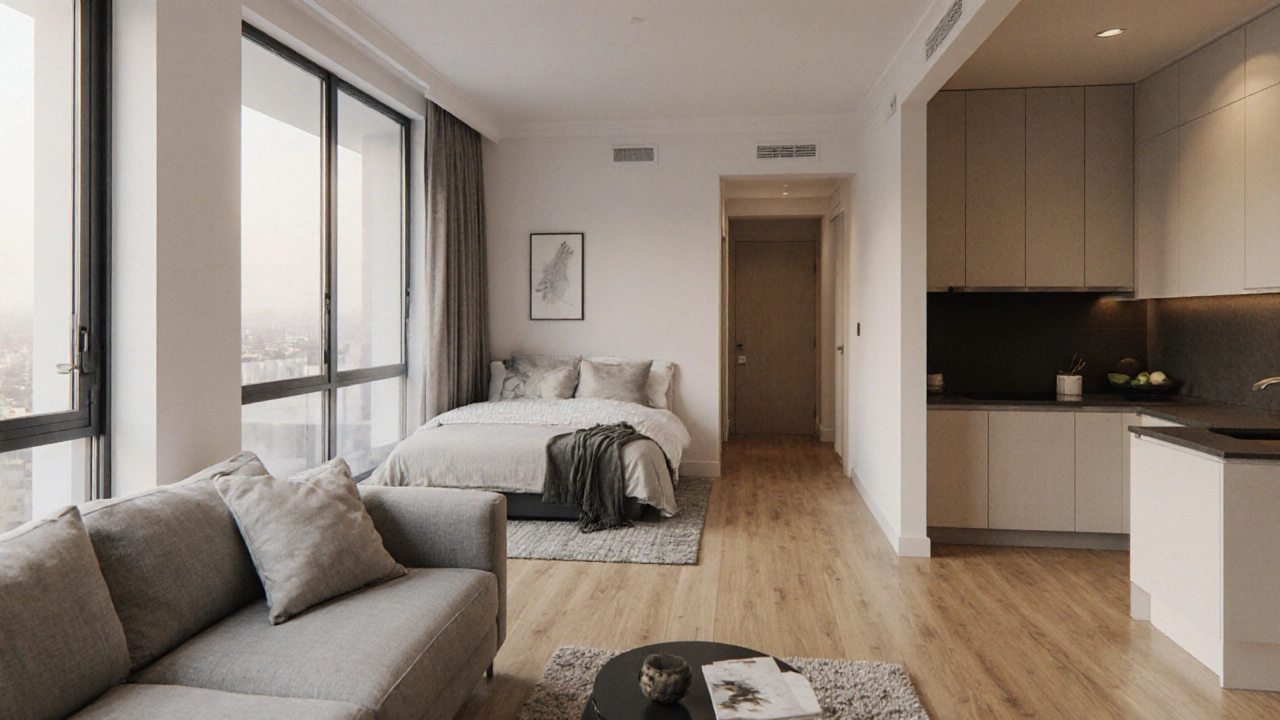
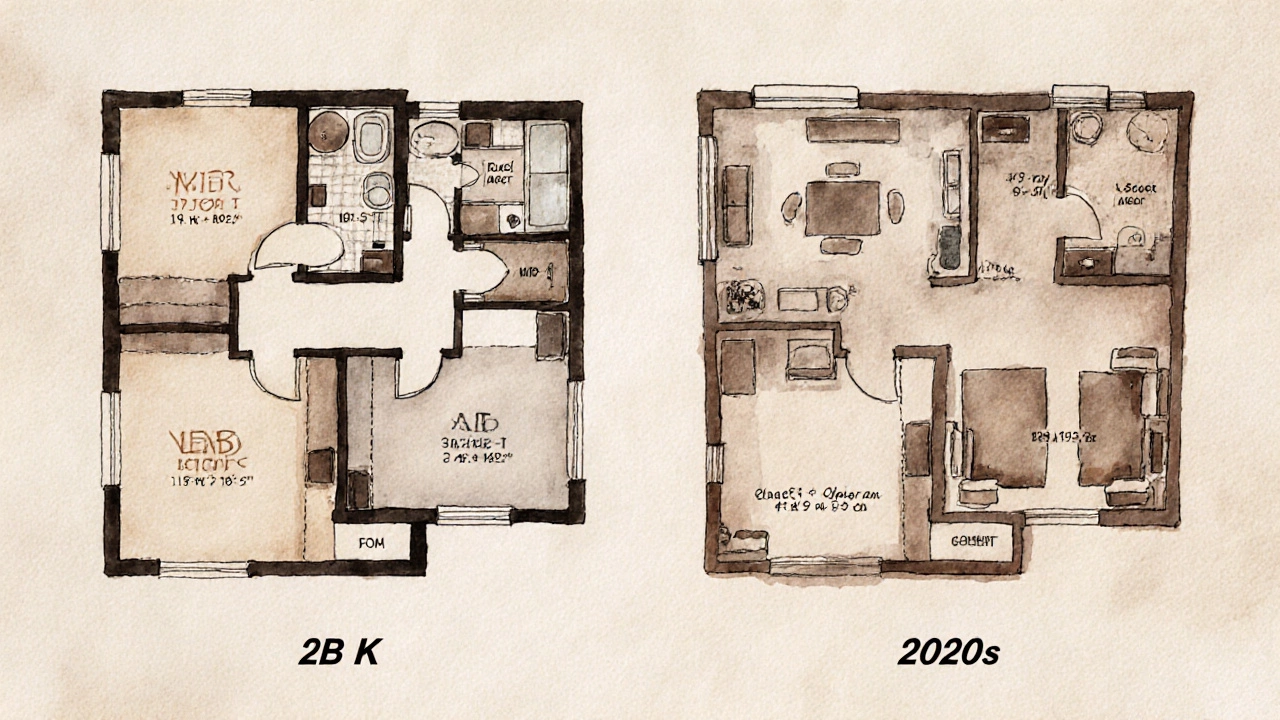
Building age also plays a role. Apartments built before 1980 often have smaller kitchens, tighter hallways, and less efficient layouts. You might see 2 bedroom units from that era at 750 sq ft, but the actual usable space feels smaller because of awkward door placements and wasted corners. Newer builds (post-2010) optimize layout better. Open floor plans, walk-in closets, and multi-functional spaces make even 850 sq ft feel roomier.
What does 800-1,000 sq ft actually look like?
Let’s break it down. In a typical 900 sq ft 2 bedroom:
- Each bedroom is about 10x11 feet (110 sq ft)-enough for a full bed, a dresser, and a nightstand. Not much room for a desk unless you tuck it into a corner.
- The living room is roughly 12x14 feet (168 sq ft). That’s where your couch, TV, and maybe a small dining table fit.
- The kitchen is 7x9 feet (63 sq ft). You’ll have room for a fridge, stove, sink, and maybe two cabinets. Countertop space is tight.
- The bathroom is 5x7 feet (35 sq ft). Standard for most rentals-enough for a shower, toilet, and sink, but no tub.
That leaves maybe 200-300 sq ft for hallways, closets, and entryways. No extra space for a home office, unless you turn one bedroom into a hybrid room.

What’s the difference between 2BHK and 2 bedroom?
“2BHK” stands for 2 Bedrooms, Hall, and Kitchen. It’s a term used mostly in India, Pakistan, Bangladesh, and parts of Southeast Asia. The “hall” here is the living area, and it’s usually included in the total square footage. So a 2BHK labeled as 900 sq ft includes the living room, kitchen, and both bedrooms.
In the U.S., we don’t use “BHK.” We just say “2 bedroom.” But the layout is often similar: two bedrooms, one living area, one kitchen, one bathroom. The difference? In many U.S. apartments, the kitchen is separate from the living area. In Indian 2BHKs, the kitchen is often open to the hall, making the space feel more connected.
What to watch out for when viewing apartments
Don’t trust the listing. A “900 sq ft” apartment might be measured including walls, closets, or even balcony space. Ask for the livable square footage. Walk through the space with a tape measure-or at least bring a 25-foot tape measure app on your phone.
Check the layout. A 950 sq ft apartment with a long, narrow layout can feel smaller than an 850 sq ft unit with a square shape. Look for:
- Doors that swing into the room-wastes space.
- Windows that are too small-makes rooms feel dark and cramped.
- Shared walls with noisy neighbors-thin drywall is common in older buildings.
- Storage. Are there closets? Or just a tiny closet in one bedroom? Many older units have zero closet space in the second bedroom.
Also, check the ceiling height. In newer buildings, it’s usually 9 feet. In older ones, it might be 8 feet. Lower ceilings make a room feel smaller, even if the floor area is the same.
How does size affect rent and value?
Size isn’t the only factor, but it’s a big one. In most markets, rent increases about $0.50-$1.00 per square foot for every extra 100 sq ft. So a 900 sq ft apartment at $1,800/month might become $2,100 at 1,100 sq ft. That’s a 17% jump in rent for 22% more space.
But here’s the catch: bigger isn’t always better. A 1,200 sq ft apartment in a low-demand area might sit vacant longer than a 900 sq ft one in a walkable neighborhood. Location, amenities, and condition often matter more than raw square footage.
If you’re buying, square footage affects appraisal value. In 2024, the average price per sq ft for a 2 bedroom condo in the U.S. ranged from $180 in Detroit to $1,100 in San Francisco. A 900 sq ft unit in Detroit might cost $162,000. The same size in San Francisco? Over $990,000. That’s not because the apartment is bigger-it’s because the land is worth more.
What’s the minimum size you should accept?
There’s no hard rule, but most renters find anything under 700 sq ft uncomfortable for two people long-term. Below that, you’re dealing with studio-sized bedrooms and no real separation between living and sleeping areas.
For couples or roommates who work from home, aim for at least 850 sq ft. That gives you enough room to have a small desk in one bedroom without turning it into a full office. If you have pets, kids, or lots of stuff, 1,000+ sq ft is better.
Some cities have minimum size laws. In New York City, for example, the legal minimum for a 2 bedroom is 550 sq ft. But that’s barely enough for two beds and a fridge. Don’t settle for the legal minimum unless you’re on a tight budget and don’t mind living like a minimalist.
What’s trending in 2025?
Developers are now designing “micro-2BHK” units-smaller than before, but smarter. Think fold-down desks, under-bed storage, kitchen islands that double as dining tables, and smart lighting to make rooms feel larger. These are popular in cities with high rent and low vacancy rates.
On the flip side, some new luxury developments are pushing 1,300-1,500 sq ft for 2 bedrooms, with walk-in closets, separate dining nooks, and upgraded finishes. These are aimed at remote workers who want space to live and work without leaving home.
The trend? More variety. You can find tiny 2 bedrooms in urban cores, mid-sized ones in suburbs, and large ones in new builds. The key is matching size to your lifestyle-not just your budget.